Recent exultant headlines about downtown's astounding growth overlook Chicago's troubling bifurcation into two cities — "one where optimism abounds, one where hope and opportunity are hard to find," writes Marilyn Katz.


While recent data indicates that downtown Chicago is America's hottest urban center, those numbers don't tell the full story of the city's economy. "While Chicago is on the rebound from the worst of the recession, the recovery has been far less robust here than in all major cities, except Miami and Detroit," writes Katz. "Many Chicagoans are poorer than they were before the economic downturn."
"The very structure of Chicago's economy has changed," Katz explains. "Over the last decade, particularly in the last five years, Chicago lost thousands of good-paying jobs in construction, manufacturing and government, while gaining jobs in retail, hospitality and professional services, which pay far less."
"This snapshot represents a painful change for many of the city's residents. Illinois earned the dubious distinction as the state where income disparities have grown the most, with incomes of the richest up by more than 11 percent and middle- and working-class folks down by 15 percent."
Katz ends her piece by imploring the city to commit to growing good-paying jobs, investing in legacy industries, assisting recent graduates, welcoming new immigrants, and supporting entrepreneurs, "to make the city a place of opportunity, not just for the few, but for all who choose to call Chicago home."
Read the full story: Chicago turning into a tale of 2 cities
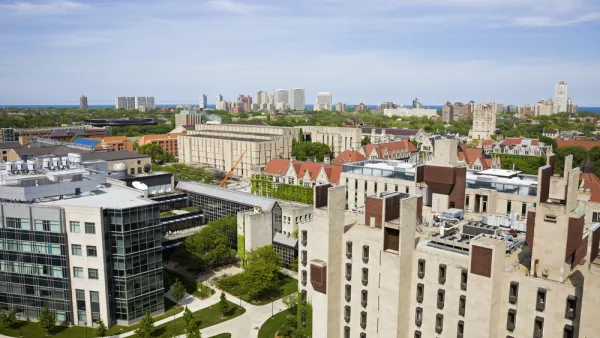
The Miseducation of Cities
A review of the provocative new book by Davarian L. Baldwin, In the Shadow of the Ivory Tower.
West Side Chicago Votes to Tax Itself to Fund Mental Health Services
After the city's government cut funding to mental health services, closing many of the city's clinics, residents of Chicago's West Side voted overwhelmingly to tax their properties to reverse that trend.
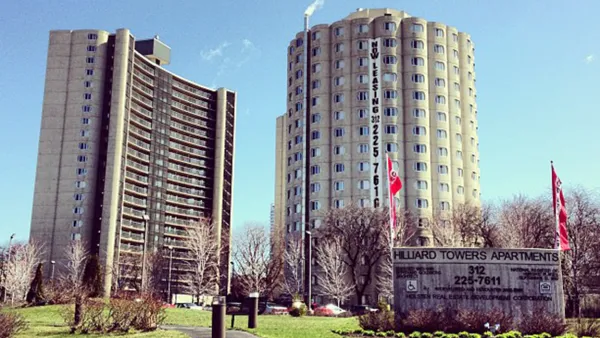
Chicago's Hilliard Homes Succeed Despite Trend Away From High-Rise Projects
The Hilliard Homes avoided the wrecking ball for 50 years, even while other high-rise projects were knocked down. A Chicago Reader pierce suggests the design and management of these buildings could make them a model for future High-rise projects.

Planetizen Federal Action Tracker
A weekly monitor of how Trump’s orders and actions are impacting planners and planning in America.

Washington state to charge fee to drivers with fuel-efficient cars
Revenue from the fee will go towards supporting the state’s highways.

Illinois considers spending $1 billion in taxpayer money on data center
A quantum computing campus and data center are currently under construction in Chicago.

Senate passes bill overhauling permitting
The bill still needs to pass the House.

Did data centers change how voters cast their ballots?
Texas, Ohio, and Georgia all flipped party control. But in rural counties, the effect of local data centers was mixed.

Amtrak invests in eight new Airo trainsets
The new trainsets will begin serving passengers in 2031.

FREE Course: Walkable City 1: Why Walkability?
After describing his path towards focusing on walkability as the essence of good planning, Jeff Speck marches through his five principal reasons for making more walkable places.
Reinventing Malls: Planning Alchemy—Turning Gray Fields Into Gold
The course focuses on the opportunities and imperatives that shape reinvention of mall sites.

City of Charlotte
City of Rosemead
Rutgers University, Edward J. Bloustein School of Planning and Public Policy
University of Michigan School for Environment and Sustainability (SEAS)
Hunter College, City University of New York (CUNY)
The Architects Foundation
University District Partnership