High cost of living and lack of jobs are driving urban populations out of cities, and simply increasing density requirements might not be enough to reverse the trend, argues Jim Russell.


Looking at demographic shifts in Toronto, San Francisco and San Antonio, geographer Jim Russell argues that migratory patterns rather than taxes or density affect innovation in metropolitan areas.
According to the Canada Mortgage and Housing Corporation, fewer people from other countries moved to Ontario in the last year and more people moved out. Russell suspects they all fled to Alberta, "where the jobs are."
High rents in urban areas also contribute to out-migration.
Studies by Trulia, a real estate data analyst, show that California is experiencing in-migration from incomes larger than $200,000, while poor and middle-income cohorts drive out-migration to other states.
Where are low and middle income Californians going? Texas.
Ryan Avent's book The Gated City argues that high productivity places like urban cores also have a high cost of living. Density increases would make them more productive and lower the cost of living, optimizing their attractiveness.
However, places like San Antonio, which are expanding outward rather than up or in, are increasing their productivity through in-migration and low home prices, writes Russell who recognizes an almost irreversible trend in the demographic shift driven by home prices.
Read the full story: Urban Innovation And Density
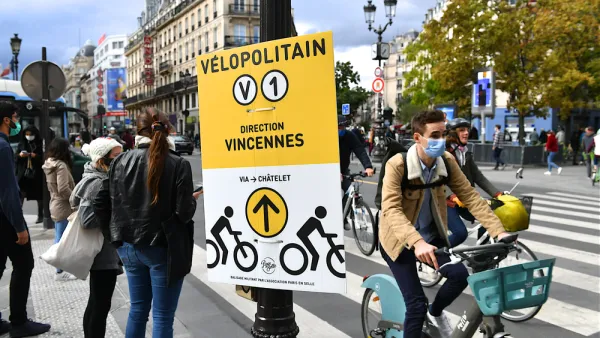
Where Pandemic Bike Improvements Won Out
While some cities are reverting back to pre-pandemic street configurations, others are taking advantage of the momentum for bike and pedestrian infrastructure to make pandemic-era projects permanent.
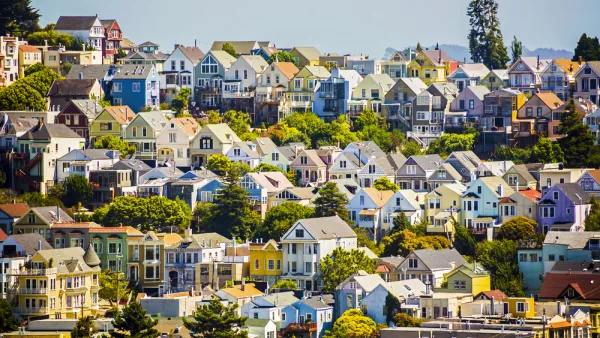
10 Real Estate Markets That Could Soon Resemble San Francisco
The housing prices that define the most expensive metropolitan areas in the country—think San Francisco, New York, and Los Angeles—have gone national.
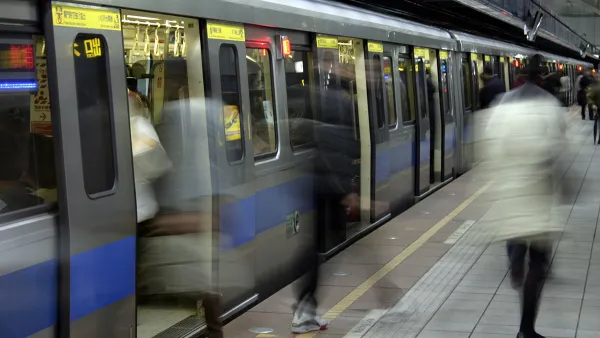
Transit Ridership Dropping Due to Coronavirus; Long-Term Funding Consequences Feared
The effects of a global pandemic on American shores are beginning to emerge for public transit systems. The consequences of a drop in transit ridership could extend beyond the end of the pandemic.

Desperate measures: Advocates weigh draining Lake Powell to fill Colorado River
Draining the reservoir could reduce evaporation losses by a couple hundred thousand acre-feet.

Eastern Nebraska is running out of electricity
Data centers and electrification are straining eastern Nebraska’s grid, throttling economic development.

Move over, LA: St. Louis gears up for Olympics, invests millions in downtown redevelopment
The Missouri city will host the 2028 Olympic soccer group stage and knockout matches.

Mass. votes against statewide minimum lot size for single-family homes
Over 2 million residents voted on Question 7; it was decided by just over 30,000 votes.

Maryland’s $15 billion bridge project gains key approval
The Maryland Transit Authority said the project will create over 60,000 jobs and add $23 billion to the local economy.

‘No clear next steps’ for Chicago's permanent festival grounds
Eleventh Ward Ald. Nicole Lee has suggested Soldier Field as a possible location for the permanent event space.

FREE Course: Walkable City 1: Why Walkability?
After describing his path towards focusing on walkability as the essence of good planning, Jeff Speck marches through his five principal reasons for making more walkable places.
Reinventing Malls: Planning Alchemy—Turning Gray Fields Into Gold
The course focuses on the opportunities and imperatives that shape reinvention of mall sites.

City of Rosemead
Rutgers University, Edward J. Bloustein School of Planning and Public Policy
One Hundred Miles
University of Michigan School for Environment and Sustainability (SEAS)
Hunter College, City University of New York (CUNY)
The Architects Foundation
City of Cambridge
The Pocatello Development Authority
The Urban Renewal Agency of the City of Pocatello