Declining populations and economic malaise in many European countries are just some of the forces contributing to what most agree seems like a lasting decline in the continent's demand for automobiles.


“Europeans are driving less and are likely to continue doing so,” observes Matthew Curtin. Stuart Pearson, an analyst at Morgan Stanley attributes this to “a wide range of forces–from high fuel costs, increased online shopping and social interaction, to more congested roads in increasingly crowded European cities.” Furthermore, “ownership, demographic and vehicle-age trends [suggest] that a recovery in Europe could remain elusive for the rest of this decade,” reports Curtin.
“Europe resembles Japan in the early 90s,' said Hakan Samuelsson, the chief executive of Volvo Cars, where car demand has fallen since 1992. “It’s a phenomenon dubbed as 'peak-car' by analysts at Morgan Stanley,” adds Curtin, who suggests that Europe may have already reached its climax in 2007, when 16 million vehicles were registered. That number has continued to fall since, and is expected to reach around 11 million - back to 1993 record low levels - before stabilizing.
Read the full story: Are Cars ‘Going Out of Style’ in Europe?
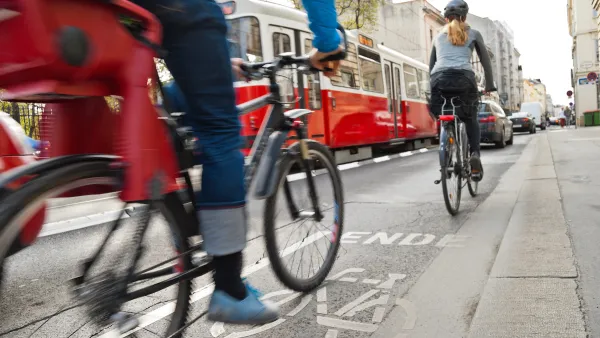
Peak Car? Check Your Data
There is evidence that automobile travel is peaking while demand for non-auto modes is growing, but double-check your data sources to be sure.

Generation Z Is Driving Less, But History Indicates It Won’t Last
Think Generation Z will usher in the long-awaited post-car future of transit advocates’ dreams? Think again (about the example set by the Millennials).
Electric Vehicle Sales Strong in 2021; SUVs Sales Still Dominate the Market
In December, data showed SUVs on course to account for more than 45% of global car sales in 2021.

Washington state to charge fee to drivers with fuel-efficient cars
Revenue from the fee will go towards supporting the state’s highways.

Illinois considers spending $1 billion in taxpayer money on data center
A quantum computing campus and data center are currently under construction in Chicago.

Trump to blast ‘hydrocarbon highway’ through ‘world’s longest art gallery’
Environmental and historic preservation groups are suing to stop the project.

NYC, state sue feds over mixed-immigration-status housing assistance rule
The state’s lawsuit argues that the rule change violates the Administrative Procedure Act.

Michigan to turn neighborhood into virtual power plant
Residents will soon be able to divert their excess energy to the grid in exchange for compensation.

Data center, mining project swarm to long-awaited Alaska railroad line
The state-owned railroad approved final plans for the spur line this week; the project is expected to cost $311 million, mostly funded by the federal government

FREE Course: Walkable City 1: Why Walkability?
After describing his path towards focusing on walkability as the essence of good planning, Jeff Speck marches through his five principal reasons for making more walkable places.
Reinventing Malls: Planning Alchemy—Turning Gray Fields Into Gold
The course focuses on the opportunities and imperatives that shape reinvention of mall sites.

City of Charlotte
City of Rosemead
Rutgers University, Edward J. Bloustein School of Planning and Public Policy
University of Michigan School for Environment and Sustainability (SEAS)
Hunter College, City University of New York (CUNY)
The Architects Foundation
University District Partnership