Lance Armstrong may no longer be the first athlete Americans associate with bicycle riding; and that may be a good thing after the last year he's had. This week, NBA MVP LeBron James's bicycle commute became national news.


"LeBron James, environmental MVP," wrote this week about the basketball star's preference for commuting to and from work in Miami by bicycle. Star athletes are often associated with flashy rides befitting their mega salaries, but James and some of his teammates have also been caught participating in the city's Critical Mass rides, proving their bicycle bona fides.
"The Miami Heat star reduces his carbon footprint the same way a 12-year-old might, by riding his bicycle to basketball games," said Joseph. "The 6-9, 250-pound three-time NBA MVP has been doing this for a while now, taking advantage of South Florida's warm climes. But that still doesn't make it any less unusual."
As to be expected, the national media aren't the only ones going gaga over the story. The auto-alternative advocates over at Streetsblog are hoping for a long rebound to the wider community. Says Angie Schmitt: "It will be interesting to see if this helps elevate the cause of safer streets in motor-happy Florida. It’s hard to see how it wouldn’t."
Read the full story: LeBron James bikes home from Miami Heat games at night

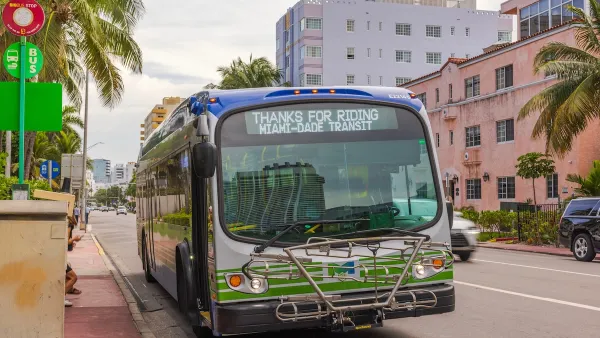
More money, less service: Miami-Dade slashes bus routes after hiking fare
The department is facing a multi-million dollar funding gap.
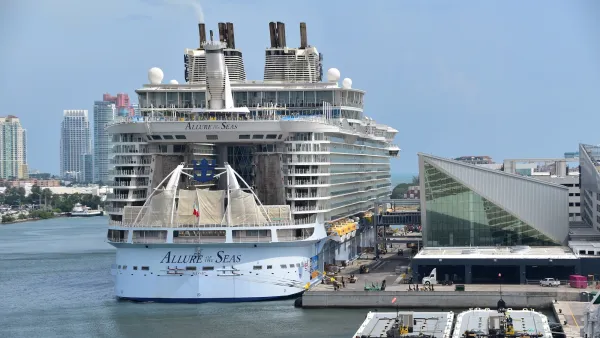
Miami Considers Airport-to-Port Train to Ease Cruise Ship Traffic
Miami’s port is one of the world’s busiest cruise ship terminals.
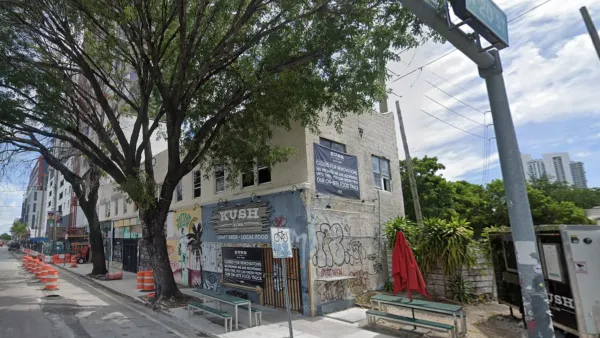
Miami Restaurant Rebuild Includes 10 Units of Affordable Workforce Housing
The restaurant’s owner worked with a local community redevelopment agency to preserve a historic building.

Planetizen Federal Action Tracker
A weekly monitor of how Trump’s orders and actions are impacting planners and planning in America.

California plans to bury El Niño’s downpour
If the state plays its cards right, it may be able to store a billion acre-feet of El Niño’s water in aquifers.

Chicago breaks ground on $3 billion megadevelopment
The new neighborhood, titled Foundry Park, will one day host 3,700 residences.

California High-Speed Rail Authority CEO resigns after $600,000 scandal
Under Ian Choudri, the authority used taxpayer dollars to fund first class flights and trips to nightclubs.

Want to study the Missouri River? Soon, you may need unanimous approval from 10 states
Legislation would require 10 governors’ permission to study or build projects moving water outside the basin.

Desperate measures: Advocates weigh draining Lake Powell to fill Colorado River
Draining the reservoir could reduce evaporation losses by a couple hundred thousand acre-feet.

FREE Course: Walkable City 1: Why Walkability?
After describing his path towards focusing on walkability as the essence of good planning, Jeff Speck marches through his five principal reasons for making more walkable places.
Reinventing Malls: Planning Alchemy—Turning Gray Fields Into Gold
The course focuses on the opportunities and imperatives that shape reinvention of mall sites.

City of Rosemead
Rutgers University, Edward J. Bloustein School of Planning and Public Policy
One Hundred Miles
Hunter College, City University of New York (CUNY)
The Architects Foundation
University of Cincinnati Online
City of Cambridge
Montrose County
The Pocatello Development Authority