It's a baffling time in the history of Detroit. For optimists, one can look to the rise of downtown and proposals for mega-development projects. For pessimists, there's the messy reality of impending municipal default. In Detroit, "paradox rules."


Columnist Laura Berman looks at Detroit's seemingly ever-present dualing moods - hope and despair - which the city wears as "a classic mask of comedy and tragedy on one municipal face."
"You pick: Detroit is having its phoenix moment, flying high. Or it is plunging ever deeper into the abyss. Emotional whiplash is the only constant."
Examples of hope abound, including a proposal by Mike Ilitch to build a $650 million arena and entertainment complex, and Dan Gilbert's crusade to fill up the city's skyscrapers with "suburban office exiles and fresh-faced young recruits eager to be part of the next innovation wave."
At the same time, "the city's running out of cash so quickly — and city government has been so impotent —that the state is poised to take action," notes Berman. "In a city where outside philanthropy and federal funds paper over the extent of the city's financial crisis, widespread recognition of impending catastrophe may never fully dawn."
"The 2012 documentary 'Detropia' caught a whiff of the uniquely local vibe with its title, playing on the idea of 'dystopia' and 'utopia' at once. A horrifying city of poverty and crime. An inspiring place where idealists plan communal farms and visionary entrepreneurs seize opportunity."
"Look around you: Detroit has a way of being the best and worst of places, in the best — or is it the worst? — of times."
Read the full story: Hope, despair in Detroit: Tale of two cities
Learning loss and urban schools, part 2
Did test scores in progressive cities drop more post-COVID than test scores in moderate ones?
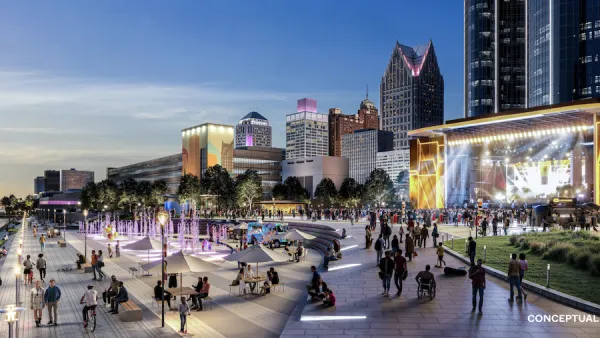
Detroit to transform waterfront with $2.2 billion investment
Developers will convert about 18 acres of unused parking lot space into civic spaces.
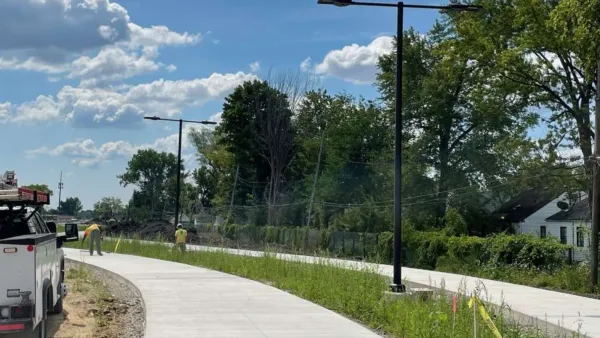
Detroit greenway brings revival — and fears of displacement
The planned Joe Louis Greenway is already bringing change to the neighborhoods near it.

Planetizen Federal Action Tracker
A weekly monitor of how Trump’s orders and actions are impacting planners and planning in America.

Eastern Nebraska is running out of electricity
Data centers and electrification are straining eastern Nebraska’s grid, throttling economic development.

Study reveals best places in the U.S. for cycling, walking
New research from Streetlight Data examines bicycle and pedestrian miles per capita in the 100 largest U.S. cities by population.

DSA members accuse Mamdani of 'abandoning values' over housing redevelopment
New York City's mayor plans to replace about 2,000 units of public housing with private, mixed-income housing.

All sides of BRT debate unhappy with CDOT’s most recent move
The Colorado Department of Transportation is no longer considering center-running bus lanes for Colorado Boulevard.

Massachusetts bogs generate both power, and cranberries
Putting solar panels above farmland is one way Massachusetts is advancing toward its goal of net-zero carbon emissions by 2050.

FREE Course: Walkable City 1: Why Walkability?
After describing his path towards focusing on walkability as the essence of good planning, Jeff Speck marches through his five principal reasons for making more walkable places.
Reinventing Malls: Planning Alchemy—Turning Gray Fields Into Gold
The course focuses on the opportunities and imperatives that shape reinvention of mall sites.

City of Rosemead
Rutgers University, Edward J. Bloustein School of Planning and Public Policy
One Hundred Miles
University of Michigan School for Environment and Sustainability (SEAS)
Hunter College, City University of New York (CUNY)
The Architects Foundation
City of Cambridge
The Pocatello Development Authority
The Urban Renewal Agency of the City of Pocatello