Surfers, local businesses and residents alike rallied against kicking in $7 million for an Army Corps of Engineers plan to elevate beaches and erect sand dunes in Long Beach, NY six years ago. Post-Hurricane Sandy, most regret this choice.


The broader $98 million plan spared neighboring coastal communities such as Point Lookout, Lido Beach and Atlantic Beach millions in damages from Sandy, whereas “Long Beach suffered at least $200 million in property and infrastructure losses, according to preliminary estimates,” reports Mireya Navarro. Though it is still early to assess the exact impact of the Army's project, “for the most part, dune barriers acted like soft sea walls made of sand and vegetation that even when flattened or breached still managed to protect places like Westhampton Beach on Long Island, Plumb Beach in Brooklyn, and Bradley Beach in Monmouth County, N.J.,” she adds.
As Long Beach and other local communities look to rebuild, past opposition to sand dunes is being reconsidered. “But some shoreline experts warn that anything short of relocating the buildings and development closest to the ocean only buys time as sea levels rise,” writes Navarro. Orrin H. Pilkey, professor emeritus of earth and ocean sciences at Duke University, “supports dune restoration but also proposes limiting and mitigating development, including not rebuilding destroyed homes next to the beach and elevating others onto stilts to avoid flooding in the event that dunes are overtopped.”
Ultimately, each community will need to decide on how to move forward. “Our preference is to put those dunes back as quickly as possible,” said Julie Schreck, the mayor of Bradley Beach. “I hope other communities will consider trying to emulate nature as much as they can, but I guess every town has to take stock of its own preferences.”
Read the full story: Resisted for Blocking the View, Dunes Prove They Blunt Storms

Building a Better Dune
As the destructive force of Hurricane Sandy demonstrated, all sand dunes are not created equal. But as coastal communities start to rebuild their defenses for the next storm, they're trying to close the gap with Mother Nature.
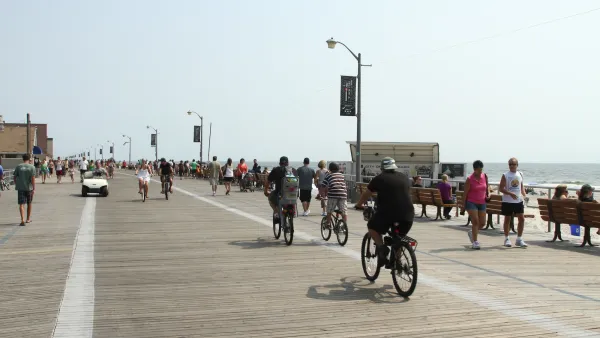
Long Beach, New York pledges $600K for pedestrian safety
The city will use $500,000 in community block development grant funding to improve pedestrian infrastructure.

California presses forward on offshore wind
The state is taking steps to prepare its grid and port infrastructure for offshore wind projects despite the federal government's pushback on the technology.

Planetizen Federal Action Tracker
A weekly monitor of how Trump’s orders and actions are impacting planners and planning in America.
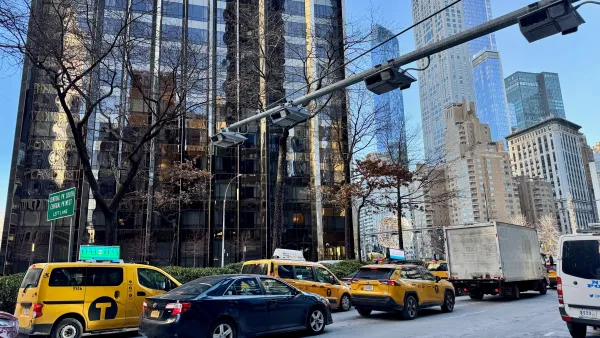
Data reveals that NYC’s bet on congestion pricing has paid off
After almost two years of the program, reports show positive impacts on traffic and air quality and no disruptions to parking.

Denver is solving homelessness. Why aren't the rest of us?
Since 2023, Denver's street homeless population has decreased by 64%, proving that effective tools exist to support those in need of housing.

Chicago's streets are littered with dead birds. Will the city protect them?
Chicago sits in the route of migratory birds traveling south. Its abundance of glass buildings and bright lights make it particularly disorienting for the animals.

CA city to shut down airport, transform it into utopian park
The western side of the 200-acre park will feature a dog park, nature education center and arboretum.

NYC to vote on supporting outdoor dining, streamlining bus and bike lane creation
The city has five proposed amendments to its municipal constitution on the ballot this November.

FREE Course: Walkable City 1: Why Walkability?
After describing his path towards focusing on walkability as the essence of good planning, Jeff Speck marches through his five principal reasons for making more walkable places.
Reinventing Malls: Planning Alchemy—Turning Gray Fields Into Gold
The course focuses on the opportunities and imperatives that shape reinvention of mall sites.

City of Rosemead
Rutgers University, Edward J. Bloustein School of Planning and Public Policy
One Hundred Miles
The Architects Foundation
University of Cincinnati Online
Montrose County
Northern Illinois Transit Authority (NITA)
The Pocatello Development Authority