Writing from Madera in the Central Valley, the Mercury News transportation reporter explores the local opposition to the largest public works project in the nation. Farmers wanted an injunction placed on the CA High Speed Rail Authority to halt work.


Mike Rosenberg describes the local opposition to the project which would have derailed had Sacramento County Superior Court Judge Timothy Frawley granted the preliminary injunction they requested. It "would prevent the state's rail authority from buying land along the proposed route and continuing with site surveys, engineering design work and geological testing that began months ago."
(Breaking news: Judge denies injunction in high-speed rail legal challenge)
"The farmers and the county here are suing to block the first 29 miles of high-speed rail from coming through the exact center of California, and a Sacramento judge on Friday (Nov. 16) is expected to rule on their request. It's a possible preview of battles to come in the Bay Area if the project moves forward."
Should Frawley grant the injunction, the Associated Press' Juliet William writes in The Fresno Bee that the High Speed Rail Authority could continue work, though more limited than they would prefer.
"'While an injunction would hinder our ability to begin construction in the Central Valley in a timely manner, other aspects of the program - such as investment into existing regional transit that will tie into the high speed rail line - will go forward as planned,' California High-Speed Rail Authority Chief Executive Officer Jeff Morales said in a written statement to The Associated Press, writes William."
"While Central Valley construction workers are eager for the high-speed train to come to town, a vocal anti-bullet train sentiment has spread across the farmlands of small, conservative Madera County, which now stands as the last barrier in the path of a groundbreaking next summer", writes Rosenberg.
In fact, Tim Sheheen writes in The Fresno Bee on Wednesday, Nov. 14 that the High Speed Rail Authority is considering a program from Fresno Works that "would put a premium on contractors to hire workers who live in communities with high rates of long-term unemployment or other economic hardship, or workers who are considered economically disadvantaged..."
In addition, "the California High Speed Rail Authority has pushed back the deadline to finish the first stages of the bullet train system in the central San Joaquin Valley", writes Tim Sheehan on Nov. 15 The Madera-Bakersfield section deadline would be extended to the end of 2017 from September 2017 - which was in compliance with the Recovery Act.
Ralph Vartabedian of the Los Angeles Times writes that "Jeff Morales, chief executive of the authority, said (Thurs, Nov. 15 that) the revised schedule would have the track completed by December 2017 rather than a year earlier as set under the agency's contracting documents"
Read the full story: In California's Central Valley, farmers fight in their fields and court to block high-speed rail


Amtrak, CN end decades-long dispute with eight-year agreement
The new operating agreement establishes an updated framework for the companies to work together, including processes to resolve disputes.

Judges permit Denver to divert 77,000 acre feet from the Colorado River for reservoir expansion
Overuse and climate change have caused the Colorado River’s water levels to plummet.
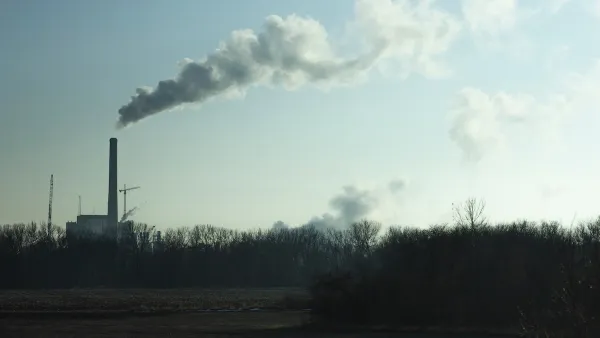
Nation's most wind-powered state turns to coal as data centers increase energy demand
For the first time in decades, Iowa has increased its generation of coal power.

Boston has spent millions making the Green Line more accessible — and there’s no end in sight
While the city has invested millions into expanding and adding platforms to the Green Line to make it more accessible, new train cars set to arrive next year will be too tall for disabled passengers to board without raising the current platforms.

Idaho may see an 18% drop in federal surface transit funding — the largest estimated cut in the US
Transit systems in rural communities are much more reliant on federal funding to provide their services.

How ‘post-disaster gentrification’ alters neighborhoods after natural calamities
After hurricanes, fires or other calamities, the original residents of a community are often replaced by younger, wealthier residents.

FREE Course: Walkable City 1: Why Walkability?
After describing his path towards focusing on walkability as the essence of good planning, Jeff Speck marches through his five principal reasons for making more walkable places.
Reinventing Malls: Planning Alchemy—Turning Gray Fields Into Gold
The course focuses on the opportunities and imperatives that shape reinvention of mall sites.

City of Wisconsin Rapids
Harvard University Graduate School of Design
KFH Group Inc.
The Architects Foundation
University of Cincinnati Online
The Pocatello Development Authority
The Urban Renewal Agency of the City of Pocatello