Five years ago, Graham Weston, the chairman and co-founder of Rackspace, had a wild vision to transform an abandoned mall into his company's headquarters. His unique approach has revitalized the adjacent city of Windcrest, a suburb of San Antonio.


"As ruefully documented on the Web site Deadmalls.com," writes Kate Murphy, "the recession has shuttered scores of enclosed malls in the United States, and estate analysts at the CoStar Group predict that at least 10 percent of the remaining 1,500 malls will fail in the next few years." The Windsor Park Mall was just another statistic until Weston decided to convert the abandoned building into a one-of-a-kind work environment.
"I thought, This is going to be awesome!" said Weston. "But everybody else pretty much thought I was crazy." Lanham Napier, the chief executive at Rackspace, admitted, "[a] lot of Rackers worked at Foot Locker in the mall, and the last thing they wanted to do is go away to school, get the fancy degree and come back and work at the mall." After an investment of over $100 million, the mall now comfortably houses the employees along with amenities including a two-story slide, a life-size chessboard, an exercise room, themed conference rooms, and recreation areas.
While some dead malls have been resurrected as mixed-used buildings, Rackspace's project "is unique in that it is the exclusive owner and occupant." Murphy adds, "The project suggests that there might be hidden opportunities in the nation's glut of dead and dying malls and represents one of the country's largest and quirkiest recycling efforts."
In addition to representing the values of the company, the mall cum office park has been a boon to Windcrest, which expects to be debt-free by 2014 as a result of a substantial increase in tax revenue.
Read the full story: Revitalizing a Dead Mall (Don’t Expect Shoppers)
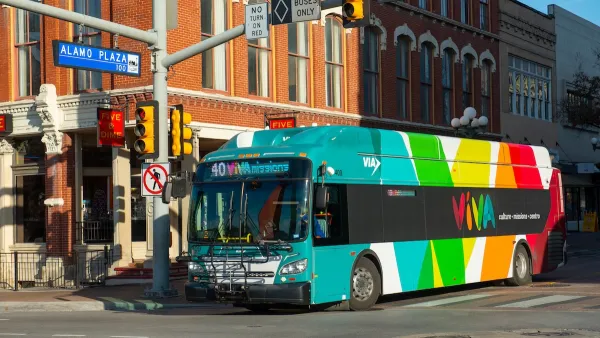
San Antonio approves $1.1 billion transit agenda
The agency has also begun construction of its Via Rapid Green line, which will service passengers from the San Antonio International Airport.
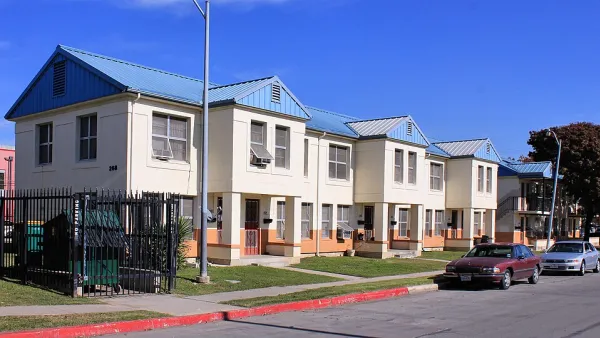
San Antonio announces $2.5 billion plan for public housing
The city’s public housing authority looks to modernize, develop and acquire at least 14,500 units.
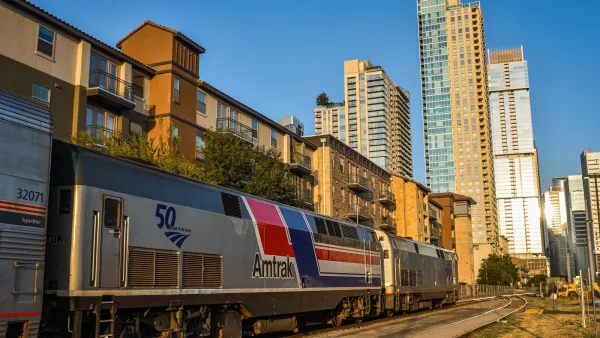
Texas DOT report outlines options for commuter rail between Austin and San Antonio
Amtrak currently operates just one trip per day between the two cities.

Planetizen Federal Action Tracker
A weekly monitor of how Trump’s orders and actions are impacting planners and planning in America.

Eastern Nebraska is running out of electricity
Data centers and electrification are straining eastern Nebraska’s grid, throttling economic development.
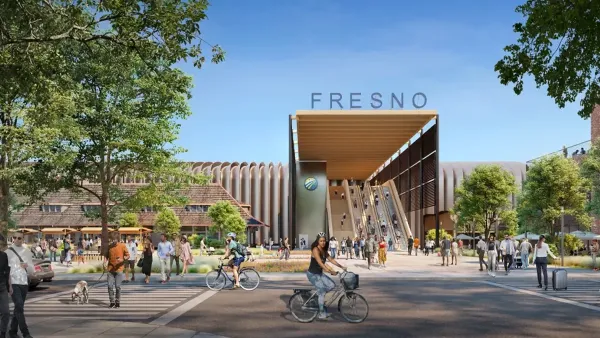
California High-Speed Rail Authority picks trainset manufacturer
The California High-Speed Rail Authority aims to start servicing passengers by 2033.

What could the future of LA transit look like under Raman?
The mayor-elect views broken sidewalks and potholes as crises that can be fixed with better governance.

States are counting on battery farms. Some towns don’t want them.
While fire safety has improved, some communities are still wary.

Dallas releases zoning code overhaul to officials
The drafted overhaul is over 400 pages long.

FREE Course: Walkable City 1: Why Walkability?
After describing his path towards focusing on walkability as the essence of good planning, Jeff Speck marches through his five principal reasons for making more walkable places.
Reinventing Malls: Planning Alchemy—Turning Gray Fields Into Gold
The course focuses on the opportunities and imperatives that shape reinvention of mall sites.

City of Rosemead
Rutgers University, Edward J. Bloustein School of Planning and Public Policy
One Hundred Miles
University of Michigan School for Environment and Sustainability (SEAS)
Hunter College, City University of New York (CUNY)
The Architects Foundation
City of Cambridge
The Pocatello Development Authority
The Urban Renewal Agency of the City of Pocatello