What do all these seemingly unrelated elements have in common? They were just a few of the creative ideas for improving the urban environment showcased at the recent Urban Prototyping Festival held in San Francisco.


"The city as it exists doesn't have to be the city we live in. These crazy projects could reinvent the urban landscape--and make it a little more fun," writes Ariel Schwartz.
She's referring to the Urban Prototyping Festival, which brings together "performances, food and expert speakers," while focusing on the future of urban innovation. According to the event website, "urban prototyping" is defined as "a global movement exploring how participatory design, art and technology can improve cities." All submissions are judged with the criteria of actual replication and adoption in mind.
This year, the festival "was held in the city's troubled yet evolving Central Market neighborhood", reports Schwartz, showcasing 18 out of the dozens of submissions made by "local residents [aiming] to make the urban environment more livable." Some of the more interesting submissions included "Pulse of the City" allowing passersby to "walk up and measure their pulse" and stress levels, says Allison Leahy. Another entry, "PPlanter", is "a urinal attached to garden spaces", which filters water through bamboo biofilters to water plants.
Another noteworthy example, the "10-Mile Garden", capitalizes on a loophole in San Francisco's law that prohibits parking in front of the city's 9,000 fire hydrants, but that doesn't explicitly state these areas need to be paved. The project, thus, proposes using succulents as a native plant to embellish and 'greenify' these otherwise drab grey areas scattered throughout the city. These are just a few of the many projects that were on display over the weekend, check out the slideshow accompanying the article to view more.
Read the full story: Prototyping The Urban Environment With Garden Urinals And Staircase Slides


Planetizen Federal Action Tracker
A weekly monitor of how Trump’s orders and actions are impacting planners and planning in America.

Data reveals that NYC’s bet on congestion pricing has paid off
After almost two years of the program, reports show positive impacts on traffic and air quality and no disruptions to parking.
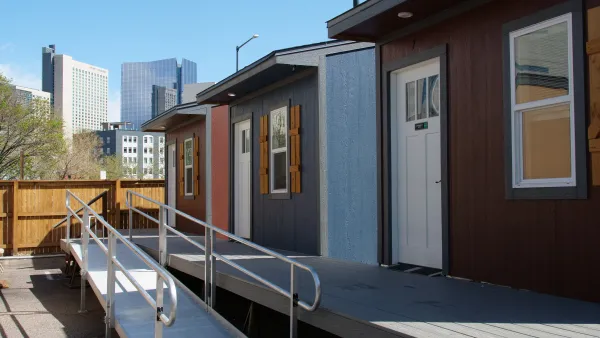
Denver is solving homelessness. Why aren't the rest of us?
Since 2023, Denver's street homeless population has decreased by 64%, proving that effective tools exist to support those in need of housing.

Chicago's streets are littered with dead birds. Will the city protect them?
Chicago sits in the route of migratory birds traveling south. Its abundance of glass buildings and bright lights make it particularly disorienting for the animals.

CA city to shut down airport, transform it into utopian park
The western side of the 200-acre park will feature a dog park, nature education center and arboretum.

NYC to vote on supporting outdoor dining, streamlining bus and bike lane creation
The city has five proposed amendments to its municipal constitution on the ballot this November.

FREE Course: Walkable City 1: Why Walkability?
After describing his path towards focusing on walkability as the essence of good planning, Jeff Speck marches through his five principal reasons for making more walkable places.
Reinventing Malls: Planning Alchemy—Turning Gray Fields Into Gold
The course focuses on the opportunities and imperatives that shape reinvention of mall sites.

City of Rosemead
Rutgers University, Edward J. Bloustein School of Planning and Public Policy
One Hundred Miles
The Architects Foundation
University of Cincinnati Online
Montrose County
Northern Illinois Transit Authority (NITA)
The Pocatello Development Authority