With wind turbines, a "daylighting" system, and charging stations for electric cars, Chicago's Greenway Self-Park bills itself as the city's first "earth friendly parking garage." John Greenfield asks, can a downtown garage truly be eco-friendly?


Built by Friedman Properties, the eleven-story, 715-space parking garage does not shy from showcasing its "green" credentials. "Its logo features a VW Bug with leaves blowing out of the tailpipes rather than noxious fumes," says Greenfield. But even though it was "constructed from 'local and sustainable' building materials" and rents spaces to Zipcar and I-GO car-sharing services, is there anything green about a facility that makes "it easy for, say, a guy from Naperville to drive solo to work every day in his Lexus, instead of taking Metra commuter rail," asks Greenfield.
Michael Burton, a sustainable transportation activist who co-founded Chicago's Critical Mass ride offers his unvarnished answer: "A green parking structure!" he
emails. "What's next, a LEED-certified strip mine? Any infrastructure
that encourages private automobile use instead of rapid transit, walking
and/or biking is inherently environmentally unfriendly. Using green
technology to market a new parking structure is simply cynical
greenwashing. A s- sandwich with honey mustard is still a s- sandwich."
Dave Lombardi, vice president with garage manager Standard Parking, offers a sound defense: "If the reasoning is we should eliminate all garages, well, that isn't
living in reality. It's easy to stand back and criticize, but Friedman
Properties has put forth the dollars to pass along the message of
environmentalism. In a perfect world all cars would be electric and
there would be no exhaust. But to get to a completely green society
there are some stops along the way."
Read the full story: Green parking or greenwashing: can a downtown garage be eco-friendly?
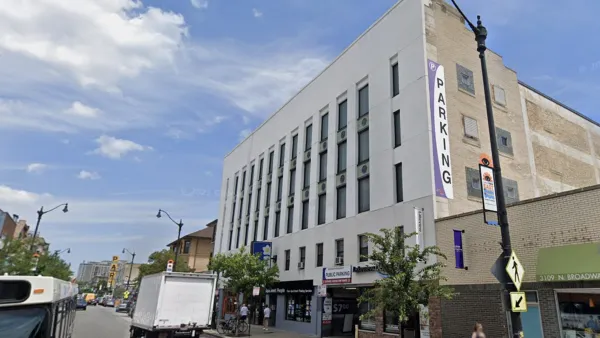
Chicago Garage Becomes 72-Unit Apartment Building
The East Lakeview project is within easy walking distance of local businesses and transit.
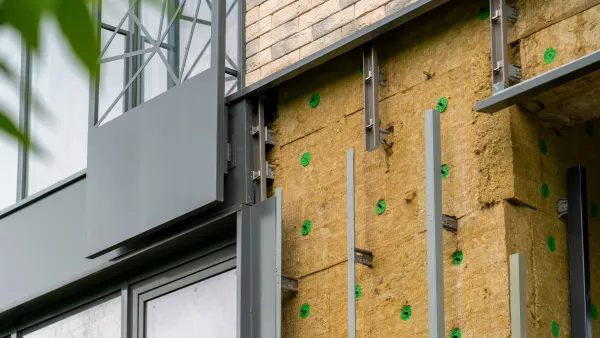
‘Passive House’ Standard Gaining Ground in Multifamily Housing
Developers in Chicago and around the country are taking notice of a design standard that encourages energy efficiency and sustainable materials.
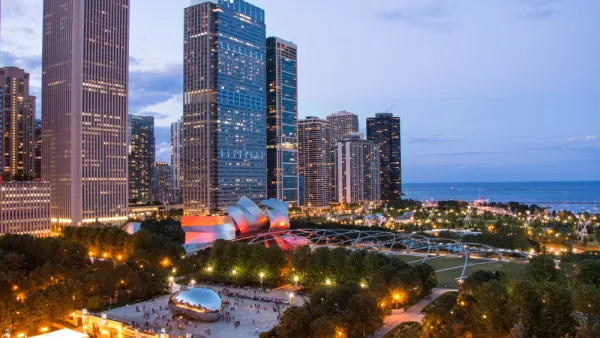
Chicago To Issue Climate Resilience Grants
Small businesses and nonprofits are eligible for a $5 million fund designed to help the city reach its emissions reduction goals.

Desperate measures: Advocates weigh draining Lake Powell to fill Colorado River
Draining the reservoir could reduce evaporation losses by a couple hundred thousand acre-feet.

Eastern Nebraska is running out of electricity
Data centers and electrification are straining eastern Nebraska’s grid, throttling economic development.

Malls are becoming the midtowns of the future
Mall and office park redevelopments are a generational opportunity to create new nodes of urbanity.

NYC breaks ground on anti-flooding infrastructure project
New York City's new system will reduce stormwater flows to local sewers by 90%.

One Kentucky town’s secret to affordable housing
The Smoketown Community Land Trust has already built seven affordable homes for community members.

Houston gains petal-shaped cooling infrastructure to make streets more ‘delightful’
The city has installed the pavilions along 15 blocks in Houston.

FREE Course: Walkable City 1: Why Walkability?
After describing his path towards focusing on walkability as the essence of good planning, Jeff Speck marches through his five principal reasons for making more walkable places.
Reinventing Malls: Planning Alchemy—Turning Gray Fields Into Gold
The course focuses on the opportunities and imperatives that shape reinvention of mall sites.

City of Rosemead
Rutgers University, Edward J. Bloustein School of Planning and Public Policy
One Hundred Miles
University of Michigan School for Environment and Sustainability (SEAS)
Hunter College, City University of New York (CUNY)
The Architects Foundation
City of Cambridge
Montrose County
The Pocatello Development Authority