A study just published in Economic Development Quarterly documents the geographical destruction on local businesses wrought by a new Walmart store, and raises questions about its long-term impact on sales tax revenues, reports Nate Berg.


The study, authored by a team led by University of Illinois Chicago economics professor Joe Persky, looked at the effect of the opening of a Walmart store on existing businesses and found a direct geographic correlation with rates of closure.
"No matter which direction you go from Walmart, there's a very high rate
of business closures in the immediate vicinity, and the further away
you get there's less and less," says Persky. According to Berg, "Persky and his colleagues found that for every mile closer to the
Walmart, 6 percent more stores closed. Close in around the store's
location, between 35 and 60 percent of stores closed."
"The research also shows that during the study period, from 2006 to 2008,
overall sales tax revenues went down in the two ZIP codes closest to or
encompassing the Walmart," notes Berg.
Granted the study only focused on the effect of one Walmart store, located in the Austin neighborhood of Chicago's West side. It also failed to "include any data on stores that opened during the 2006 to 2008 period, just those that closed."
"Walmart disputes these findings and argues that its stores are magnets for both growth and economic development," says Berg.
FULL STORY: Radiating Death: How Walmart Displaces Nearby Small Businesses

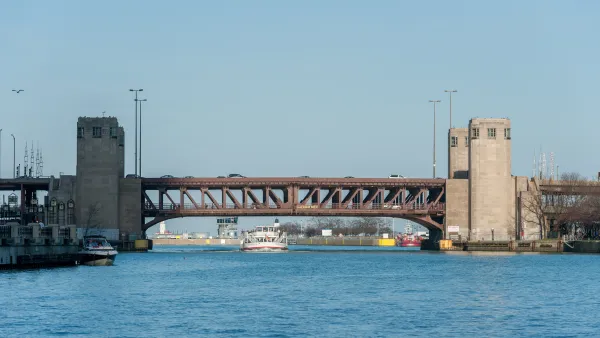
Extreme heat is paralyzing Chicago’s moveable bridges
If moveable bridges are raised during heatwaves, the metal can expand and jam the bridge's mechanisms, preventing it from lowering.
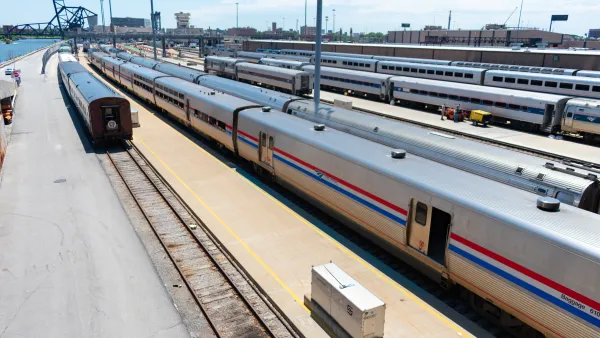
Chicago Amtrak funding makes way for new White Sox stadium
The new funding is the first step in Amtrak vacating its 14th Street rail yard, the future development site of a new baseball stadium.
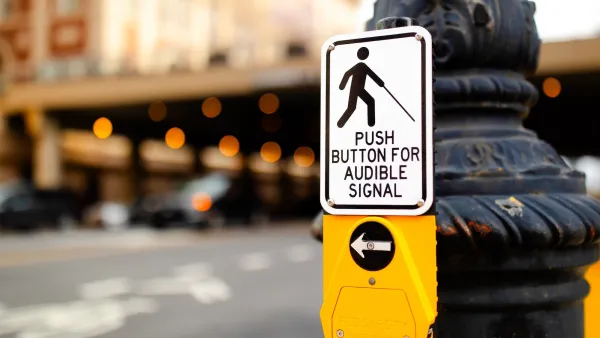
Report: Chicago surpassed its legal mandate for accessible pedestrian signals — but none passed inspections
Gaps in accessibility, placement and functionality highlight the importance of regular inspections and maintenance.

The state-sanctioned urbicide of Austin
People don’t kill cities. Freeways do.

US to reduce Colorado River water deliveries to Mexico
A new Colorado Treaty amendment reduces Mexico’s Colorado River water allocation by 250,000 acre feet.

New Jersey’s second-largest city bans standalone data centers
Jersey City will continue to allow co-location facilities, such as those meant for research institutions that store their own data.

Amtrak not solely to blame for New Jersey commuter rail's unreliability, report finds
A new study from the Garden State Initiative found that NJ Transit’s budget grew 20% across a 4 year period, but reliability declined significantly over the same period.

EPA erases limits on planet-warming pollution from power plants
Under Monday’s plan, power plants would still have some limits on how much mercury, arsenic and other contaminants they can emit.

Phoenix announces new on-demand transit service, more frequent RAPID buses
Both new services will launch in October, and are part of Phoenix's Project Effective Access Solutions for Easing Congestion.

FREE Course: Walkable City 1: Why Walkability?
After describing his path towards focusing on walkability as the essence of good planning, Jeff Speck marches through his five principal reasons for making more walkable places.
Reinventing Malls: Planning Alchemy—Turning Gray Fields Into Gold
The course focuses on the opportunities and imperatives that shape reinvention of mall sites.

Eagle County Government
Harvard University Graduate School of Design
Nashville Planning Department
The Architects Foundation
University of Cincinnati Online
The Pocatello Development Authority
The Urban Renewal Agency of the City of Pocatello
Journal of the American Planning Association