



















Although the Obama administration is still weighing whether to give the Keystone XL pipeline the necessary approvals to begin construction, the courts are already deciding that eminent domain can be used to secure access to private land.


According to Steven Mufson, "the vast majority of landowners have signed agreements with TransCanada" to allow the Keystone XL pipeline to traverse their private lands on its route from Canada to the Gulf of Mexico. However, "where necessary, the Calgary, Alberta-based company is busy going to
state courts to exercise eminent domain and lining up rights to cross
properties throughout the Great Plains," reigniting "the emotional issue of eminent domain - the taking of private property for public use - all along its proposed route," writes Mufson.
With courts already siding with the pipeline owners, approval of the project by the federal government may clear any potential barriers to the widespread application of eminent domain. And, reportedly, TransCanada is using the threat of eminent domain to pressure landowners into reaching agreement with the company.
Nevertheless, some landowners like John Harter, who view the project as driven by "greed, not need" continue to holdout.
"'Negotiating with TransCanada having right of eminent domain is like
having somebody trying to rob you at gunpoint and arguing for your
billfold when there's nothing in it,' Harter said. When a company
representative threatened to use eminent domain, he recalled, 'I said,
‘I will not be bullied into signing.' "
FULL STORY: Keystone XL pipeline is issue of property rights for some ranchers

Keystone XL Dealt a Setback in Court—But Not from the Usual Suspects
The lawsuit comes from three private landowners who successfully sued to prevent their properties from being seized so that TransCanada can lay their pipeline—turns out the state Legislature was in too much of a rush in 2012 to approve the project.

Trump Signs Two Executive Orders Limiting States' Authority Over Energy Pipelines
The Trump administration's "energy dominance" agenda depends, in part, on growing the energy distribution network, namely pipelines, rail facilities, and ports. However, states can use the Clean Water Act to block pipelines and coal terminals.
Tar Sands Oil Just Lost Another Outlet, For Now
It was viewed as a "David vs. Goliath" pipeline fight: the city of South Portland, Maine against a pipeline company backed by Big Oil. The city had passed a zoning ordinance preventing the export of oil which would have impacted public health.
Planetizen Federal Action Tracker
A weekly monitor of how Trump’s orders and actions are impacting planners and planning in America.
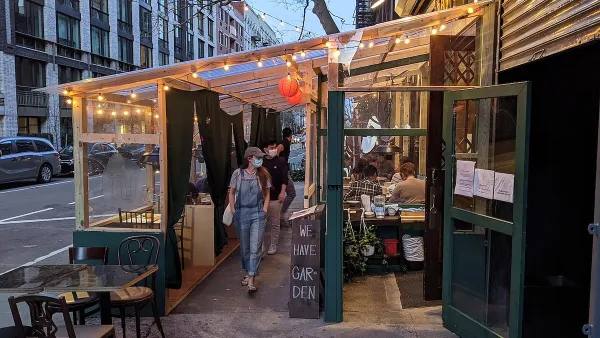
Restaurant Patios Were a Pandemic Win — Why Were They so Hard to Keep?
Social distancing requirements and changes in travel patterns prompted cities to pilot new uses for street and sidewalk space. Then it got complicated.
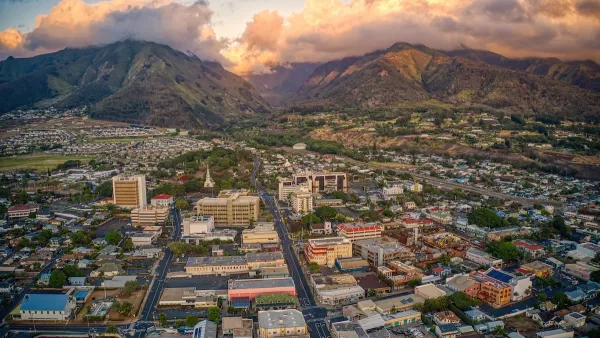
Maui's Vacation Rental Debate Turns Ugly
Verbal attacks, misinformation campaigns and fistfights plague a high-stakes debate to convert thousands of vacation rentals into long-term housing.

In California Battle of Housing vs. Environment, Housing Just Won
A new state law significantly limits the power of CEQA, an environmental review law that served as a powerful tool for blocking new development.

Boulder Eliminates Parking Minimums Citywide
Officials estimate the cost of building a single underground parking space at up to $100,000.

Orange County, Florida Adopts Largest US “Sprawl Repair” Code
The ‘Orange Code’ seeks to rectify decades of sprawl-inducing, car-oriented development.

Urban Design for Planners 1: Software Tools
This six-course series explores essential urban design concepts using open source software and equips planners with the tools they need to participate fully in the urban design process.
Planning for Universal Design
Learn the tools for implementing Universal Design in planning regulations.

Heyer Gruel & Associates PA
JM Goldson LLC
Custer County Colorado
City of Camden Redevelopment Agency
City of Astoria
Transportation Research & Education Center (TREC) at Portland State University
Jefferson Parish Government
Camden Redevelopment Agency
City of Claremont