After decades of planning and development of its urban rail networks, will the American West change its image from car cornucopia to transit paradise?


After many decades (and many billions of dollars spent), urban rail networks in American West Coast cities are finally coming-of-age. San Lubell and Ariel Rosenstock, of the Architect's Newspaper, report, "[n]ew lines, stations, infrastructure, and transit-oriented developments are popping up and in planning stages in and around Seattle, Portland, San Francisco, Sacramento, Los Angeles and San Diego. And if you count West Coast–adjacent cities such as Phoenix and Denver, there are even more."
Not only are cities seeing increases in the size of their transit infrastructure, existing transit lines are seeing increased ridership numbers. Lubell and Rosenstock find, "[a]ccording to the American Public Transportation Association, from 1995 through 2010, public transportation ridership increased by 31 percent...perhaps the most compelling reason for the expansion is the crippling impact of traffic in the region and in the country, and its accompanying demons-sprawl, pollution, and climate change."
But are West Coast cities the next transit utopias? Don't bet on it just yet. "Besides pockets of underuse, rail and light rail are still far from reaching the tipping point on the West Coast," say Lubell and Rosenstock, "In LA, for example, 80 percent of the city's residents still don't live within convenient distance to rail [and] slower returns from Measure R's tax-related funding have forced the completion of LA's Purple Line subway extension beyond 2030."
Still, as it transforms municipal land use patterns, rail's return to the West is worth paying attention to. Read the details of each city's progress in the Architect's Newspaper article.
Read the full story: Feature> On The Right Track

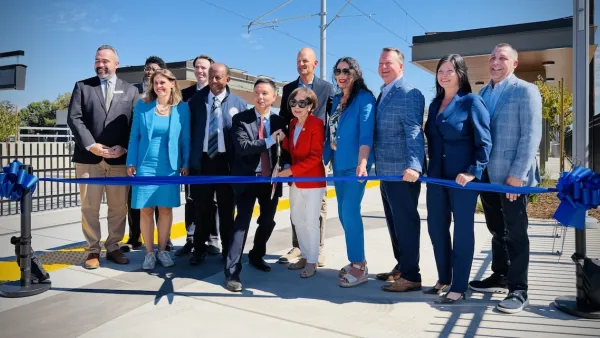
After decades of planning, Sacramento gains new light rail station
Trains will arrive every 15 minutes during peak hours and every 30 minutes during non-peak hours.
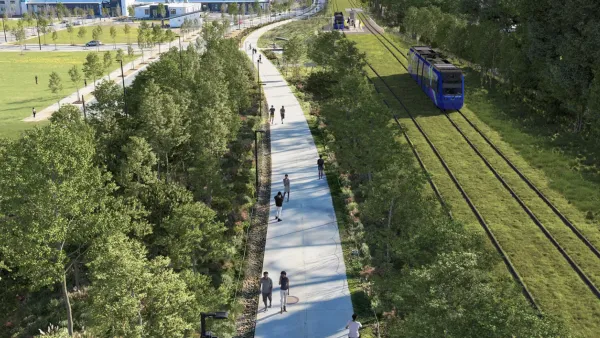
Atlanta City Council unanimously backs $3.5 billion Beltline light rail project
The resolution was drafted after Atlanta Mayor Andre Dickens pulled support for the Atlanta Streetcar extension last year.
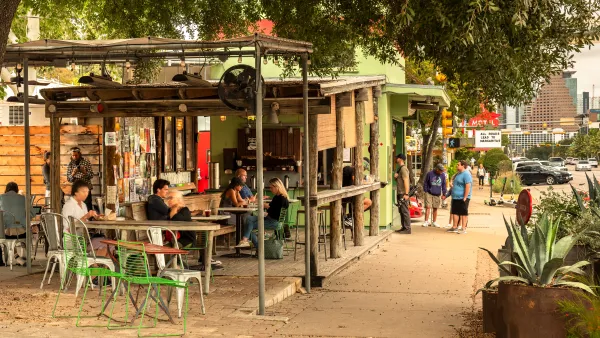
Large projects near Austin's light rail must include affordable housing
Elsewhere in the city, developers can pay into a city bank account for affordable housing rather than providing the required affordable units within their projects.

Planetizen Federal Action Tracker
A weekly monitor of how Trump’s orders and actions are impacting planners and planning in America.

‘Going backwards:’ Baltimore mayor, students rally against state's transit funding plan
Maryland's proposed six-year plan provides no funding for Baltimore’s BMORE bus program and reduces its road maintenance funding.

Detroit to transform waterfront with $2.2 billion investment
Developers will convert about 18 acres of unused parking lot space into civic spaces.

U.S.-Iran war may have ‘devastating’ impact on cost to warm homes
Vermont and Maine residents may see a 76% increase in the cost of warming their homes this winter.

Senate bill would ‘overhaul’ environmental permitting laws
Under the proposed act, government agencies would also not be able to suspend or rescind permits after granting them.

Exemption applications for NYC’s pied-à-terre tax see 55% success rate
The city sent nearly 40% of its initial pied-à-terre tax warnings erroneously.

FREE Course: Walkable City 1: Why Walkability?
After describing his path towards focusing on walkability as the essence of good planning, Jeff Speck marches through his five principal reasons for making more walkable places.
Reinventing Malls: Planning Alchemy—Turning Gray Fields Into Gold
The course focuses on the opportunities and imperatives that shape reinvention of mall sites.

One Hundred Miles
County of Mendocino
planning NEXT
The Architects Foundation
University of Cincinnati Online
Montrose County
Northern Illinois Transit Authority (NITA)
The Pocatello Development Authority