Whenever a term is overused, it's up for snark attack. Ben Brown seeks to inoculate himself and others against that tendency, by describing why community health is an admirable goal and how it's connected to economic development (and beer).


Brown muses on what the arrival of a craft beer brewer means to Asheville's redeveloping River Arts District, and finds himself responding to a recent diatribe attacking, "everything remotely connected with "vibrancy" as a goal for urban planning."
"I began to think of taking beer production and consumption to the next level, as an indicator, a quantifiable marker of the 'creative class' economy Richard Florida talks about," writes Brown. "Then I had a snark attack, a reoccurrence of an affliction developed over 20 years as a newspaper reporter. It presents this way: You come upon an idea pushed with maybe a little too much idealistic enthusiasm, especially by folks who are easy to make fun of. And the impulse to ridicule is just too overwhelming to resist."
Brown then goes on to describe some people's reaction to the overuse of the word "vibrancy" in urban planning and community life. While it may come across as phony to some, with farmers markets, craft beer breweries, art festivals and the like entertaining the creative class, Brown looks beyond the semantics, to the meat of the debate.
"We have a tendency to mistake the sizzle for the steak. If it has meaning at all, 'vibrancy,' taken together with a bunch of other indicators, implies community health, just as it might imply an individual's health. But it's more of an indicator than a driver. More effect, than cause. So imagining that a few street festivals and an art show will work magic in the absence of harder, more complicated work is naïve – and near criminal if chasing vibrancy diverted millions of dollars in cities from more productive, community-enhancing projects. But it doesn't."
"The places out front in the vibrancy sweepstakes tend to be those that discovered a healthy cultural vitality working on smaller scales, figured out links between that vitality and the quality-of-life components that citizens and companies value, then funneled a few extra bucks in that direction. Which gets me back to Asheville and beer..."
Here's hoping in the next blog, he gets around to that Urban Beer Index!
Thanks to Hazel Borys
FULL STORY: In Defense of ‘Vibrancy’ (And beer)

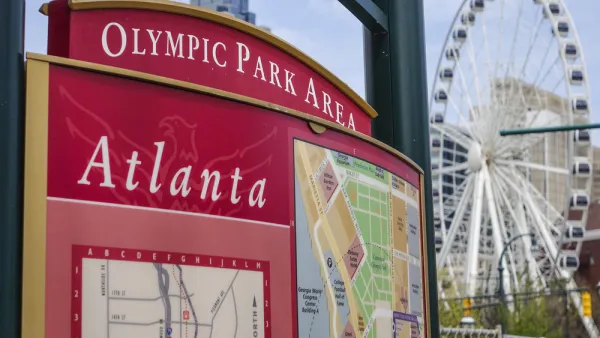
Atlanta to Create New Downtown Sign District
Not everybody has the same definition of vibrant, but Atlanta recently chose the way of Times Square and the Sunset Strip.
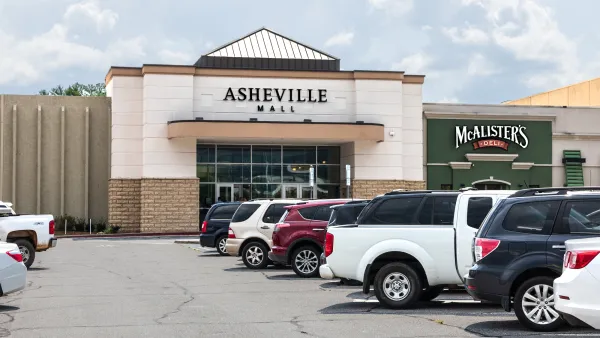
Asheville reconsiders parking minimums as surface parking eats up over a third of downtown real estate
Housing advocates say parking requirements are unnecessary and induce sprawl.

Asheville bus plan could increase frequency at the expense of lesser-used routes
The city plans to increase service on its most-used routes by pulling drivers from less popular lines.

The state-sanctioned urbicide of Austin
People don’t kill cities. Freeways do.

US to reduce Colorado River water deliveries to Mexico
A new Colorado Treaty amendment reduces Mexico’s Colorado River water allocation by 250,000 acre feet.

New Jersey’s second-largest city bans standalone data centers
Jersey City will continue to allow co-location facilities, such as those meant for research institutions that store their own data.

Amtrak not solely to blame for New Jersey commuter rail's unreliability, report finds
A new study from the Garden State Initiative found that NJ Transit’s budget grew 20% across a 4 year period, but reliability declined significantly over the same period.

EPA erases limits on planet-warming pollution from power plants
Under Monday’s plan, power plants would still have some limits on how much mercury, arsenic and other contaminants they can emit.

Phoenix announces new on-demand transit service, more frequent RAPID buses
Both new services will launch in October, and are part of Phoenix's Project Effective Access Solutions for Easing Congestion.

FREE Course: Walkable City 1: Why Walkability?
After describing his path towards focusing on walkability as the essence of good planning, Jeff Speck marches through his five principal reasons for making more walkable places.
Reinventing Malls: Planning Alchemy—Turning Gray Fields Into Gold
The course focuses on the opportunities and imperatives that shape reinvention of mall sites.

Eagle County Government
Harvard University Graduate School of Design
Nashville Planning Department
The Architects Foundation
University of Cincinnati Online
The Pocatello Development Authority
The Urban Renewal Agency of the City of Pocatello
Journal of the American Planning Association