From Portland to Minneapolis, cities across the America have been trying to catch up to Copenhagen's world-renowned bicycling infrastructure. With the recent opening of a bike superhighway, the Danish capital is leaving other cities in the dust.


The opening in April of the 11-mile-long cycle superhighway connecting Copenhagen to its western suburb of Albertslund, is the first of 26 routes intended to encourage long-distance bicycle commuting in the region around the Danish capital, reports Sally McGrane. In a city where half of the residents already bike to work or to school every day, the construction of the network of superhighways targets an area ripe for growth in bicycle use - suburban commuters, "most of whom use cars or public transportation to reach the city."
"While there is a good existing network of
bicycle pathways around Copenhagen," notes McGrane, "standards across municipalities can
be inconsistent, with some stretches having inadequate pavement,
lighting or winter maintenance, as well as unsafe intersections and
gaps." Hence, "For the superhighway project, Copenhagen and 21 local governments teamed
up to ensure that there were contiguous, standardized bike routes into
the capital across distances of up to 14 miles."
Although environmental and health benefits are stressed as key advantages of traveling by bike, "[Danish] commuters choose
bicycles because they are the fastest and most convenient transportation
option," writes McGrane. "'It's not because the Danes are more environmentally friendly,'
said Gil Penalosa, executive director of 8-80 Cities, a Canadian
organization that works to make cities healthier. 'It's not because they
eat something different at breakfast.'"
Read the full story: Commuters Pedal to Work on Their Very Own Superhighway

290 Miles of Bike Superhighways to Connect Copenhagen and its Suburbs
The first bike super highway connecting Copenhagen and one of its suburbs was completed in 2012. That first, 11-mile leg only hints of the ambitious plans for the network.
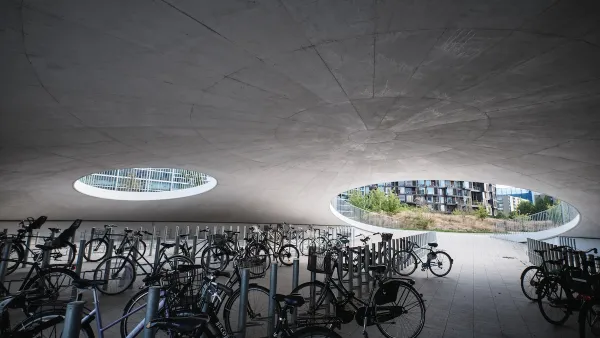
How Copenhagen Became a ‘Sponge City’
The Danish capital is implementing a massive, multi-pronged strategy to build resilience against flooding and shore up water supplies during drought periods.
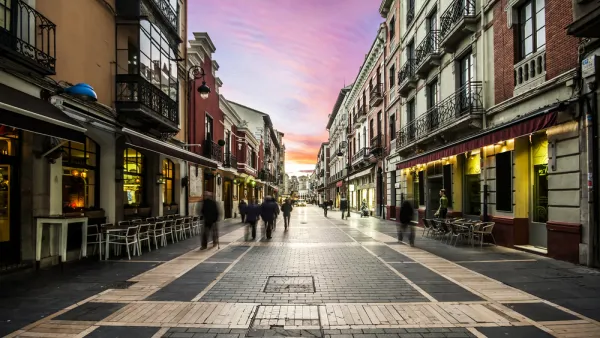
Envisioning the 'Soft City'
Density and diversity—where boundaries between spaces and uses are lessened—create more vibrant, livable places and more functional cities.

Planetizen Federal Action Tracker
A weekly monitor of how Trump’s orders and actions are impacting planners and planning in America.

The state-sanctioned urbicide of Austin
People don’t kill cities. Freeways do.

Colorado’s Largest Data Center Could Rise Next to Homes — Without a Public Hearing
The proposed campus would consume 11 times the power of Denver International Airport; as it has across the country, opposition mounts.

Judges permit Denver to divert 77,000 acre feet from the Colorado River for reservoir expansion
Overuse and climate change have caused the Colorado River’s water levels to plummet.

Amtrak, CN end decades-long dispute with eight-year agreement
The new operating agreement establishes an updated framework for the companies to work together, including processes to resolve disputes.

Raised interest rates may kill financially vulnerable construction projects
The chief economist at ConstructConnect warns that if construction project owners are negatively impacted by the raised rates, it could result in delayed payments to contractors.

FREE Course: Walkable City 1: Why Walkability?
After describing his path towards focusing on walkability as the essence of good planning, Jeff Speck marches through his five principal reasons for making more walkable places.
Reinventing Malls: Planning Alchemy—Turning Gray Fields Into Gold
The course focuses on the opportunities and imperatives that shape reinvention of mall sites.

KFH Group Inc.
Greater Baltimore Committee
Eagle County Government
The Architects Foundation
University of Cincinnati Online
The Pocatello Development Authority
The Urban Renewal Agency of the City of Pocatello