Even smaller than Mayor Bloomberg's 'micro-apartment' proposal for Manhattan, Berkeley developer Patrick Kennedy has his 'SmartSpace' model, based on his experience living in an Airstream trailer, headed to the Board of Supervisors on July 24.


Carolyn Said writes of an innovative "affordable-by-design" plan to address San Francisco's apartment shortage (vacancy rate near zero) and sky-high prices. Kennedy's building is now in the entitlement process. "It's designed for car-free living; the only parking will be for bikes, with a City CarShare spot outside."
"The goal is to provide flexibility to affordable and market-rate developers to produce all sorts of housing," said Supervisor Scott Wiener, whose proposal to reduce apartment sizes will be considered by the Board of Supervisors on July 24. "The fact is 41 percent of San Franciscans live alone. There are a lot of people who don't need or can't afford a lot of space."
"The new minimum would be 150 square feet plus kitchen, bathroom and closet - 220 square feet in total, about the size of a one-car garage. The current minimum with all rooms included is 290 square feet."
By comparison, Manhattan's Kips Bay apartment proposal would be no less than 275 sq. ft.
Smaller but more profitable than conventional studio apartments.
"The current average rent for a San Francisco studio apartment is $2,075 a month, according to real estate service RealFacts. Those studios average 493 square feet, making the per-square foot price $4.21. Kennedy's proposed units, at 220 square feet, would rent for $5.91 to $6.82 per foot - a big premium."
The San Francisco Chronicle editorialized in support of the micro-apartments. "The next frontier could be super-small apartments for singles or very well-adjusted couples looking to live inside an Ikea catalog. San Francisco needs to experiment with unconventional housing such as the mini apartment. It's worth seeing if buyers and renters are willing to do the same."
Yet according to San Francisco columnist C.W. Nevius, they already are. "In 2008, an innovative condo building called Cubix opened on Harrison Street, and although the hoots were just as loud - and it experienced some rocky financial times - it is now fully occupied with tenants who say they are neither dissatisfied nor claustrophobic." Unlike the Ninth & Mission streets proposal, Cubix on Harrison St. is for-sale condominiums.
One Chronicle reader was not pleased with the proposal, writing, "Working in a cubicle all day and living in a cubicle apartment does not seem emotionally healthy."
Contributor's Note: See 10-slide photo array above article.
Thanks to Kevin Turner
Read the full story: Micro-apartments next for S.F.?
Modular Housing for Homeless in San Francisco Hits Roadblocks
Lego-type housing construction has attracted the attention of two separate developers as an efficient means to provide housing for the city's large homeless population but has met objections from labor unions and the Mayor's Office.
Micro-Apartments Proposal Passes San Francisco Board of Supervisors
Don't call these modern apartments SROs - they go by 'micro-apartments', and they just received a significant approval, 375 of them, that is. One more step awaits: Mayor Ed Lee must give his blessing, and he appears rather non-committal.
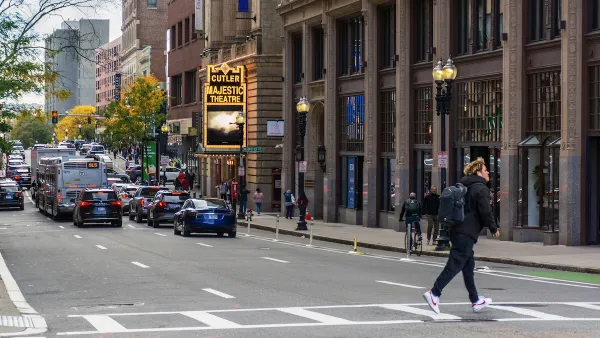
As development costs rise, Boston moves to lessen affordable housing requirements
The Boston Zoning Commission and the City Council still need to approve Boston Mayor Michelle Wu’s proposed changes

Planetizen Federal Action Tracker
A weekly monitor of how Trump’s orders and actions are impacting planners and planning in America.

Washington state to charge fee to drivers with fuel-efficient cars
Revenue from the fee will go towards supporting the state’s highways.

Illinois considers spending $1 billion in taxpayer money on data center
A quantum computing campus and data center are currently under construction in Chicago.

People Mover delayed again, LAX and contractor trade barbs
The automated train was last slated to open in January 2027.

Trump to blast ‘hydrocarbon highway’ through ‘world’s longest art gallery’
Environmental and historic preservation groups are suing to stop the project.

25 states cast bids to be the home of U.S. Space Academy
The academy will train scientists, officers and astronauts for the U.S. Space Force.

FREE Course: Walkable City 1: Why Walkability?
After describing his path towards focusing on walkability as the essence of good planning, Jeff Speck marches through his five principal reasons for making more walkable places.
Reinventing Malls: Planning Alchemy—Turning Gray Fields Into Gold
The course focuses on the opportunities and imperatives that shape reinvention of mall sites.

City of Charlotte
City of Rosemead
Rutgers University, Edward J. Bloustein School of Planning and Public Policy
University of Michigan School for Environment and Sustainability (SEAS)
Hunter College, City University of New York (CUNY)
The Architects Foundation
University District Partnership