



















Leda Marritz notes that renderings of proposed landscape improvement projects often feature beautiful mature trees intended to spruce up streetscapes. But the associated plans regularly overlook a crucial element: room for the trees to grow.


Adding trees to urban landscapes can beautify an area and help convert carbon dioxide into breathable oxygen. But, simply planting more and more young trees is not the most efficient way get good results. Leda Marritz explains that trees need both time and room to grow.
"[M]ost urban trees are planted in small openings where they receive a mere fraction of the soil needed to survive. Unless they can access additional soil or water nearby, these trees usually don't survive to maturity. As a result, they are replaced on a short cycle [PDF], an avoidable recurring expense and - when you consider that a tree with a 30-inch diameter removes 70 times more air pollution annually than one with a 3-inch diameter - a very serious missed opportunity. And that's just one measure of a tree's contribution. They also help with stormwater interception, urban heat island effect reduction, crime reduction."
Marritz's simple two-step solution is for cities to adopt "minimum soil volumes for street trees" and then put "the right tree in the right place."
FULL STORY: Planting Trees Is Like Not Eating A Marshmallow

Providing a Healthy Foundation for Our Arboreal Aides
As new studies show the fundamental connection between trees and human health, cities are recognizing the essential elements in cultivating thriving urban canopies. And they're enacting policies to ensure their protection and growth.

Climate Gardening: Cultivating Resilient Landscapes in Los Angeles
TreePeople’s 4th Annual Urban Soil Symposium explored how climate gardening, soil health, and collaborative land management strategies can enhance urban resilience in the face of climate change.
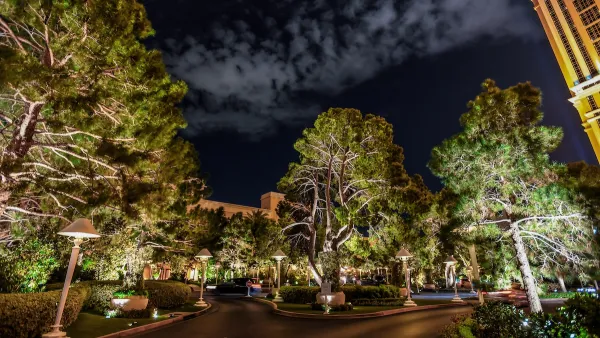
Urban Trees Have Bigger Impact in Hot, Dry Cities
The cooling effect of robust urban tree canopies is more pronounced in hotter, drier cities like Phoenix and Las Vegas.

Planetizen Federal Action Tracker
A weekly monitor of how Trump’s orders and actions are impacting planners and planning in America.
Chicago’s Ghost Rails
Just beneath the surface of the modern city lie the remnants of its expansive early 20th-century streetcar system.
Amtrak Cutting Jobs, Funding to High-Speed Rail
The agency plans to cut 10 percent of its workforce and has confirmed it will not fund new high-speed rail projects.

Ohio Forces Data Centers to Prepay for Power
Utilities are calling on states to hold data center operators responsible for new energy demands to prevent leaving consumers on the hook for their bills.

MARTA CEO Steps Down Amid Citizenship Concerns
MARTA’s board announced Thursday that its chief, who is from Canada, is resigning due to questions about his immigration status.

Silicon Valley ‘Bike Superhighway’ Awarded $14M State Grant
A Caltrans grant brings the 10-mile Central Bikeway project connecting Santa Clara and East San Jose closer to fruition.

Urban Design for Planners 1: Software Tools
This six-course series explores essential urban design concepts using open source software and equips planners with the tools they need to participate fully in the urban design process.
Planning for Universal Design
Learn the tools for implementing Universal Design in planning regulations.

Caltrans
City of Fort Worth
Mpact (founded as Rail~Volution)
City of Camden Redevelopment Agency
City of Astoria
City of Portland
City of Laramie