






















John Handley looks at the popularity of New Urbanism over the past two decades and asks whether traditional neighborhood design will continue to flourish in the 21st century, as the housing market rebounds.


Handley survey's the early successes of new urbanism, including Seaside and the more than 600 projects nationwide that have been influenced by its principles, and the recent slowdown in such projects as the economy ground to a halt.
Despite the recent dry spell, Elizabeth Plater-Zyberk is confident in the movement's staying power: "The new urbanism product has maintained its value, and going forward there will absolutely be a resurgence. New urbanism is still a model for the future. It's exactly what the boomers want."
While John McIlwain, senior fellow for housing at the Urban Land Institute, agrees with the premise that new urbanism will continue to influence new housing development, he sees a shift in its product types and characteristic design features, as the market moves towards more dense development.
"Going forward, there will be changes in new urbanism, and it will continue to be part of master-planned communities. Some core elements will remain, but characteristics like front porches may become marginal," McIlwain said. "Expect future new urbanism projects to include more rental, high-rises and open spaces, but fewer single-family homes."
FULL STORY: New urbanism: Old-fashioned design in for long run

The Health of Cities Depends on Place-Based Development More than Big Projects
Cities take a physical form that either supports or is stressful to people outside of a moving vehicle or building. Witold Rybczynski, in his critique of New Urbanism, forgets that lesson.
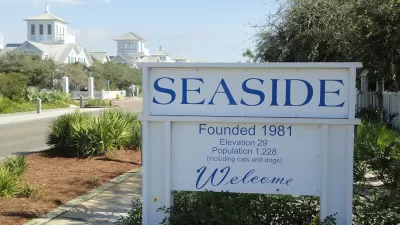
Book Review: Visions of Seaside
A new anthology tells the story of Seaside like we've never heard it before–on its own terms.
The Unbuilt Origins of Seaside
Seaside, Florida is well known as the proving grounds for new urbanism, the place where Andrés Duany and Elizabeth Plater-Zyberk made a development into a town. Dhiru Thadani documents the early experiments and unbuilt designs in a new book.

Planetizen Federal Action Tracker
A weekly monitor of how Trump’s orders and actions are impacting planners and planning in America.
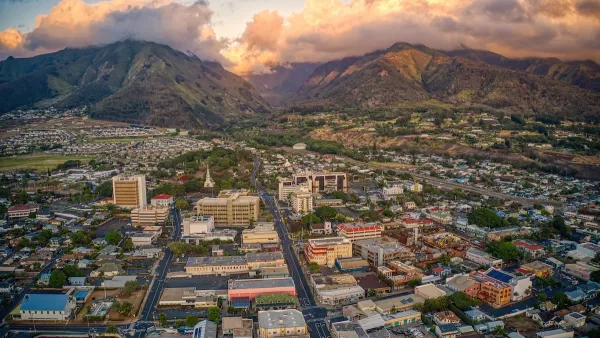
Maui's Vacation Rental Debate Turns Ugly
Verbal attacks, misinformation campaigns and fistfights plague a high-stakes debate to convert thousands of vacation rentals into long-term housing.
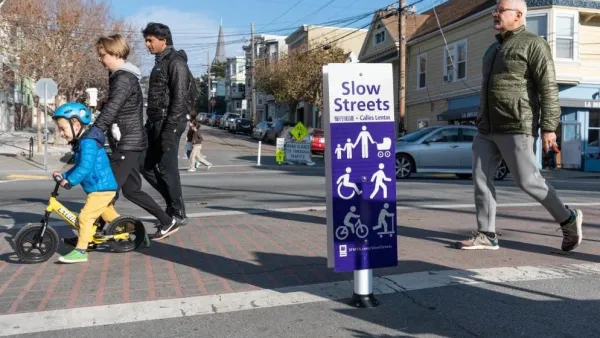
San Francisco Suspends Traffic Calming Amidst Record Deaths
Citing “a challenging fiscal landscape,” the city will cease the program on the heels of 42 traffic deaths, including 24 pedestrians.

Amtrak Rolls Out New Orleans to Alabama “Mardi Gras” Train
The new service will operate morning and evening departures between Mobile and New Orleans.

The Subversive Car-Free Guide to Trump's Great American Road Trip
Car-free ways to access Chicagoland’s best tourist attractions.

San Antonio and Austin are Fusing Into one Massive Megaregion
The region spanning the two central Texas cities is growing fast, posing challenges for local infrastructure and water supplies.

Urban Design for Planners 1: Software Tools
This six-course series explores essential urban design concepts using open source software and equips planners with the tools they need to participate fully in the urban design process.
Planning for Universal Design
Learn the tools for implementing Universal Design in planning regulations.

Heyer Gruel & Associates PA
JM Goldson LLC
Custer County Colorado
City of Camden Redevelopment Agency
City of Astoria
Transportation Research & Education Center (TREC) at Portland State University
Jefferson Parish Government
Camden Redevelopment Agency
City of Claremont