Michael Sallah reports on the financial meltdown surrounding Donald Trump's completed but empty $200 million International Hotel & Tower on Fort Lauderdale Beach.


Sallah recounts the process by which Trump's dream of "a luxury high-rise shaped like an ocean liner and bearing his name that would turn Fort Lauderdale Beach into an international draw" has turned into a "hulking, empty tower casting a shadow over one of Florida's most popular beachfronts" and a court battle for duped investors.
Was the project a victim of a historically poor real estate market or more nefarious reasons? All of the above, it sounds like from Sallah's report featuring project delays, a market plunge, shady deals with a onetime mob associate, and the eventual withdraw of Trump's name from the project mere months before it was scheduled to open.
"Three years after the tower was to open its doors, investors are demanding millions in down payments on at least 60 units - priced between $500,000 and $3 million - accusing the developers of massive fraud."
Read the full story: Trump’s tower of trouble: anatomy of a financial fiasco
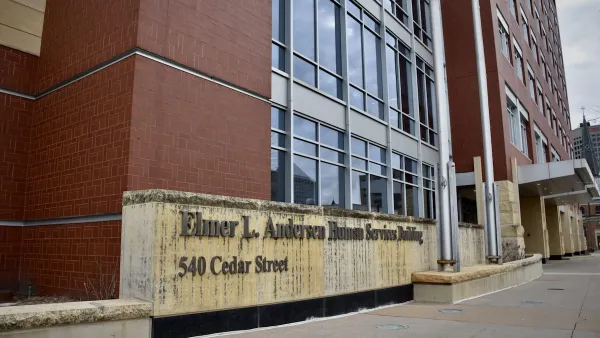
Minnesota seeks to replace fraud-ridden Housing Stabilization Services with new program
Federal prosecutors have charged over a dozen people in fraud cases involving at least $26 million.
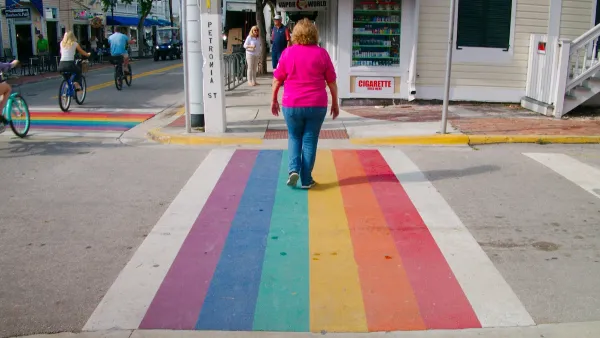
The Florida Cities Risking Everything to Save Rainbow Sidewalks
Gov. DeSantis has threatened to withhold state transportation funding and remove local leaders who don’t comply with an order to remove painted crosswalks.

Planetizen Federal Action Tracker
A weekly monitor of how Trump’s orders and actions are impacting planners and planning in America.

Desperate measures: Advocates weigh draining Lake Powell to fill Colorado River
Draining the reservoir could reduce evaporation losses by a couple hundred thousand acre-feet.

Eastern Nebraska is running out of electricity
Data centers and electrification are straining eastern Nebraska’s grid, throttling economic development.

Malls are becoming the midtowns of the future
Mall and office park redevelopments are a generational opportunity to create new nodes of urbanity.

NYC breaks ground on anti-flooding infrastructure project
New York City's new system will reduce stormwater flows to local sewers by 90%.

One Kentucky town’s secret to affordable housing
The Smoketown Community Land Trust has already built seven affordable homes for community members.

Houston gains petal-shaped cooling infrastructure to make streets more ‘delightful’
The city has installed the pavilions along 15 blocks in Houston.

FREE Course: Walkable City 1: Why Walkability?
After describing his path towards focusing on walkability as the essence of good planning, Jeff Speck marches through his five principal reasons for making more walkable places.
Reinventing Malls: Planning Alchemy—Turning Gray Fields Into Gold
The course focuses on the opportunities and imperatives that shape reinvention of mall sites.

City of Rosemead
Rutgers University, Edward J. Bloustein School of Planning and Public Policy
One Hundred Miles
University of Michigan School for Environment and Sustainability (SEAS)
Hunter College, City University of New York (CUNY)
The Architects Foundation
City of Cambridge
Montrose County
The Pocatello Development Authority