Web Urbanist has published a fun post featuring examples of unconventional urban furniture. If you're tired of the same old boring bus benches and park picnic tables, these interactive, comfortable, and visually interesting pieces should inspire you.


Including such delightful examples as a rocking bench/planter called the "CHITCHAT", by Teun Fleskens, and a reclining sky gazing saucer called the "Skystation", by Peter Newman, "[t]hese 14 chairs, benches, loungers, tables and more often double as art objects, with designs that consider a wide range of needs."
We're particularly fond of the playful "Loop Bench" by Jeppe Hein, that looks like a mini roller coaster, and the elegant "Urban Adapter Bench," "a modern urban bench [that] considers the varying needs of different people who might use it. The designers, Rocker Lange, use a computer program that takes data about the intended site and creates a form that offers multiple seating solutions including a flat bench, a sloped area for lounging and a seat with a back."
Read the full story: City Seats: 14 Examples of Unconventional Urban Furniture
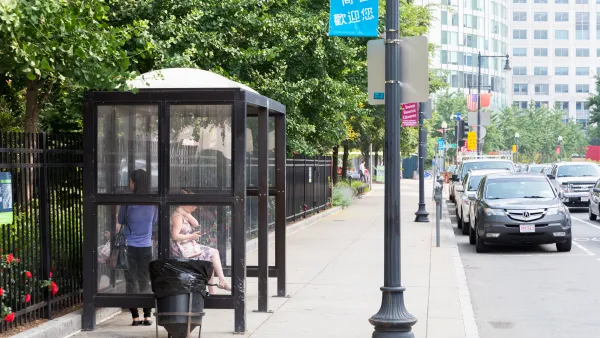
Boston requests proposals for new street furniture program
The city is looking to expand its network of bus shelters, wayfinding kiosks and other infrastructure.
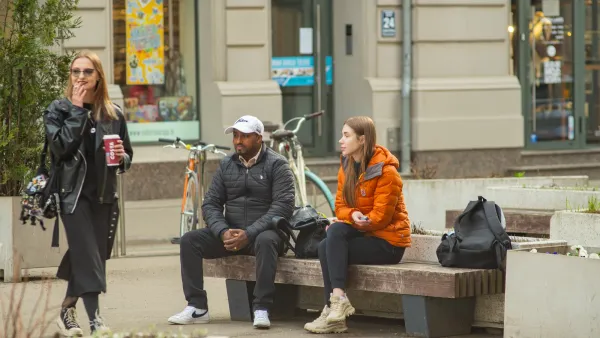
Where have all the public benches gone?
Public seating can be an indicator of broader trends in who gets to use public space — and how.
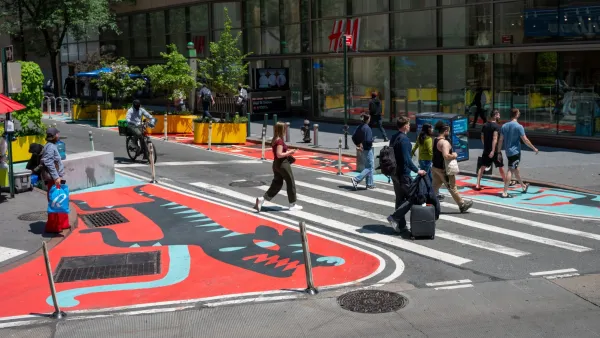
See Downtown Brooklyn’s Dramatic Complete Streets Transformation
A streetscape redesign spearheaded by the Downtown Brooklyn Partnership has quickly made many of Brooklyn’s streets unrecognizable.

Desperate measures: Advocates weigh draining Lake Powell to fill Colorado River
Draining the reservoir could reduce evaporation losses by a couple hundred thousand acre-feet.

Eastern Nebraska is running out of electricity
Data centers and electrification are straining eastern Nebraska’s grid, throttling economic development.

Malls are becoming the midtowns of the future
Mall and office park redevelopments are a generational opportunity to create new nodes of urbanity.

NYC breaks ground on anti-flooding infrastructure project
New York City's new system will reduce stormwater flows to local sewers by 90%.

One Kentucky town’s secret to affordable housing
The Smoketown Community Land Trust has already built seven affordable homes for community members.

Houston gains petal-shaped cooling infrastructure to make streets more ‘delightful’
The city has installed the pavilions along 15 blocks in Houston.

FREE Course: Walkable City 1: Why Walkability?
After describing his path towards focusing on walkability as the essence of good planning, Jeff Speck marches through his five principal reasons for making more walkable places.
Reinventing Malls: Planning Alchemy—Turning Gray Fields Into Gold
The course focuses on the opportunities and imperatives that shape reinvention of mall sites.

City of Rosemead
Rutgers University, Edward J. Bloustein School of Planning and Public Policy
One Hundred Miles
University of Michigan School for Environment and Sustainability (SEAS)
Hunter College, City University of New York (CUNY)
The Architects Foundation
City of Cambridge
Montrose County
The Pocatello Development Authority