New York has created new zoning rules, now officially under review for approval, that combat the current zoning's sometimes impeding effect on green building.


"'This is the most comprehensive citywide initiative dealing with energy efficiency and green building in the U.S.,' said Amanda Burden, chair of the City Planning Commission. 'This is about being a greener city, providing cleaner air and water as well as saving money on utility bills.'
The city's roughly one million buildings cost $15 billion a year to power and heat and account for 80% of the city's greenhouse gas emissions. The changes will promote the installation of solar panels on rooftops, which will reduce electrical bills and carbon emissions.
Additionally, storm-water detention systems and skylights can be installed anywhere below the parapet on rooftops, regardless of building height. Wind turbines would also be allowed to rise up to 55 feet above, or up to half the height of the building, on the rooftop of commercial and industrial buildings taller than 100 feet."
Read the full story: NYC launches push to enter green zone
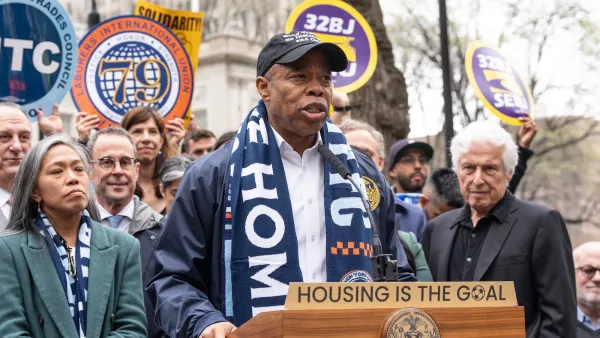
What Actually Got Built Under Eric Adams’ ‘Pro-Housing’ Administration
The outgoing mayor claims credit for hundreds of thousands of new homes. The truth is more complicated.
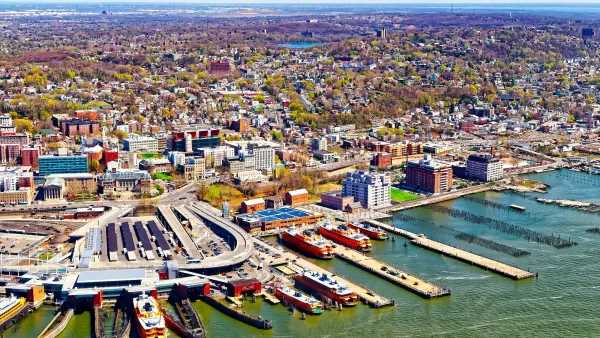
Staten Island Resists ‘City of Yes’ Zoning Reforms
One year after New York City approved major zoning changes, some residents continue to fight increased density.
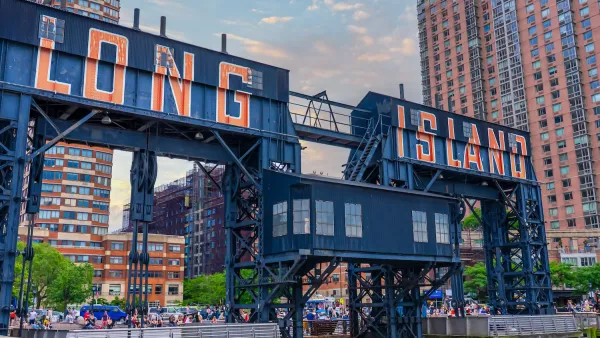
Upzoning Could Bring 15K New Homes to Queens
A rezoning plan for Long Island City opens up prime waterfront land for residential development, but some critics say new housing could be prone to flooding and should be built farther inland.

Planetizen Federal Action Tracker
A weekly monitor of how Trump’s orders and actions are impacting planners and planning in America.

Eastern Nebraska is running out of electricity
Data centers and electrification are straining eastern Nebraska’s grid, throttling economic development.

Study reveals best places in the U.S. for cycling, walking
New research from Streetlight Data examines bicycle and pedestrian miles per capita in the 100 largest U.S. cities by population.

Officials look to alter BART extension as price goes through the roof
Tariffs and the war with Iran are behind the rising cost.

To power data centers, Utah company may build hundreds of nuclear reactors on state land
In its permit application, Valar asked for the county to confirm that changes within its outlined plan would still be covered by the permit.

San Antonio is using environmental review to stall ICE detention center
San Antonio sued last month to pause work on the new detention center until the federal government studied its effect on the surrounding area.

FREE Course: Walkable City 1: Why Walkability?
After describing his path towards focusing on walkability as the essence of good planning, Jeff Speck marches through his five principal reasons for making more walkable places.
Reinventing Malls: Planning Alchemy—Turning Gray Fields Into Gold
The course focuses on the opportunities and imperatives that shape reinvention of mall sites.

City of Charlotte
City of Rosemead
Rutgers University, Edward J. Bloustein School of Planning and Public Policy
University of Michigan School for Environment and Sustainability (SEAS)
Hunter College, City University of New York (CUNY)
The Architects Foundation
City of Cambridge
The Pocatello Development Authority
The Urban Renewal Agency of the City of Pocatello