According to the non-partisan, independent poll, 64% of respondents endorse placing the 2008, $9.95 billion bond measure back on the ballot to allow voters to choose to proceed with the train project now that costs have doubled; 59% would vote 'no'.


Clearly all the disappointing news, foremost the escalation in costs with the new business plan, and the lawsuits in the Central Valley and Peninsula may have taken their toll. Only 31% would vote to continue the project if it were placed on the ballot today - Proposition 1A (PDF) passed with 52.6% of the vote three years ago.
"The new Field Poll (PDF) finds support for another vote on the issue is strong regardless of voters' political affiliations and how they voted on the 2008 measure.
Among Republicans, 73 percent would vote against the train funding; 49 percent of Democrats would say no."
The California Report (audio tape): Field Poll: Buyers remorse - "A new poll out this morning shows a strong bipartisan urge to put the idea of a statewide bullet train back on the ballot."
About the Field Poll: "During its long history, The Field Poll has acquired a national reputation as a consistently reliable and authoritative source of public opinion trends in California..."
Read the full story: High-speed rail would fail in new vote, poll finds

California High-Speed Rail's Plan to Right Itself
The railroad's new CEO thinks he can get the project back on track. The stars will need to align this summer.
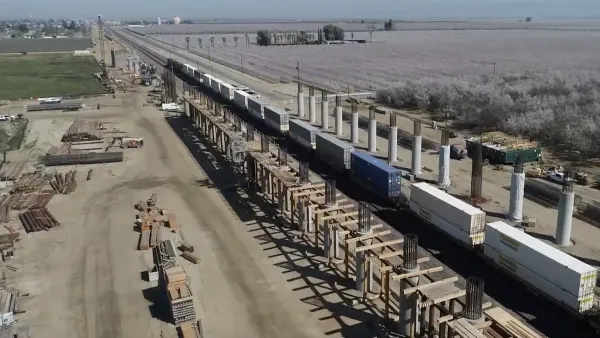
Trump: Federal Government Won’t Pay for California HSR
The President has targeted federal funding for the California bullet train project since his first administration.
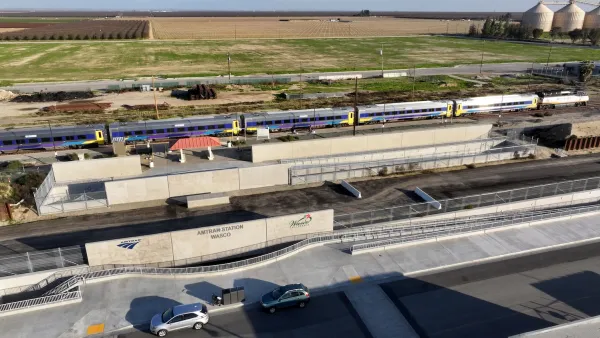
California HSR Could Be Up and Running by 2033
A newly restructured leadership promises to speed up the arduous construction process and start running trains in five to eight years.

Desperate measures: Advocates weigh draining Lake Powell to fill Colorado River
Draining the reservoir could reduce evaporation losses by a couple hundred thousand acre-feet.

Eastern Nebraska is running out of electricity
Data centers and electrification are straining eastern Nebraska’s grid, throttling economic development.

Malls are becoming the midtowns of the future
Mall and office park redevelopments are a generational opportunity to create new nodes of urbanity.

NYC breaks ground on anti-flooding infrastructure project
New York City's new system will reduce stormwater flows to local sewers by 90%.

One Kentucky town’s secret to affordable housing
The Smoketown Community Land Trust has already built seven affordable homes for community members.

Houston gains petal-shaped cooling infrastructure to make streets more ‘delightful’
The city has installed the pavilions along 15 blocks in Houston.

FREE Course: Walkable City 1: Why Walkability?
After describing his path towards focusing on walkability as the essence of good planning, Jeff Speck marches through his five principal reasons for making more walkable places.
Reinventing Malls: Planning Alchemy—Turning Gray Fields Into Gold
The course focuses on the opportunities and imperatives that shape reinvention of mall sites.

City of Rosemead
Rutgers University, Edward J. Bloustein School of Planning and Public Policy
One Hundred Miles
University of Michigan School for Environment and Sustainability (SEAS)
Hunter College, City University of New York (CUNY)
The Architects Foundation
City of Cambridge
Montrose County
The Pocatello Development Authority