




















The argument that increased supply of urban housing will lower prices is rapidly being disproved by successive waves of gentrification throughout American cities. Stephen Smith offers a considered analysis of the economics behind this dynamic.


For the original, and often poor residents of newly gentrifying neighborhoods, the market remedy of increasingly supply doesn't make anything cheaper. Rather, they find themselves pushed out by the increased cost of housing, and amenities.
Smith believes that price increases respond to new amenities along an S-curve. "The first 100-unit rental building with the neighborhood's first high-quality grocery story is a huge boon, but the hundredth glass tower with the neighborhood's fifth bank won't even be noticed. It's at this point that the price-lowering effect of dumping new units on the market will outweigh the price-raising effect of the new amenities – in other words, prices will start to fall."
The problem is that once a neighborhood has all its amenities, new housing construction is ground to a halt by a NIMBY shield and any remaining original homeowners who are unlikely to allow their home values to fall.
FULL STORY: Does Urban Growth Have To Mean Gentrification

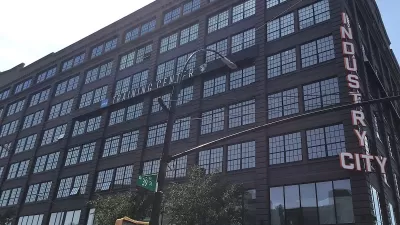
‘Emergent City’ Documentary Highlights Rare Anti-Gentrification Victory
The film charts the saga of a Brooklyn site called Industry City.
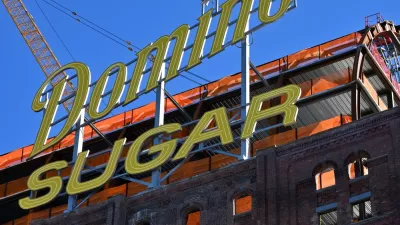
Bitter Irony Behind Brooklyn’s Sweet Domino Sugar Sign
A new feature on the Brooklyn waterfront is a reminder that Domino Sugar has made several unsavory appearances in the history of Puerto Rican communities.

How Broken Planning and Development Processes Hobble the Potential of Neighborhoods
A stinging critique of the public review process in New York City.

Planetizen Federal Action Tracker
A weekly monitor of how Trump’s orders and actions are impacting planners and planning in America.
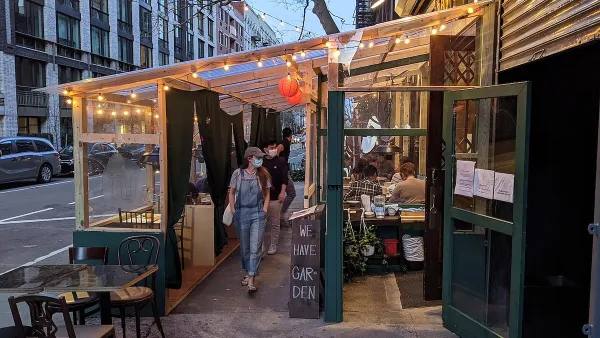
Restaurant Patios Were a Pandemic Win — Why Were They so Hard to Keep?
Social distancing requirements and changes in travel patterns prompted cities to pilot new uses for street and sidewalk space. Then it got complicated.

Map: Where Senate Republicans Want to Sell Your Public Lands
For public land advocates, the Senate Republicans’ proposal to sell millions of acres of public land in the West is “the biggest fight of their careers.”

Maui's Vacation Rental Debate Turns Ugly
Verbal attacks, misinformation campaigns and fistfights plague a high-stakes debate to convert thousands of vacation rentals into long-term housing.

San Francisco Suspends Traffic Calming Amidst Record Deaths
Citing “a challenging fiscal landscape,” the city will cease the program on the heels of 42 traffic deaths, including 24 pedestrians.

California Homeless Arrests, Citations Spike After Ruling
An investigation reveals that anti-homeless actions increased up to 500% after Grants Pass v. Johnson — even in cities claiming no policy change.

Urban Design for Planners 1: Software Tools
This six-course series explores essential urban design concepts using open source software and equips planners with the tools they need to participate fully in the urban design process.
Planning for Universal Design
Learn the tools for implementing Universal Design in planning regulations.

Heyer Gruel & Associates PA
JM Goldson LLC
Custer County Colorado
City of Camden Redevelopment Agency
City of Astoria
Transportation Research & Education Center (TREC) at Portland State University
Camden Redevelopment Agency
City of Claremont
Municipality of Princeton (NJ)