Performance parking, dynamic pricing; whatever you call it, SF Park's strategy uses the latest technology and pricing strategies to make the most efficient use of parking, with the goal of improving air quality and traffic flow. But is it working?


At a two-day conference of the National Association of City Transportation Officials, the SFpark demonstration took center stage.
"If it works as envisioned, at least one parking spot per block will always be available, as some drivers - influenced by cost - will opt to park elsewhere and when rates are lower," summarized San Francisco Chronicle reporters.
"The feds have hired an independent evaluation team to track the program's successes and failures. Team leader Carol Zimmerman said a robust assessment will review everything from the change of air quality, the time it takes to find a space, the speed of traffic, sales tax revenue, the demand on the information technology and public perception to determine the effectiveness of SFpark. The final report is due in January 2013."
From MTC News: Cool New Tool: SFpark Takes the Mystery Out of Parking: "Circling city streets in search of an open parking space is not only maddening, its also bad for your carbon footprint. Enter SFpark, a pilot parking management program that tracks space availability and pricing information for 14 public garages in San Francisco."
Thanks to One Bay Area News Update
Read the full story: Parking experiment takes national stage

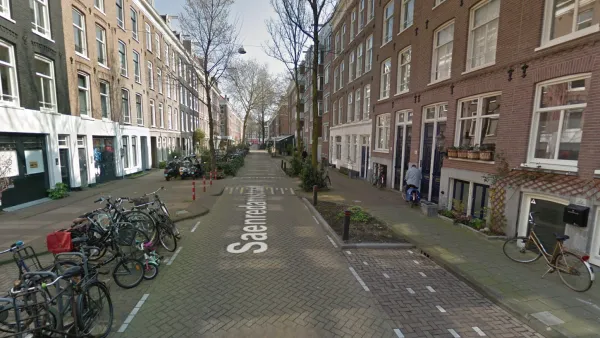
Watch: How to Remove Thousands of Parking Spaces
What the city of Amsterdam will gain by removing cars from on-street parking space.
Boston Mayor Considering Shoup-Style Makeover for Downtown Parking
Mayor Martin J. Walsh and Chris Osgood, the latter Boston's new "chief of streets," are looking to San Francisco as a model of dynamic parking.
More Meter Revenue But Fewer Parking Tickets Issued
SF Park is an outstanding success when measured by 'ticket anxiety'; i.e. the new program allows motorists to reduce the likelihood of being ticketed by making payment easier and allowing for longer parking stays, thus avoiding a $55-65 citation.

Planetizen Federal Action Tracker
A weekly monitor of how Trump’s orders and actions are impacting planners and planning in America.

‘Going backwards:’ Baltimore mayor, students rally against state's transit funding plan
Maryland's proposed six-year plan provides no funding for Baltimore’s BMORE bus program and reduces its road maintenance funding.

Detroit to transform waterfront with $2.2 billion investment
Developers will convert about 18 acres of unused parking lot space into civic spaces.

NYC’s landfills will soon overflow — expanding them invites health risks
In as little as 16 years, New York City will have to find new places to dump its trash.

This Boston neighborhood is filling its roads with obstacles — intentionally
Somerville is embracing ‘extreme street makeovers’ to make its roads safer for pedestrians and cyclists.

Planned $2 billion courthouse in MA sparks tension with local government
Springfield owns an essential piece of the land developers intend to build on, and some city officials do not want to see the project come to fruition.

FREE Course: Walkable City 1: Why Walkability?
After describing his path towards focusing on walkability as the essence of good planning, Jeff Speck marches through his five principal reasons for making more walkable places.
Reinventing Malls: Planning Alchemy—Turning Gray Fields Into Gold
The course focuses on the opportunities and imperatives that shape reinvention of mall sites.

City of Thousand Oaks
City of Wisconsin Rapids
Harvard University Graduate School of Design
The Architects Foundation
University of Cincinnati Online
Northern Illinois Transit Authority (NITA)
The Pocatello Development Authority
The Urban Renewal Agency of the City of Pocatello