





















Any prospect for the green initiatives to produce desired results requires more than just aggressive reduction targets, according to The Economist. It comes down to scope and suitability, the two factors that vary greatly from city to city.


"[F]or climate-change plans to work, the actions you take have to be local, tailored to the particular needs of each city," explains Missy Stults in the article. "One particular strength of urban, as opposed to national or even state climate-change policy, particularly in a country as vast as America, is that cities are different; what works in one may not in another."
"Portland's plan, for instance, calls for 90% of its citizens to be able to walk or bicycle 'to meet all basic, daily non-work needs' by 2030: a laudable and achievable goal there, but far more difficult in sprawling cities such as Los Angeles or Houston. New York's PlaNYC pays more attention to wetlands and coastal issues than CCAP does, because New York has more coastline and waterways than Chicago."
FULL STORY: Greening the concrete jungle


A C40-Ready Framework for Local Climate Action in Santa Monica
Santa Monica City Manager Rick Cole outlines the city's actions and policies to realize its ambitious C40 goals.
Lawsuit Puts Climate Change Preparation Onus On Cities
A class-action lawsuit filed by Farmers Insurance Co. against the city of Chicago raises questions on municipal responsibility to prepare against 'foreseeable risk.'
World Bank: Carbon Pricing Key to Tackling Climate Change and Poverty
World Bank President Jim Yong Kim explains why climate change is a poverty issue - and why we must tackle it today to ensure that carbon emissions do not continue rising after 2016. Establishing a world price on carbon will be difficult to achieve.
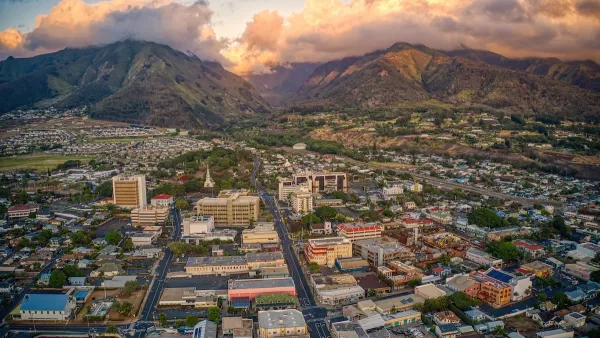
Maui's Vacation Rental Debate Turns Ugly
Verbal attacks, misinformation campaigns and fistfights plague a high-stakes debate to convert thousands of vacation rentals into long-term housing.
Planetizen Federal Action Tracker
A weekly monitor of how Trump’s orders and actions are impacting planners and planning in America.
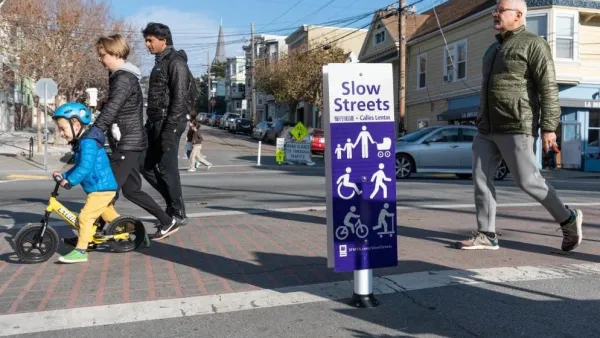
San Francisco Suspends Traffic Calming Amidst Record Deaths
Citing “a challenging fiscal landscape,” the city will cease the program on the heels of 42 traffic deaths, including 24 pedestrians.

Defunct Pittsburgh Power Plant to Become Residential Tower
A decommissioned steam heat plant will be redeveloped into almost 100 affordable housing units.

Trump Prompts Restructuring of Transportation Research Board in “Unprecedented Overreach”
The TRB has eliminated more than half of its committees including those focused on climate, equity, and cities.

Amtrak Rolls Out New Orleans to Alabama “Mardi Gras” Train
The new service will operate morning and evening departures between Mobile and New Orleans.

Urban Design for Planners 1: Software Tools
This six-course series explores essential urban design concepts using open source software and equips planners with the tools they need to participate fully in the urban design process.
Planning for Universal Design
Learn the tools for implementing Universal Design in planning regulations.

Heyer Gruel & Associates PA
JM Goldson LLC
Custer County Colorado
City of Camden Redevelopment Agency
City of Astoria
Transportation Research & Education Center (TREC) at Portland State University
Jefferson Parish Government
Camden Redevelopment Agency
City of Claremont