Residents of the Bayview neighborhood of San Francisco fear that redevelopment threatens to gentrify the area in a way that pushes out low- and middle-income black residents.


The Bayview neighborhood of San Francisco is undergoing a redevelopment that will change the look and make-up of the community, according to residents. The new plan has a mixed use, mixed-income, transit-oriented development being built on a former brownfield site. Bayview is an historically black neighborhood that wraps around an old Navy shipyard and is one of the city's poorest communities.
Rachel Waldholz of High Country News says that the industrial pollution has in some ways sheltered the community from development for decades:
"...the industries that have so burdened the neighborhood have also, to some extent, sheltered it, keeping housing relatively affordable as rising prices forced low-income residents out of other neighborhoods. For decades, activists urged the city to redevelop the shipyard, hoping it could revive the neighborhood's economy. Now that redevelopment is finally under way, though, many worry that it's come at too high a cost."
Thanks to Cathie Pagano
Read the full story: Greening a city...and pushing other colors out
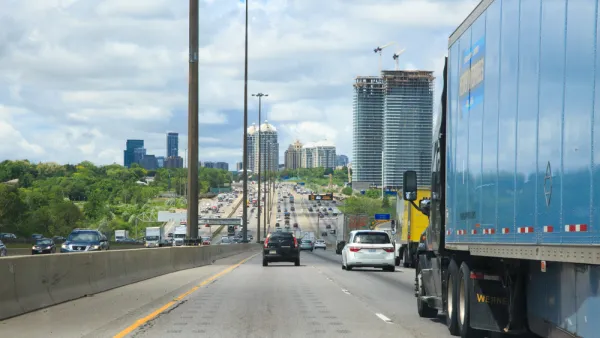
Does Highway Removal Make Cities Healthier?
Highway removal can improve the air quality and health of the immediate environment, but displacement and gentrification threaten to exclude former residents from the benefits.
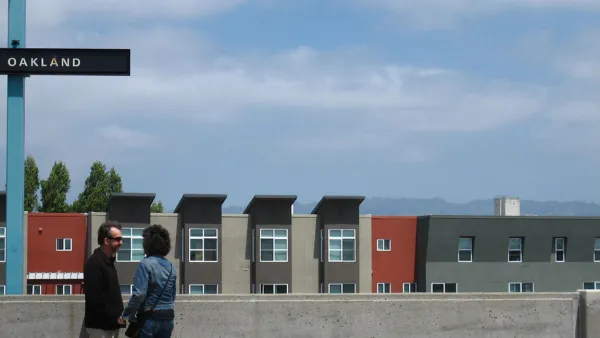
Gentrification and Race in the San Francisco Bay Area
A feature article revisits the gentrification and displacement discussion, especially as it pertains to racial and economic demographics, in one of the nation's most troubled and challenging housing markets.
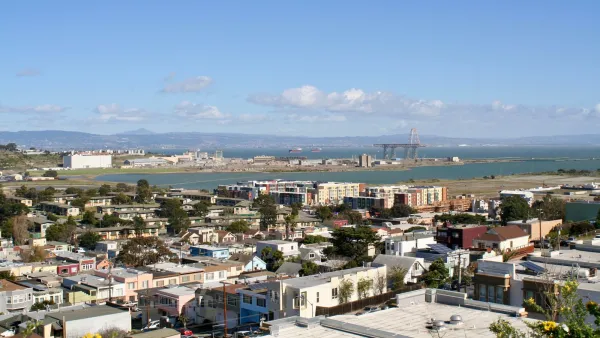
Bay Area Displacement and Gentrification Trends Have Regional Consequences
Displacement in the San Francisco Bay Area has resulted in distinct mobility patterns and significant race and class inequalities.

Planetizen Federal Action Tracker
A weekly monitor of how Trump’s orders and actions are impacting planners and planning in America.

Washington state to charge fee to drivers with fuel-efficient cars
Revenue from the fee will go towards supporting the state’s highways.

Trump to blast ‘hydrocarbon highway’ through ‘world’s longest art gallery’
Environmental and historic preservation groups are suing to stop the project.

Data centers need power – lower income, rural residents pay the price
In 2025, data centers paid only 38% of the energy infrastructure costs linked to their growth, with households, especially rural and low-income residents, bearing the remaining burden.

MBTA Green Line project moved to next phrase of CIG program
The modernization effort will cost $4.08 billion.

22-mile pedestrian and bike path to encircle Atlanta by 2030
The project will also support affordable housing.

FREE Course: Walkable City 1: Why Walkability?
After describing his path towards focusing on walkability as the essence of good planning, Jeff Speck marches through his five principal reasons for making more walkable places.
Reinventing Malls: Planning Alchemy—Turning Gray Fields Into Gold
The course focuses on the opportunities and imperatives that shape reinvention of mall sites.

City of Charlotte
City of Rosemead
Rutgers University, Edward J. Bloustein School of Planning and Public Policy
University of Michigan School for Environment and Sustainability (SEAS)
Hunter College, City University of New York (CUNY)
The Architects Foundation
University District Partnership