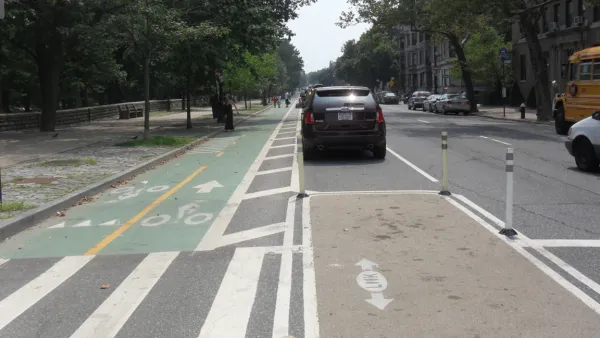
Blogger Chewie suggests a controversial idea - a tax on bicycle sales and repair to go to creating more bicycle infrastructure.


Chewie gives four reasons why he thinks this is a good idea. For one, "it worked for cars":
"Taxing a mode of transportation to improve its infrastructure is a key reason why we have car dominance today. In the 1950s and 60s the interstate highway system was built with gas tax revenue. Although we sometimes think of raising gas taxes as a way to discourage driving, historically they have helped to encourage it by paying for roads."
A commenter begs to differ:
"From a social standpoint, activities that benefit the society should be made cheaper while those that hurt society should be made more expensive; this is the concept behind congestion pricing and pollution taxes ("Pigovian taxes"). Bicycling is a net benefit to society, primarily due to its health effects, and should be encouraged rather than discouraged through taxation."
Read the full story: Tax Bikes for Better Bike Infrastructure?


Why Do People Hate Cyclists?
At the Association of Collegiate Schools of Planning conference, several researchers shared their work examining why people hate bicyclists and what can be done about that animosity.
More Bicycle Infrastructure Equals More Riders
Analysis of Census data shows that, while still small in number, more Americans are taking to two-wheels as part of their daily commute.
Florida Pilots Bike Lanes on Highway Bridges
In an effort to create safer walking and biking environments, Miami-Dade counties have built bike lanes along two highways connecting the Miami with its eastern island beaches, reducing travel distances by 75 percent for cyclists.

Planetizen Federal Action Tracker
A weekly monitor of how Trump’s orders and actions are impacting planners and planning in America.

Amtrak, CN end decades-long dispute with eight-year agreement
The new operating agreement establishes an updated framework for the companies to work together, including processes to resolve disputes.

Northwest rail fans eager for Sept. 30 debut of Amtrak’s Airo fleet
Get ready for that new train smell and more seats. But they won’t go faster or run more frequently on the Cascades route in Washington and Oregon.

Brightline Florida files for bankruptcy
The transit company is over $5 billion in debt.

St. Louis Metro to test if single-car trains can reduce operating costs, maintain rider satisfaction
The pilot program will run from October to spring 2027, and begin with one single-car train operating on Metrolink’s Red and Blue lines.

Pennsylvania is building data centers in abandoned mines
Housing data centers in mines provides an alternative to destroying local forests and may spare residents from data centers’ noise and air pollution.

FREE Course: Walkable City 1: Why Walkability?
After describing his path towards focusing on walkability as the essence of good planning, Jeff Speck marches through his five principal reasons for making more walkable places.
Reinventing Malls: Planning Alchemy—Turning Gray Fields Into Gold
The course focuses on the opportunities and imperatives that shape reinvention of mall sites.

City of Thousand Oaks
City of Wisconsin Rapids
Harvard University Graduate School of Design
The Architects Foundation
University of Cincinnati Online
The Pocatello Development Authority
The Urban Renewal Agency of the City of Pocatello