As the San Diego Planning Department folds into another department to save city money, locals and former officials grapple with whether it was the right move and how the city could change as a result.


Mixed feelings abound in the city, even from the former planning director who resigned over the merger.
"Until now the city's pro-active planning model has been similar to models used in Boston, Seattle, San Antonio, Austin, and Portland-all cities recognized for effective planning and high-quality urban development. San Diego won awards from the American Planning Association and the Urban Land Institute for its 2008 overhaul of the city's general plan. But in his state of the city address in January, Mayor Sanders claimed that merging planning with development services would "save as much as $1 billion by eliminating duplication."
Bill Anderson, who was the city's Planning Director before resigning in May, sees pros and cons in the new arrangement. "We will benefit by having California Environmental Quality Act issues tied more to development. Also, with the staff for land development code under development services instead of in a separate planning department, things may be more efficient," he said. However, Anderson cautioned, "Now planning becomes a more conventional regulatory process, rather than a pro-active community planning and development department." Currently a principal and vice president at AECOM, Anderson left his position with the city largely because of the impending merger."
Read the full story: Down with the Plan?

Planning Slips From San Diego's Org Chart
Last month, the planning department of the City of San Diego was folded into the Development Services Department. Locals worry the shift in perspective will endanger plans being developed in a dozen different neighborhoods.
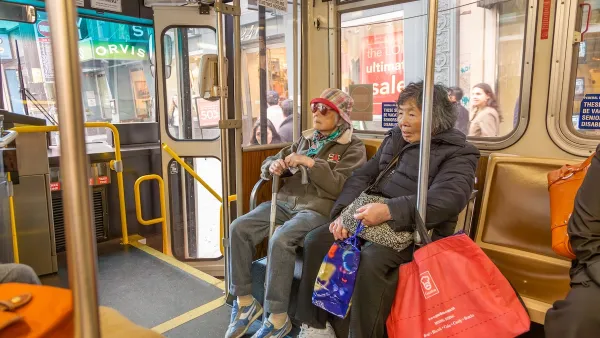
San Diego may kill one-third of its bus routes as budget crisis looms
Under the city's proposed plan, 21% of Metropolitan Transit System riders would lose access to transit services.

New density bill would require 7 California cities to establish regional transit hubs
The bill would also require major cities in California to permit high-rise residential buildings.

Planetizen Federal Action Tracker
A weekly monitor of how Trump’s orders and actions are impacting planners and planning in America.

Amtrak, CN end decades-long dispute with eight-year agreement
The new operating agreement establishes an updated framework for the companies to work together, including processes to resolve disputes.

Northwest rail fans eager for Sept. 30 debut of Amtrak’s Airo fleet
Get ready for that new train smell and more seats. But they won’t go faster or run more frequently on the Cascades route in Washington and Oregon.

Atlanta City Council unanimously backs $3.5 billion Beltline light rail project
The resolution was drafted after Atlanta Mayor Andre Dickens pulled support for the Atlanta Streetcar extension last year.

SEPTA to bring nearby frequent transit to over 1 million new riders as part of decade-long plan
The agency's Accelerate plan will also bring frequent transit to twice the amount of jobs that are currently located near it.

NYC plants over 18,000 trees, the most new foliage in a decade
Many of the trees were planted in communities vulnerable to extreme heat.

FREE Course: Walkable City 1: Why Walkability?
After describing his path towards focusing on walkability as the essence of good planning, Jeff Speck marches through his five principal reasons for making more walkable places.
Reinventing Malls: Planning Alchemy—Turning Gray Fields Into Gold
The course focuses on the opportunities and imperatives that shape reinvention of mall sites.

City of Thousand Oaks
City of Wisconsin Rapids
Harvard University Graduate School of Design
The Architects Foundation
University of Cincinnati Online
The Pocatello Development Authority
The Urban Renewal Agency of the City of Pocatello