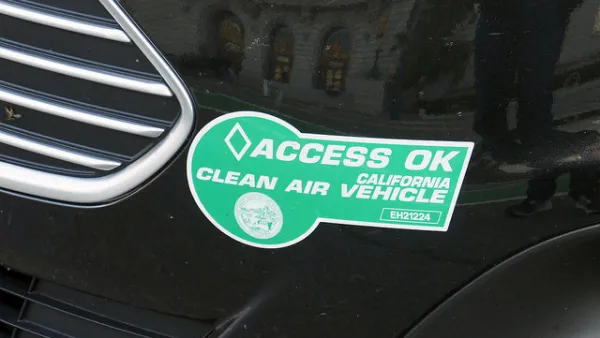
In Sept. 2005, eligible hybrid vehicles could use CA carpool lanes with only one occupant as an incentive to purchase them. The expiration date was extended by legislation twice, but DMV assures the 85,000 yellow decal owners it ends July 1.


The incentive program worked - there are now 423,180 hybrid vehicles registered in CA. And the $8 yellow decals added $4,000 to the value of the vehicle. It even enabled until last July a free ride over the $4 toll Bay Bridge.
For those solo motorists who wish to continue the 'carpool privilege', they can drive a zero-emission vehicle, e.g. Nissan Leaf with the white sticker, or come January, a plug-in hybrid electric vehicle, e.g. Chevy Volt, with the green sticker. Of course, they could always carpool or take the bus and not worry about getting a sticker which are suppose to expire in 2015 - so they say.
From SF Chronicle: John Burton defends Prius carpool-lane access: "The yellow-sticker program isn't over yet, and John Burton (the California Democratic Party chairman and former state Senate leader) is a crafty guy who knows more about the Capitol than anyone around. Don't be surprised if July 1 arrives, and Burton still is zipping from San Francisco to Sacramento in the carpool lane."
Read the full story: Hybrids' yellow stickers program expires July 1
220,000 EV Drivers in California to Lose Carpool Lane Perk in 2019
The good news: the Clean Air Vehicle program for electric vehicles will be extended for at least three years. The bad news: not all EVs that have a decal now will be able to be renewed. Congestion on HOV and HOT lanes is a major concern.
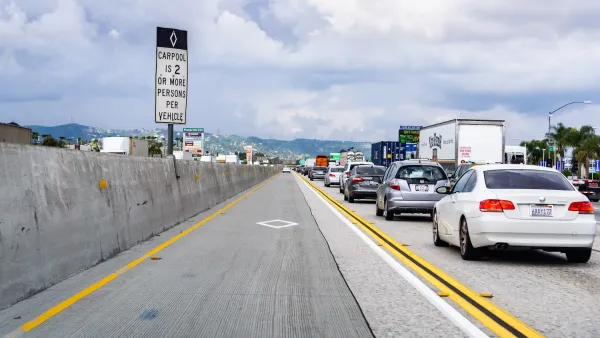
California’s Carpool Lane Exemption for EVs Dies This Week
The program that allows EV drivers to use carpool lanes alone has issued 1,211,530 stickers since it began in 2000.
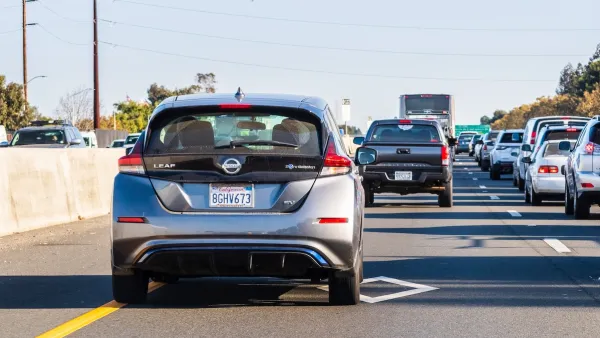
When Carpool Lanes Cause Mayhem
A newly widened Bay Area freeway serves as a reminder of the futility of HOV lanes. There are better ways to manage and mitigate traffic.

Planetizen Federal Action Tracker
A weekly monitor of how Trump’s orders and actions are impacting planners and planning in America.

California plans to bury El Niño’s downpour
If the state plays its cards right, it may be able to store a billion acre-feet of El Niño’s water in aquifers.

Desperate measures: Advocates weigh draining Lake Powell to fill Colorado River
Draining the reservoir could reduce evaporation losses by a couple hundred thousand acre-feet.

Los Angeles just elected an urban planner as its mayor
Transportation analysts are optimistic that Raman will be more aggressive in addressing transit issues than Bass.

Mamdani’s pied-à-terre tax survives legal challenge
A panel of judges found that the plaintiffs failed to demonstrate injury as a result of New York City's implementation of the tax.

Eastern Nebraska is running out of electricity
Data centers and electrification are straining eastern Nebraska’s grid, throttling economic development.

FREE Course: Walkable City 1: Why Walkability?
After describing his path towards focusing on walkability as the essence of good planning, Jeff Speck marches through his five principal reasons for making more walkable places.
Reinventing Malls: Planning Alchemy—Turning Gray Fields Into Gold
The course focuses on the opportunities and imperatives that shape reinvention of mall sites.

City of Rosemead
Rutgers University, Edward J. Bloustein School of Planning and Public Policy
One Hundred Miles
University of Michigan School for Environment and Sustainability (SEAS)
Hunter College, City University of New York (CUNY)
The Architects Foundation
City of Cambridge
Montrose County
The Pocatello Development Authority