Charles Waldheim examines the current trend's roots in design and architectural history and how it might alter city form.


The idea of bringing food production to cities is not new, Waldheim says. In fact, it's a key element of three unbuilt projects by well-known architects: Frank Lloyd Wright's Broadacre City, Ludwig Hilberseimer's New Regional Pattern, and Andrew Branzi's Agronica. In each design, agricultural landscapes are integral, organizing components.
These projects remind planners that although current discussions of urban agriculture typically focus on food policy, the movement brings broader implications for the city form, writes Charles Waldheim:
"To date the enthusiasm for slow and local food has been based, on the one hand, on the assumption that abandoned or underused brownfield sites could be remediated for their productive potential; and on the other it has been based on the trend toward conserving greenfield sites on city peripheries - on dedicating valuable ecological zones to food production and to limiting suburban sprawl. But these laudable goals are not much concerned with how urban farming might affect urban form. This suggests that we need to probe further into the possibilities of agricultural urbanism."
FULL STORY: Notes Toward a History of Agrarian Urbanism


Children in 55 countries are redesigning their cities in Minecraft
A U.N.-backed program lets students and community members reimagine sites in their neighborhoods in the game — and translate them into real-life buildings.
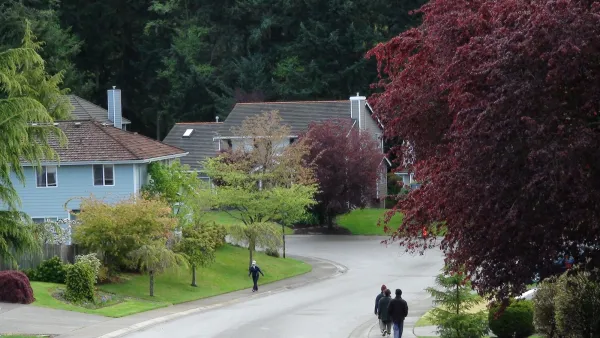
Move over, zoning. Housing’s unsung hero is better street design.
The physical layout of infrastructure is the quiet force that shapes housing supply.
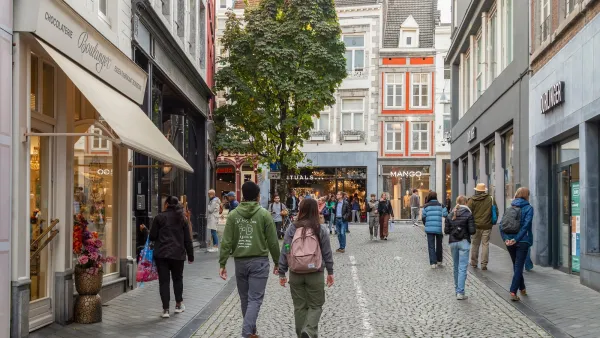
Planning for Love, Part 3: Enhancing human connection through walkability
In the third and final installment of this series, author Hannah Kosoff examines what her research findings say about modern dating and urban form.

The state-sanctioned urbicide of Austin
People don’t kill cities. Freeways do.

US to reduce Colorado River water deliveries to Mexico
A new Colorado Treaty amendment reduces Mexico’s Colorado River water allocation by 250,000 acre feet.

New Jersey’s second-largest city bans standalone data centers
Jersey City will continue to allow co-location facilities, such as those meant for research institutions that store their own data.

Amtrak not solely to blame for New Jersey commuter rail's unreliability, report finds
A new study from the Garden State Initiative found that NJ Transit’s budget grew 20% across a 4 year period, but reliability declined significantly over the same period.

EPA erases limits on planet-warming pollution from power plants
Under Monday’s plan, power plants would still have some limits on how much mercury, arsenic and other contaminants they can emit.

Phoenix announces new on-demand transit service, more frequent RAPID buses
Both new services will launch in October, and are part of Phoenix's Project Effective Access Solutions for Easing Congestion.

FREE Course: Walkable City 1: Why Walkability?
After describing his path towards focusing on walkability as the essence of good planning, Jeff Speck marches through his five principal reasons for making more walkable places.
Reinventing Malls: Planning Alchemy—Turning Gray Fields Into Gold
The course focuses on the opportunities and imperatives that shape reinvention of mall sites.

Eagle County Government
Harvard University Graduate School of Design
Nashville Planning Department
The Architects Foundation
University of Cincinnati Online
The Pocatello Development Authority
The Urban Renewal Agency of the City of Pocatello
Journal of the American Planning Association