Kathmandu, Manila, Dhaka, Mumbai and Jakarta are among the cities most prone to natural disasters, says The Guardian.


When disaster strikes, the divergence between the security provided by a well run, well built city and the chaos facilitated by an ill-planned one, is known as the "urban risk divide":
"'Physical infrastructure, land-planning and the size of informal settlements are the biggest factors determining the impact of disasters on cities,' said NMSI Arambepola, director of Urban Disaster Risk Management with the Asian Disaster Preparedness Centre in Bangkok. 'With so many people migrating to the cities, many of the most vulnerable urban populations settle in the more disaster-prone areas where no one else wants to live.'"
This divide is particularly severe in Asia where, "where someone in the Philippines is up to 17 times more likely to be killed by a natural disaster than someone in Japan, although the likelihood and frequency of disaster in Japan is higher overall."
Thanks to Ryan Sloan
Read the full story: Asian cities more vulnerable to natural disasters
New Town Takes Worst of Irene, Emerges Unscathed
The town, designed by DPZ Associates, uses traditional building techniques (most of which are completely illegal in US hurricane zones) and fared better in the eye of Hurricane Irene at its strongest point than any other town.
Disaster Risk Tied to Urban Growth
Two reports have linked patterns of urban development to disaster risk. As urban populations grow, these studies suggest developing countries will become even more vulnerable.
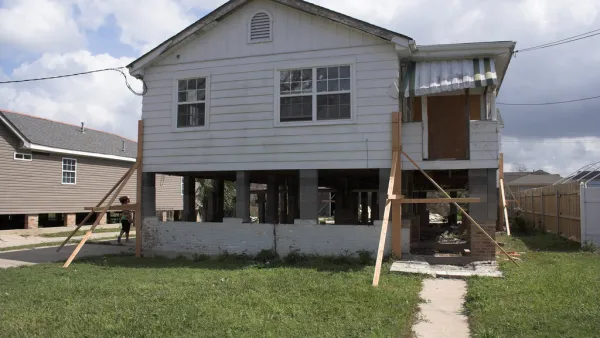
Adapting Building Codes to Natural Disasters Saves Billions
New research shows that modern building codes have prevented around $27 billion in damage from natural disasters between 2000 and 2016, yet many cities still operate under decades-old regulations.

California plans to bury El Niño’s downpour
If the state plays its cards right, it may be able to store a billion acre-feet of El Niño’s water in aquifers.

Desperate measures: Advocates weigh draining Lake Powell to fill Colorado River
Draining the reservoir could reduce evaporation losses by a couple hundred thousand acre-feet.

Eastern Nebraska is running out of electricity
Data centers and electrification are straining eastern Nebraska’s grid, throttling economic development.

After years of opposition to light rail, this L.A. city wants a $200 million station
Cerritos officials want the Southeast Gateway Line, a planned 14.5-mile light rail route through Los Angeles County, to stop in their city.

SpaceXAI may be fined $6 million for data center lacking water permits
A Mississippi agency also responds after a federal judge criticized the state’s Clean Air Act enforcement.

Housing is the top priority of Seattle’s sole new councilmember
Jenks campaigned on building 1,000 new units of affordable housing.

FREE Course: Walkable City 1: Why Walkability?
After describing his path towards focusing on walkability as the essence of good planning, Jeff Speck marches through his five principal reasons for making more walkable places.
Reinventing Malls: Planning Alchemy—Turning Gray Fields Into Gold
The course focuses on the opportunities and imperatives that shape reinvention of mall sites.

City of Rosemead
Rutgers University, Edward J. Bloustein School of Planning and Public Policy
One Hundred Miles
University of Michigan School for Environment and Sustainability (SEAS)
Hunter College, City University of New York (CUNY)
The Architects Foundation
City of Cambridge
Montrose County
The Pocatello Development Authority