After a trip through Eastern Germany in 1990 photographing blasted out buildings from World War Two, photographer Stefan Koppelkamm's second trip ten years later revealed vastly renovated places -- to his disappointment.


"Ten years after his journey through an East Germany reminiscent of pre-war days, photographer Stefan Koppelkamm took another look at his pictures. What had become of those old facades? He returned to the Neustadt (new town) area of Dresden. It isn't difficult for him to find the same buildings again: 'I noted down the addresses the first time, and for some pedantic reason I even wrote down the focal lengths I used.' With the old photo in his hand, he quickly found the location.
But after the first stop he would have preferred to cancel the tour altogether. The buildings had been renovated. 'In quite a normal, almost trivial style,' said the designer. 'The thrill of the first trip was gone.'"
Der Spiegel has a slideshow of some of Koppelkamm's photos.
Read the full story: A Massive Facelift for Eastern Germany
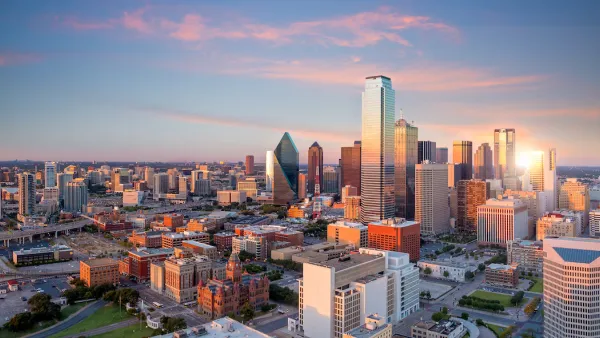
Adaptive Reuse Successes in Dallas
The rise in office vacancies is fueling a boom in adaptive reuse projects.
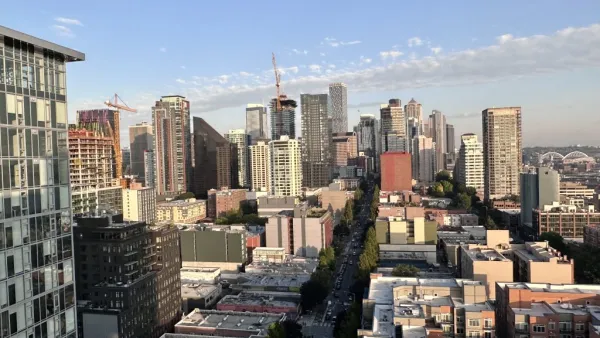
Capturing the Post-Pandemic City: The Power of 'Visual Prosecution'
Have you ever tried immersive photography to show how urban landscapes, with their ever-evolving stories, are changing post-pandemic? A three-time author of books about understanding the innate identities of urban places updates his perspective.
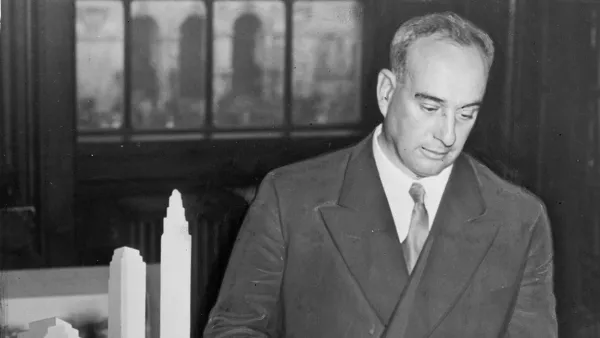
On Progressive Impotence and an Obsolete Penn Station
In a deep dive into the sad state of the nation's busiest transit hub, Marc J. Dunkelman raises a dispiriting question. In their zeal to ward off future Robert Moseses, have progressives crippled government's power to carry out its job?

Desperate measures: Advocates weigh draining Lake Powell to fill Colorado River
Draining the reservoir could reduce evaporation losses by a couple hundred thousand acre-feet.

Eastern Nebraska is running out of electricity
Data centers and electrification are straining eastern Nebraska’s grid, throttling economic development.

Move over, LA: St. Louis gears up for Olympics, invests millions in downtown redevelopment
The Missouri city will host the 2028 Olympic soccer group stage and knockout matches.

Mass. votes against statewide minimum lot size for single-family homes
Over 2 million residents voted on Question 7; it was decided by just over 30,000 votes.

Maryland’s $15 billion bridge project gains key approval
The Maryland Transit Authority said the project will create over 60,000 jobs and add $23 billion to the local economy.

‘No clear next steps’ for Chicago's permanent festival grounds
Eleventh Ward Ald. Nicole Lee has suggested Soldier Field as a possible location for the permanent event space.

FREE Course: Walkable City 1: Why Walkability?
After describing his path towards focusing on walkability as the essence of good planning, Jeff Speck marches through his five principal reasons for making more walkable places.
Reinventing Malls: Planning Alchemy—Turning Gray Fields Into Gold
The course focuses on the opportunities and imperatives that shape reinvention of mall sites.

City of Rosemead
Rutgers University, Edward J. Bloustein School of Planning and Public Policy
One Hundred Miles
University of Michigan School for Environment and Sustainability (SEAS)
Hunter College, City University of New York (CUNY)
The Architects Foundation
City of Cambridge
Montrose County
The Pocatello Development Authority