























As Los Angeles MTA's plan to fully implement its TAP card program stalls, so does the plan to lock the turnstiles that the agency had installed to deter riders from not paying.


"Originally, Metro estimated it would save $3 million to $6 million annually using locking turnstiles and up to $7 million a year on reduced fare inspector costs. Metro officials said they had found a 5 percent fare evasion rate across all the rail lines and they expected the new system to pay for itself in four years.
In 2008, the Metro board approved a 10-year, $46 million lease contract with Cubic Transportation Systems Inc. to install the locking gates – similar to those in use in most other big-city systems, like New York, Chicago and Washington, D.C.
Currently they operate as unlocked turnstiles, but the goal of having them lock to prevent fare evasion remains far off, officials acknowledge. That means Metro will likely have to spend more money for attendants to man the stations.
Raymond said one of the main obstacles to converting to the TAP system has been getting the county's 16 municipal bus operators and Metrolink to agree to use the TAP cards."
FULL STORY: MTA's $46M system of locking turnstiles sits unused, waiting for fare cards to be adopted

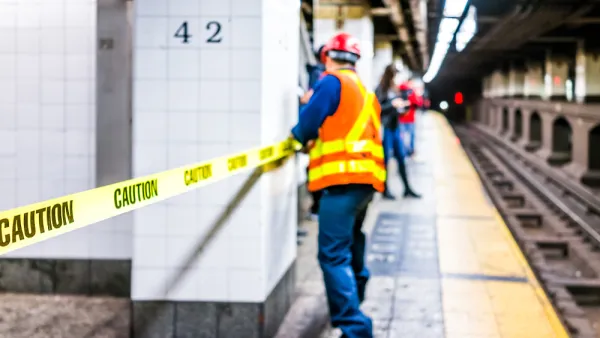
Why New York's Transportation Infrastructure Costs So Much
It's been remarked upon before. Infrastructure in New York City is a cost nightmare compared to other global cities. Accountability is lacking, Josh Barro writes, but MTA also suffers from an "institutional lack of power."
The New Transit User Fee: Real Estate Rent
Driven by a need to meet growing costs amid unstable federal subsidies, metropolitan transit agencies are eying their properties, particularly parking lots, as money makers from new residential and commercial development.
Can Good Design Lead to Good Deeds in Auto Obsessed L.A.?
For 10 years now, Michael Lejeune, Creative Director for the Metropolitan Transit Authority (M.T.A.), has made taking transit in L.A. seem a lot cooler. These re-branding efforts have contributed to a 38 percent increase in ridership since 2005.

Planetizen Federal Action Tracker
A weekly monitor of how Trump’s orders and actions are impacting planners and planning in America.
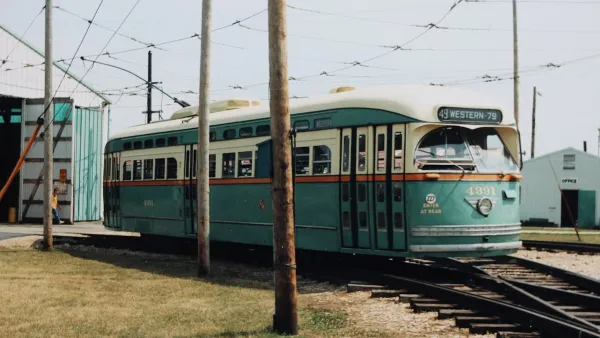
Chicago’s Ghost Rails
Just beneath the surface of the modern city lie the remnants of its expansive early 20th-century streetcar system.
Amtrak Cutting Jobs, Funding to High-Speed Rail
The agency plans to cut 10 percent of its workforce and has confirmed it will not fund new high-speed rail projects.

Ohio Forces Data Centers to Prepay for Power
Utilities are calling on states to hold data center operators responsible for new energy demands to prevent leaving consumers on the hook for their bills.

MARTA CEO Steps Down Amid Citizenship Concerns
MARTA’s board announced Thursday that its chief, who is from Canada, is resigning due to questions about his immigration status.

Silicon Valley ‘Bike Superhighway’ Awarded $14M State Grant
A Caltrans grant brings the 10-mile Central Bikeway project connecting Santa Clara and East San Jose closer to fruition.

Urban Design for Planners 1: Software Tools
This six-course series explores essential urban design concepts using open source software and equips planners with the tools they need to participate fully in the urban design process.
Planning for Universal Design
Learn the tools for implementing Universal Design in planning regulations.

Caltrans
City of Fort Worth
Mpact (founded as Rail~Volution)
City of Camden Redevelopment Agency
City of Astoria
City of Portland
City of Laramie