With increasing urbanization spreading throughout global cities, Justin McGuirk argues that city design is the biggest challenge acing designers.


"[H]ere's the scary part: most of this growth is happening in places where millions of people already live in slums. Mumbai, Delhi, Karachi, Shanghai, São Paulo, Kinshasa: these are the fastest-growing cities in the world, most of them destined to have populations of more than 20 million by 2025. Between now and then, Lagos will have to make room for 67 new arrivals per hour. If we don't start designing for these new inhabitants now, then the potential for human misery is all the greater.
The cities we love most are slow burners, layered accretions of history – Jerusalem, Venice or Rome, for instance. Yet here we are, in the position of having to manufacture new urban spaces, as though cities were just another type of product."
McGuirk says that making these emerging urban megacities into sustainable places is the task facing architects, planners and policymakers.
Read the full story: The urban age: how cities became our greatest design challenge yet
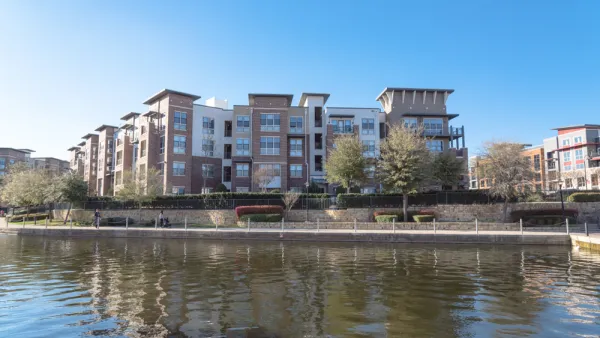
Is the Urban-Suburban Divide Destined to Disappear?
In a new book, Hans Westlund and Tigran Haas argue that the global knowledge economy is radically reshaping urban development. Eventually, they say, it'll render meaningless our present notions of "urban," "suburban," and "rural."
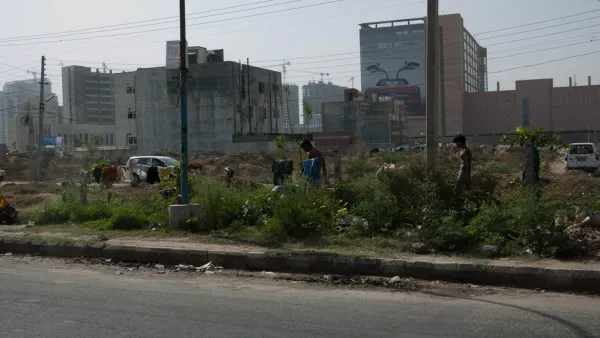
Friday Eye Candy: India's Rapid Urbanization
Photographer and architect Lars Mortensen captured the new face of urbanization in Gurgaon, a suburb of New Delhi. The scales involved are unprecedented, and rich and poor live in close proximity.
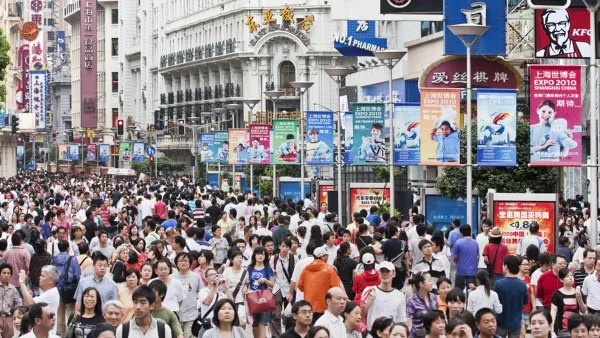
Visualizing Global Urban Growth Through 2030
Geographer Duncan Smith mapped the predicted trajectory of worldwide urban growth from 1950 through 2030. Concentric circles of different shades show where and when growth was (or will be) the most dramatic.

Desperate measures: Advocates weigh draining Lake Powell to fill Colorado River
Draining the reservoir could reduce evaporation losses by a couple hundred thousand acre-feet.

Eastern Nebraska is running out of electricity
Data centers and electrification are straining eastern Nebraska’s grid, throttling economic development.

Malls are becoming the midtowns of the future
Mall and office park redevelopments are a generational opportunity to create new nodes of urbanity.

NYC breaks ground on anti-flooding infrastructure project
New York City's new system will reduce stormwater flows to local sewers by 90%.

One Kentucky town’s secret to affordable housing
The Smoketown Community Land Trust has already built seven affordable homes for community members.

Houston gains petal-shaped cooling infrastructure to make streets more ‘delightful’
The city has installed the pavilions along 15 blocks in Houston.

FREE Course: Walkable City 1: Why Walkability?
After describing his path towards focusing on walkability as the essence of good planning, Jeff Speck marches through his five principal reasons for making more walkable places.
Reinventing Malls: Planning Alchemy—Turning Gray Fields Into Gold
The course focuses on the opportunities and imperatives that shape reinvention of mall sites.

City of Rosemead
Rutgers University, Edward J. Bloustein School of Planning and Public Policy
One Hundred Miles
University of Michigan School for Environment and Sustainability (SEAS)
Hunter College, City University of New York (CUNY)
The Architects Foundation
City of Cambridge
Montrose County
The Pocatello Development Authority