



















How grassroots organizers beat out commercial bidders, and overcame zoning hurdles to redevelop Catholic church into affordable housing.


It seems every week we hear about some Catholic Archdiocese selling its churches or schools. But what happens to those properties? WBUR's Monica Brady-Myerov revisits the neighborhood of Jamaica Plain which purchased Blessed Sacrament Church. The local community development corporation is now building a four-story co-housing complex inside the ten-story church.
"Taking a church and turning it into housing is a bit of a challenge," says Brian Goldson, of New Atlantic Development, the firm that is overseeing construction. "You ask the church what it wants to be and it tells you it wants to be a church, not a bunch of condos."
In addition to co-housing, below-market-rate condos are for sale in what used to be the church rectory. The convent will house formerly homeless people. Former parishoner Demaris Pimental supports a mix of housing. "It's not good to have only low-income (housing)," Pimental tells WBUR. "It's good to have a little bit of market value. And keeping that balance is a challenge for our neighborhood because gentrification will change that unique taste of diversity that Jamaica Plain has."
FULL STORY: As Construction Alters Closed Church, Jamaica Plain Builds Its Community


Plans for Massive St. Paul Mixed-Income Development Revealed
Occupying a site where Ford once manufactured automobiles, the eco-friendly, mixed-income development seeks to add 3,800 units of housing over the next decade.
Parking, Density, and Affordable Housing in California
A bill to reduce parking minimums for residential or mixed-use developments that include affordable units passed a key Senate committee. AB 744 amends the state's density bonus law, itself controversial, that incentivizes building affordable housing.
Olympic Village Blasted for Missing Affordable Housing Targets
Housing activists in Vancouver are criticizing the city for only offering a small portion of the Olympic Village built for the 2010 Winter Olympics as affordable housing.

Planetizen Federal Action Tracker
A weekly monitor of how Trump’s orders and actions are impacting planners and planning in America.
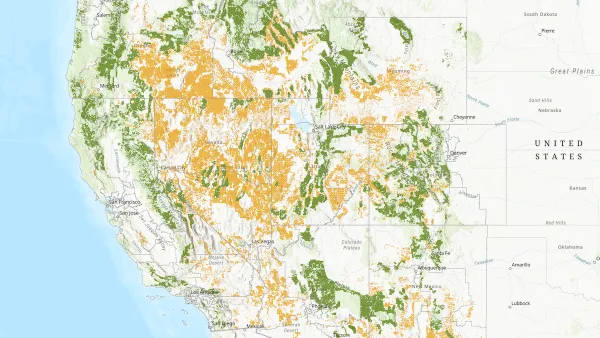
Map: Where Senate Republicans Want to Sell Your Public Lands
For public land advocates, the Senate Republicans’ proposal to sell millions of acres of public land in the West is “the biggest fight of their careers.”
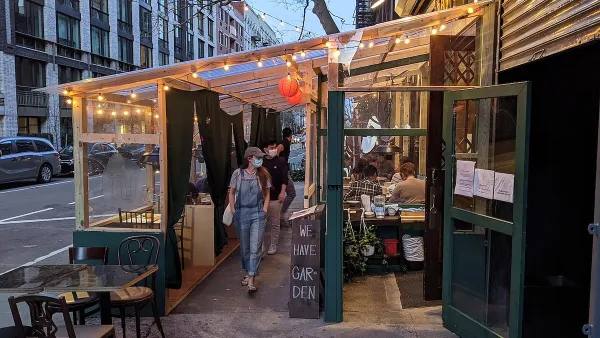
Restaurant Patios Were a Pandemic Win — Why Were They so Hard to Keep?
Social distancing requirements and changes in travel patterns prompted cities to pilot new uses for street and sidewalk space. Then it got complicated.

Platform Pilsner: Vancouver Transit Agency Releases... a Beer?
TransLink will receive a portion of every sale of the four-pack.

Toronto Weighs Cheaper Transit, Parking Hikes for Major Events
Special event rates would take effect during large festivals, sports games and concerts to ‘discourage driving, manage congestion and free up space for transit.”

Berlin to Consider Car-Free Zone Larger Than Manhattan
The area bound by the 22-mile Ringbahn would still allow 12 uses of a private automobile per year per person, and several other exemptions.

Urban Design for Planners 1: Software Tools
This six-course series explores essential urban design concepts using open source software and equips planners with the tools they need to participate fully in the urban design process.
Planning for Universal Design
Learn the tools for implementing Universal Design in planning regulations.

Heyer Gruel & Associates PA
JM Goldson LLC
Custer County Colorado
City of Camden Redevelopment Agency
City of Astoria
Transportation Research & Education Center (TREC) at Portland State University
Camden Redevelopment Agency
City of Claremont
Municipality of Princeton (NJ)