Planning policies that produce cheap, abundant parking are fundamentally at odds with efforts to promote transit, biking, and walking. A new report from ITDP shows how some cities have started to align parking policies with sustainable transport.


It's been more than 35 years since American cities including New York, Boston, and Portland acknowledged the connection between parking policy and traffic generation by setting limits on downtown parking. Since then, parking innovation has proceeded at a snail's pace. Streetsblog reports on a new study that highlights how that's starting to change:
"In San Francisco and New York, programs to bring the price of curbside parking more in line with off-street parking are reducing the incentive to cruise endlessly for a cheap spot. In Portland, planners have reduced parking requirements for new development near transit lines, helping to improve walkability and increase ridership.
"Boulder provides an intriguing study in parking management as an economic development tool. This small Colorado city is one of the only places that introduced new parking policies during the 80s and 90s. After deciding they couldn't compete with suburban malls by imitating them, local merchants led an effort that effectively capped the volume of downtown parking and directed revenue from parking facilities to improve transit, walking, and bicycling."
Read the full story: Want to Foster Walking, Biking and Transit? You Need Good Parking Policy

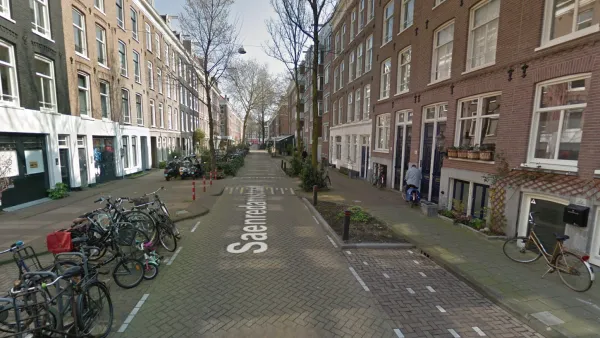
Watch: How to Remove Thousands of Parking Spaces
What the city of Amsterdam will gain by removing cars from on-street parking space.
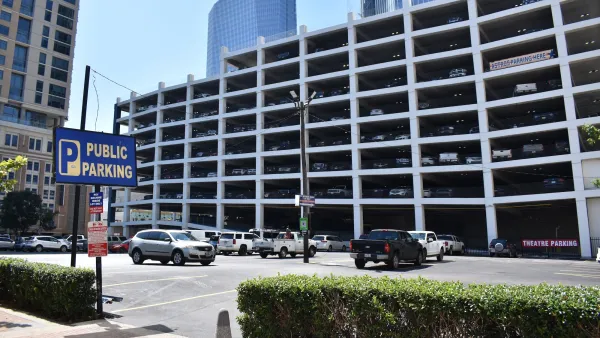
Downtown Houston parking garage will take up an entire block
The garage will connect to the Houston Center retail complex, a 4.6-million square foot office and commercial site.
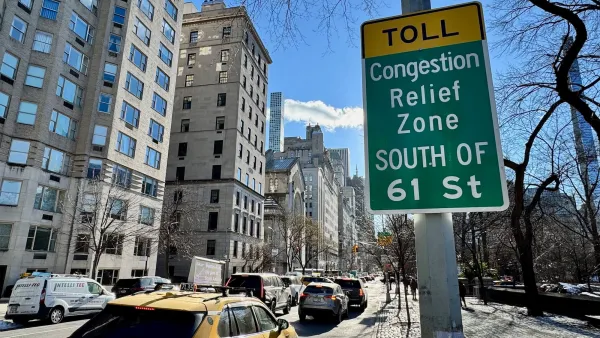
Study: NYC congestion pricing didn't impact parking demand
A city report shows that free parking, not congestion pricing, is the main driver of limited parking demand in the city.

Planetizen Federal Action Tracker
A weekly monitor of how Trump’s orders and actions are impacting planners and planning in America.

Northwest rail fans eager for Sept. 30 debut of Amtrak’s Airo fleet
Get ready for that new train smell and more seats. But they won’t go faster or run more frequently on the Cascades route in Washington and Oregon.
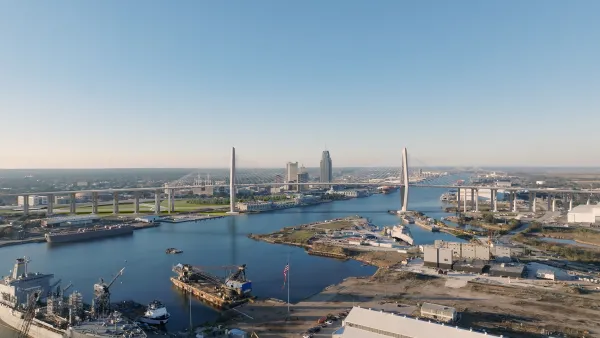
Alabama scores up to $2.5 billion federal loan for largest infrastructure project in state’s history
The Mobile River Bridge and Bayway Project aims to ease congestion at Alabama’s worst bottleneck.

Novel study finds extreme state-by-state disparity in housing construction timelines
The first comprehensive working paper on U.S. construction timelines also found that the permitting process for multi-family projects has slowed nationwide.

California may destroy its beaches trying to save homes from El Niño
Boulders and seawalls can protect homes from waves, but ultimately destroy sandy beaches.

California high-speed rail accomplishes only one legislative goal in 2026
The majority of the agency's failed pitches were never developed into written proposals.

FREE Course: Walkable City 1: Why Walkability?
After describing his path towards focusing on walkability as the essence of good planning, Jeff Speck marches through his five principal reasons for making more walkable places.
Reinventing Malls: Planning Alchemy—Turning Gray Fields Into Gold
The course focuses on the opportunities and imperatives that shape reinvention of mall sites.

City of Thousand Oaks
City of Wisconsin Rapids
Harvard University Graduate School of Design
The Architects Foundation
University of Cincinnati Online
Northern Illinois Transit Authority (NITA)
The Pocatello Development Authority
The Urban Renewal Agency of the City of Pocatello