NYC would certainly not be the first, but the Henry Hudson Bridge would be one of the most significant bridges to go to all-electronic fare collection. No E-ZPass? No worry - your license will be photographed and you'll get the bill in the mail.


As many motorists, environmentalists, and even Planetizen readers have noted, the queues at the toll plazas are one part of driving that may be uniformly dreaded. Toll authorities, including NY's MTA, feel your pain.
"The Metropolitan Transportation Authority is embarking on a pilot program on the Henry Hudson Bridge between Manhattan and the Bronx to create an all-electronic toll system, allowing cars to zip over the crossing without slowing to a crawl.
The program...would eliminate the gates that currently force E-ZPass users to come to a complete stop, even at tolls that require no cash transaction. Staffed tollbooths for customers who now pay cash would eventually be phased out, and drivers who do not subscribe to E-ZPass would be mailed a bill."
"It is a test to see how we can move toward an all-electronic tolling environment," Mr. Walder, the authority's chairman, said in an interview."
Thanks to Streetsblog Daily
Read the full story: M.T.A. to Test Eliminating Tollbooths, Relying on E-ZPass
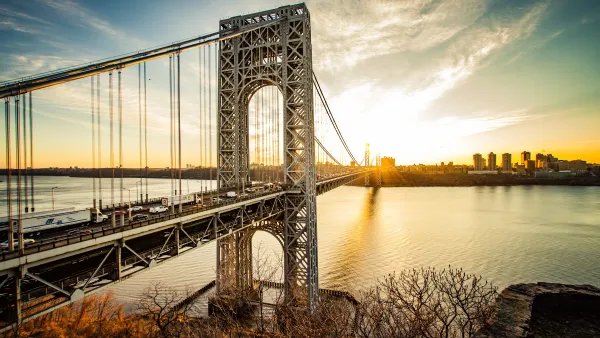
NJ v. U.S. DOT: Cordon Pricing in Manhattan
The State of New Jersey filed a federal lawsuit against the U.S. Department of Transportation on Friday to halt the Manhattan cordon pricing project approved in June by the FHWA, charging that they violated the National Environmental Protection Act.
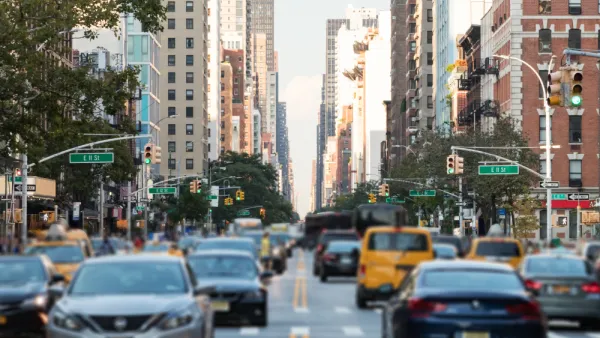
New Yorkers Weigh in on Congestion Pricing
Hundreds of people signed up to speak at the city’s first public meeting on the long-delayed plan to charge drivers entering Manhattan’s Central Business District.
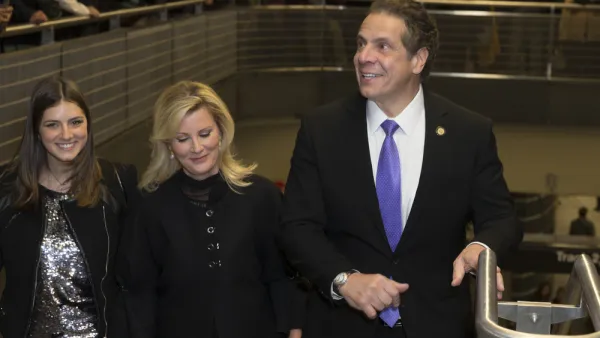
How NY Gov. Andrew Cuomo Came to Support Congestion Pricing
Gov. Andrew Cuomo was not an early endorser of congestion pricing. Why the sudden embrace, particularly when Mayor Bill de Blasio is opposed? Turns out that electronic tolling technology, embraced by the MTA, appears to have moved the governor.

Planetizen Federal Action Tracker
A weekly monitor of how Trump’s orders and actions are impacting planners and planning in America.

Eastern Nebraska is running out of electricity
Data centers and electrification are straining eastern Nebraska’s grid, throttling economic development.

Study reveals best places in the U.S. for cycling, walking
New research from Streetlight Data examines bicycle and pedestrian miles per capita in the 100 largest U.S. cities by population.

DSA members accuse Mamdani of 'abandoning values' over housing redevelopment
New York City's mayor plans to replace about 2,000 units of public housing with private, mixed-income housing.

All sides of BRT debate unhappy with CDOT’s most recent move
The Colorado Department of Transportation is no longer considering center-running bus lanes for Colorado Boulevard.

Massachusetts bogs generate both power, and cranberries
Putting solar panels above farmland is one way Massachusetts is advancing toward its goal of net-zero carbon emissions by 2050.

FREE Course: Walkable City 1: Why Walkability?
After describing his path towards focusing on walkability as the essence of good planning, Jeff Speck marches through his five principal reasons for making more walkable places.
Reinventing Malls: Planning Alchemy—Turning Gray Fields Into Gold
The course focuses on the opportunities and imperatives that shape reinvention of mall sites.

City of Rosemead
Rutgers University, Edward J. Bloustein School of Planning and Public Policy
One Hundred Miles
University of Michigan School for Environment and Sustainability (SEAS)
Hunter College, City University of New York (CUNY)
The Architects Foundation
City of Cambridge
The Pocatello Development Authority
The Urban Renewal Agency of the City of Pocatello