























Prof. Sharon Zukin argues that Jacobs had "a gentrifier’s appreciation of urban authenticity" in her new book, Naked City.


Zukin tackles the issue of gentrification and the people who lay claim to the authenticity of neighborhoods, particularly in New York. She finds no easy answers, but does believe in the quest to preserve authenticity.
In the New York Post: "In the end, New York City development revolves around who successfully claims ownership of a neighborhood. Conflict arises when 'groups representing the opposing visions claim the same space,' Zukin says, especially in 'the conflict over authentic representations of neighborhoods like Red Hook, between old working-class homeowners, public housing project tenants, and gentrifiers.'"
FULL STORY: Naked City

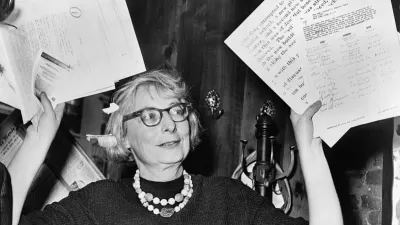
Deconstructing Saint Jane
The iconic urban thinker has influenced generations of planners, but how do her ideas hold up in an age of massive upheaval and economic inequality?
Comic Illustrates the Capitalist Co-option of Jane Jacobs's Teachings
A new illustrate comic strip published by the Nib examines "Jane Jacobs vs. The Power Brokers."
100 Years After Her Birth, Jane Jacobs Might Not Recognize New York
Sam Hall Kaplan reviews "Eyes on Street: The Life of Jane Jacobs" and offers insight gained from personal experience with the "Saint of City Planning."

Planetizen Federal Action Tracker
A weekly monitor of how Trump’s orders and actions are impacting planners and planning in America.

Map: Where Senate Republicans Want to Sell Your Public Lands
For public land advocates, the Senate Republicans’ proposal to sell millions of acres of public land in the West is “the biggest fight of their careers.”
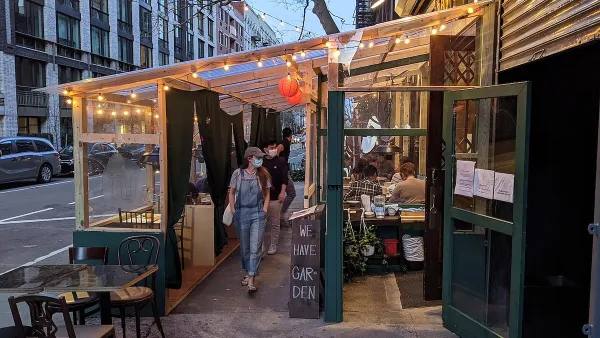
Restaurant Patios Were a Pandemic Win — Why Were They so Hard to Keep?
Social distancing requirements and changes in travel patterns prompted cities to pilot new uses for street and sidewalk space. Then it got complicated.

Platform Pilsner: Vancouver Transit Agency Releases... a Beer?
TransLink will receive a portion of every sale of the four-pack.

Toronto Weighs Cheaper Transit, Parking Hikes for Major Events
Special event rates would take effect during large festivals, sports games and concerts to ‘discourage driving, manage congestion and free up space for transit.”

Berlin to Consider Car-Free Zone Larger Than Manhattan
The area bound by the 22-mile Ringbahn would still allow 12 uses of a private automobile per year per person, and several other exemptions.

Urban Design for Planners 1: Software Tools
This six-course series explores essential urban design concepts using open source software and equips planners with the tools they need to participate fully in the urban design process.
Planning for Universal Design
Learn the tools for implementing Universal Design in planning regulations.

Heyer Gruel & Associates PA
JM Goldson LLC
Custer County Colorado
City of Camden Redevelopment Agency
City of Astoria
Transportation Research & Education Center (TREC) at Portland State University
Camden Redevelopment Agency
City of Claremont
Municipality of Princeton (NJ)