Sweetheart deals using public monies to fund stadiums have backfired across the country, causing more drain than gain.


Ken Belson of the New York Times focuses on the example of Cincinnati, where voters approved a sales tax increase to fund building a stadium for the Bengals and the Reds. With sales tax revenue plummeting, the city is left holding the bag for the sports center.
Belson writes, "The teams have not volunteered to rewrite their leases. So in the coming weeks, the county plans to cut basic services, lower its legal bills and drain a bond reserve fund with no plan for paying it back.
'Anyone looking at this objectively knows it's a train wreck,' said Dusty Rhodes, the county auditor. 'I told them they were making a big mistake, but they didn't want to hear me.'
Cincinnati is hardly alone."
Read the full story: Stadium Boom Deepens Municipal Woes
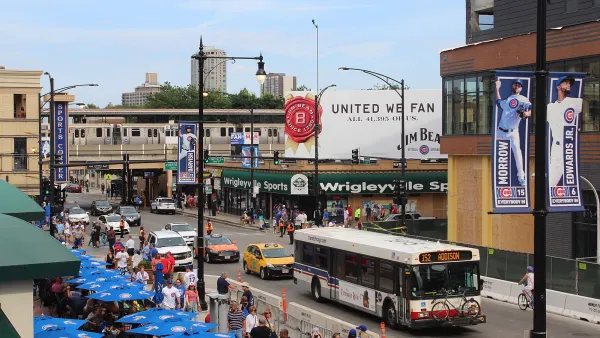
New Development Continues in Wrigleyville
New mixed-use projects bring residential units, retail, and entertainment venues to the neighborhood surrounding Chicago's Wrigley Field as stadium-adjacent development grows in popularity.
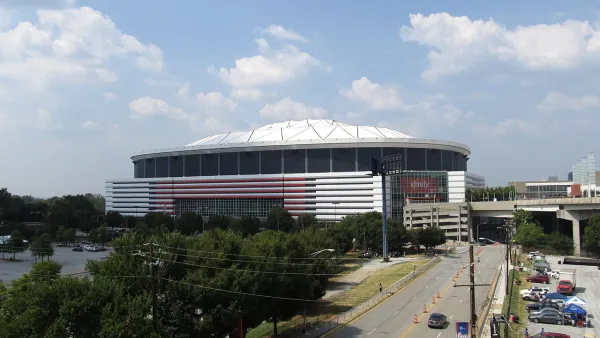
When Publicly Funded Stadiums Gut Neighborhoods
In Atlanta—and throughout the country—city politicians have proven willing and eager to support stadium construction. But though these facilities are marketed as economic drivers, they often cause steep declines instead.
Publicly-Funded Stadiums Bad Deal for Cities
Sports teams often coerce cities into contributing public funds toward the building of new stadiums. Numerous reports indicate that it's a bad deal for cities with little to no positive economic impact, writes Neal DeMause.

Washington state to charge fee to drivers with fuel-efficient cars
Revenue from the fee will go towards supporting the state’s highways.

Illinois considers spending $1 billion in taxpayer money on data center
A quantum computing campus and data center are currently under construction in Chicago.

Trump to blast ‘hydrocarbon highway’ through ‘world’s longest art gallery’
Environmental and historic preservation groups are suing to stop the project.

Boston City Council votes to no longer mandate parking in residential developments
The Boston Zoning Commission still needs to approve the proposal.

Passengers in New York, California lift off in air taxis
Two air taxi companies have received a Special Airworthiness Market Survey Certificate, which allows them to service passengers.

MTA to upgrade subway signals for entire network by 2050
This is the first time New York City has planned to modernize subway signals in the Bronx.

FREE Course: Walkable City 1: Why Walkability?
After describing his path towards focusing on walkability as the essence of good planning, Jeff Speck marches through his five principal reasons for making more walkable places.
Reinventing Malls: Planning Alchemy—Turning Gray Fields Into Gold
The course focuses on the opportunities and imperatives that shape reinvention of mall sites.

City of Charlotte
City of Rosemead
Rutgers University, Edward J. Bloustein School of Planning and Public Policy
University of Michigan School for Environment and Sustainability (SEAS)
Hunter College, City University of New York (CUNY)
The Architects Foundation
University District Partnership