























Walkable, transit-accessible neighborhoods do more than just lower greenhouse gas emissions of their residents - they save them money too, states a new report, "Windfall for All", from the Bay Area's TransForm, a coalition of over 100 non-profits.


The new report seems tied to California's landmark anti-sprawl law, SB 375, that aims to reduce vehicle-miles-traveled in metropolitan areas in order to meet greenhouse reduction goals.
"The study, "Windfall For All: How Connected, Convenient Neighborhoods Can Protect Our Climate And Safeguard California's Economy," found that people in Sacramento, the Bay Area, Los Angeles and San Diego who live near public transportation on average emit fewer carbon emissions and spend billions less on transportation compared to people who live in areas where public transit is scarce."
From Sacramento Bee:
"The study... was conducted by Oakland-based TransForm, formerly the Transportation and Land Use Coalition. TransForm is a coalition that includes nonprofits, environmental advocates and labor unions.
If all residents in the four areas lived in transportation-friendly communities, the study said, they would save $31 billion per year on transportation costs and emit 34 percent less greenhouse gas.
They said the study also underscores the goals of Senate Bill 375, signed into law last year. The bill, by Sacramento Democrat Sen. Darrell Steinberg, is designed to cut greenhouse gas emissions through anti-sprawl measures, including rewarding new residential development with easy access to public transit."
Thanks to Steve Levy
FULL STORY: Study: 'Walkable neighborhoods' could save state $31M

City of Los Angeles Tops 4 Million in Latest State Population Report
As usual, California's fastest growing counties were inland, far from coastal job centers. The big surprise was that the fastest growing city was an affluent Silicon Valley suburb that had been sued in 2012 by affordable housing advocates.
Feds Withholding $2 Billion in Funding for CA Transit
The U.S Department of Labor is holding up the distribution of billions of dollars in transit funding destined for San Diego, Sacramento, Los Angeles and other California cities due to a new state pension law's impact on transit workers.

An Unexpected Turn for California's New State Population Report
Population data released May 1 by the Department of Finance reveals the Golden State's lowest population growth rate on record, at 0.47 percent.

Planetizen Federal Action Tracker
A weekly monitor of how Trump’s orders and actions are impacting planners and planning in America.
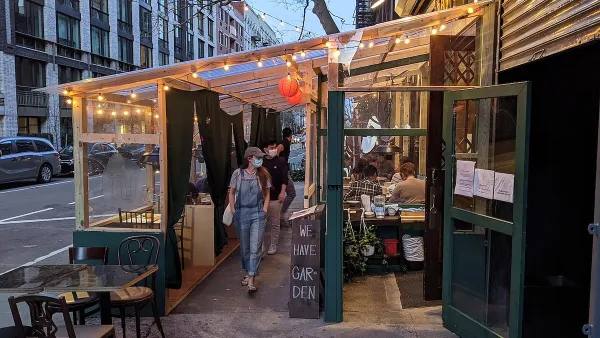
Restaurant Patios Were a Pandemic Win — Why Were They so Hard to Keep?
Social distancing requirements and changes in travel patterns prompted cities to pilot new uses for street and sidewalk space. Then it got complicated.
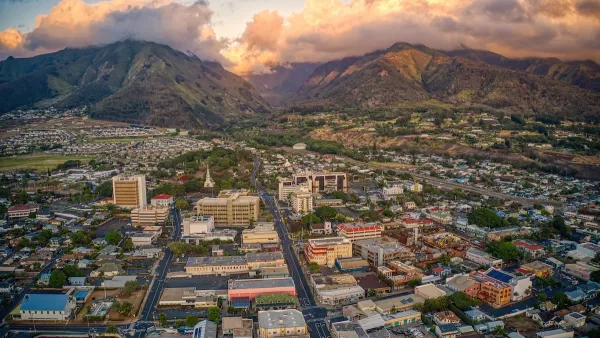
Maui's Vacation Rental Debate Turns Ugly
Verbal attacks, misinformation campaigns and fistfights plague a high-stakes debate to convert thousands of vacation rentals into long-term housing.

In California Battle of Housing vs. Environment, Housing Just Won
A new state law significantly limits the power of CEQA, an environmental review law that served as a powerful tool for blocking new development.

Boulder Eliminates Parking Minimums Citywide
Officials estimate the cost of building a single underground parking space at up to $100,000.

Orange County, Florida Adopts Largest US “Sprawl Repair” Code
The ‘Orange Code’ seeks to rectify decades of sprawl-inducing, car-oriented development.

Urban Design for Planners 1: Software Tools
This six-course series explores essential urban design concepts using open source software and equips planners with the tools they need to participate fully in the urban design process.
Planning for Universal Design
Learn the tools for implementing Universal Design in planning regulations.

Heyer Gruel & Associates PA
JM Goldson LLC
Custer County Colorado
City of Camden Redevelopment Agency
City of Astoria
Transportation Research & Education Center (TREC) at Portland State University
Camden Redevelopment Agency
City of Claremont
Municipality of Princeton (NJ)