


























Imagine this: Replacing the sales tax on purchasing a new vehicle and annual, 'fixed' fees with a VMT fee based on size, weight, and CO2 emissions of the vehicle. This is the plan of the Dutch government to reduce congestion and greenhouse gases.


Will a new, variable vehicle-miles-traveled fee using GPS that may, in fact be revenue-neutral, reduce congestion and carbon dioxide emissions? The Dutch cabinet thinks it will, but the Parliament hasn't ruled on it yet.
"The Dutch government said Friday it wants to introduce a "green" road tax by the kilometre from 2012 aimed at cutting carbon dioxide emissions by 10 percent and halving congestion.
"Each vehicle will be equipped with a GPS device that tracks how many kilometres are driven and when and where. This data will be then be sent to a collection agency that will send out the bill," the transport ministry said in a statement.
Ownership and sales taxes, about a quarter of the cost of a new car, will be scrapped and replaced by the "price per kilometre" system aimed at cutting the Netherlands' carbon dioxide emissions by 10 percent."
Thanks to Ed Braddy
FULL STORY: Netherlands to levy 'green' road tax by the kilometre


Is Privacy Overrated as a Concern for Mileage Fees?
'Big Brother' has long been voiced as a criticism of charging motorists by the mile driven, but in the ongoing Oregon road usage charge program, more than 75 percent of volunteer enrollees opted for a recording technology with GPS.
Need Convincing that Vehicle-Miles-Traveled Fees Make Sense?
Eric Jaffe's July 1 article in CityLab has 18 reasons, and not one in opposition. The date is significant as it marks the official kickoff of the Oregon Road Usage Charge program.
GPS Technology Chosen for Oregon's Road Usage Charge
Oregon's much heralded mileage fee program, known as OReGO, has selected the technology to record the miles driven by participants. A French and Canadian company will collaborate to provide a telematics road usage charging framework to begin July 1.

Planetizen Federal Action Tracker
A weekly monitor of how Trump’s orders and actions are impacting planners and planning in America.

Chicago’s Ghost Rails
Just beneath the surface of the modern city lie the remnants of its expansive early 20th-century streetcar system.
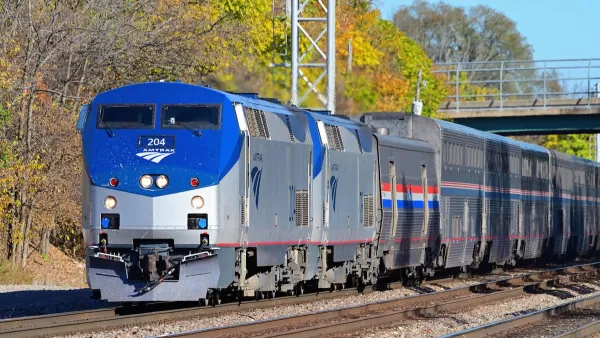
Amtrak Cutting Jobs, Funding to High-Speed Rail
The agency plans to cut 10 percent of its workforce and has confirmed it will not fund new high-speed rail projects.

Ohio Forces Data Centers to Prepay for Power
Utilities are calling on states to hold data center operators responsible for new energy demands to prevent leaving consumers on the hook for their bills.

MARTA CEO Steps Down Amid Citizenship Concerns
MARTA’s board announced Thursday that its chief, who is from Canada, is resigning due to questions about his immigration status.

Silicon Valley ‘Bike Superhighway’ Awarded $14M State Grant
A Caltrans grant brings the 10-mile Central Bikeway project connecting Santa Clara and East San Jose closer to fruition.

Urban Design for Planners 1: Software Tools
This six-course series explores essential urban design concepts using open source software and equips planners with the tools they need to participate fully in the urban design process.
Planning for Universal Design
Learn the tools for implementing Universal Design in planning regulations.

Caltrans
City of Fort Worth
Mpact (founded as Rail~Volution)
City of Camden Redevelopment Agency
City of Astoria
City of Portland
City of Laramie