Changing technologies and erratic political schedules are altering the way the public interacts with elected officials. For some politicians, the new form of public participation can get them into trouble.


YouTube videos of politicians making off-color remarks are causing some to shy away from the typical town hall meeting in favor of less public interaction.
"In recent decades, with lawmakers shuttling between Washington and their districts, squeezing constituent meetings into weekends and short breaks, town halls emerged as a convenient one-stop-shopping for lawmakers to hear citizens' concerns. Presidents used them too; in 1978, Jimmy Carter tried to sell voters on the Panama Canal treaty by phoning town hall meetings.
Now, though, the complaining constituent is not always who he seems to be. In Wisconsin last week, Representative Steve Kagen, a Democrat, was challenged on health care by a woman who declared herself politically unaffiliated; the local television station later discovered that she was a former Republican Party official who had worked for Mr. Kagen's opponent in his Congressional race."
Read the full story: Where Have You Gone, Joe the Citizen?
Montana Land Use Reform Overhauls Public Participation Rules
In a bid to streamline housing permits, new state legislation limits public input to the land use planning stage.

Covid Burnout Causing Mayoral Turnover
A large number of local leaders are leaving office ahead of schedule; many report Covid burnout as the cause of their departure.
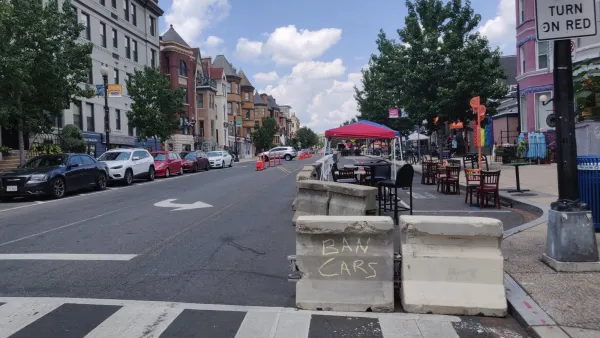
The Slow Streets Reckoning
Slow streets programs provided a quick short-term solution and paved the way for some permanent street closures and realignments. Now, these programs are getting a second look as community groups react to the changes.

Planetizen Federal Action Tracker
A weekly monitor of how Trump’s orders and actions are impacting planners and planning in America.

California plans to bury El Niño’s downpour
If the state plays its cards right, it may be able to store a billion acre-feet of El Niño’s water in aquifers.

Desperate measures: Advocates weigh draining Lake Powell to fill Colorado River
Draining the reservoir could reduce evaporation losses by a couple hundred thousand acre-feet.

In Texas, data centers are swallowing promised parkland
Residents who moved to Taylor, Texas for a rural community now have to contend with three data centers in their backyard.

How a Chicago-sized wind farm beat the odds and powered on
The project spanned five presidential administrations and a standoff with a U.S. military base.

MTA gives itself 30 days to transform pit into basketball court
The site has been under construction since 2022; the city originally estimated it would finish the court in 2024.

FREE Course: Walkable City 1: Why Walkability?
After describing his path towards focusing on walkability as the essence of good planning, Jeff Speck marches through his five principal reasons for making more walkable places.
Reinventing Malls: Planning Alchemy—Turning Gray Fields Into Gold
The course focuses on the opportunities and imperatives that shape reinvention of mall sites.

City of Rosemead
Rutgers University, Edward J. Bloustein School of Planning and Public Policy
One Hundred Miles
Hunter College, City University of New York (CUNY)
The Architects Foundation
University of Cincinnati Online
City of Cambridge
Montrose County
The Pocatello Development Authority