With great fanfare, the Bay Area's Greenbelt Alliance has released a new report, "Grow Smart Bay Area", the premise being that future population and job growth can be accommodated by infill and by doing so, will add to the region's sustainability.


The Bay Area's premier open space and regional smart growth organization, Greenbelt Alliance, has launched an aggressive campaign to promote infill and stop sprawl in the 9-county Bay region. The report identifies both strategies and specific areas to accommodate the infill growth.
"Grow Smart Bay Area", released June 10 by the Greenbelt Alliance, persuasively asserts that all of the growth in housing and jobs expected by 2035 around the bay can be absorbed within existing cities, without annexing an acre of open land. And it shows how building on the vacant or underutilized sites that the Greenbelt task force identified can create more livable, walkable neighborhoods - if cities adopt policies that encourage good neighborhood design."
From SF Chronicle:
"The group identified 100 "priority" development sites that could best handle growth. These should be the areas for future housing and commercial development, rather than farmland, forests and other open space, according to the group's executive director, Jeremy Madsen."
Thanks to Steve Levy
Read the full story: Editorial: Region can add homes, jobs without more sprawl

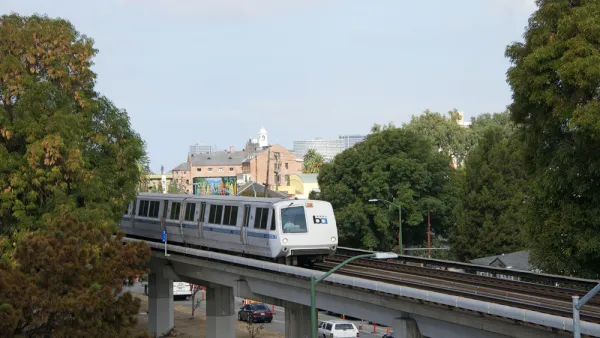
The San Francisco Bay Area Voted for a Sustainable, Inclusive Future
We can’t simply rely on the federal government to solve the San Francisco Bay Area’s challenges. Time and time again, we have turned to local do-it-yourself solutions. This year, voters rolled up their sleeves and took matters into their own hands.
Effect of California's New Anti-Sprawl Law Uncertain
Clearly it has aroused enormous excitement and hope amongst California's smart growth advocates, but the new anti-sprawl, greenhouse gas-reducing law, SB 375, may do more in the tone it sets than in the changes its supporters hope it makes.
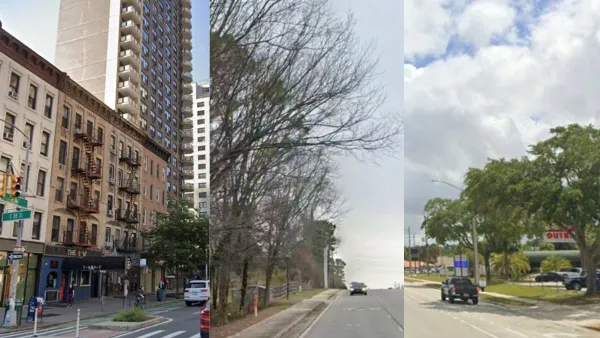
A Transect of sprawl
A development pattern this lifestyle-defining deserves its whole own classification system.

Planetizen Federal Action Tracker
A weekly monitor of how Trump’s orders and actions are impacting planners and planning in America.

California plans to bury El Niño’s downpour
If the state plays its cards right, it may be able to store a billion acre-feet of El Niño’s water in aquifers.

Desperate measures: Advocates weigh draining Lake Powell to fill Colorado River
Draining the reservoir could reduce evaporation losses by a couple hundred thousand acre-feet.

California’s ‘unrecognizable’ water plan may go down the drain
After four years of regulatory processes, water agencies say the plan to overhaul how cities and farms take water from the Sacramento-San Joaquin Delta has changed dramatically.

Chicago Avenue bridge construction delays enrages city leaders
The bridge has been closed since 2025. The city originally aimed to re-open it in December, and now expects to finish construction in 2027.

NYC bus network redesign speeds up Queens buses
Rush routes have seen a 4.6% speed increase after the redesign.

FREE Course: Walkable City 1: Why Walkability?
After describing his path towards focusing on walkability as the essence of good planning, Jeff Speck marches through his five principal reasons for making more walkable places.
Reinventing Malls: Planning Alchemy—Turning Gray Fields Into Gold
The course focuses on the opportunities and imperatives that shape reinvention of mall sites.

City of Rosemead
Rutgers University, Edward J. Bloustein School of Planning and Public Policy
One Hundred Miles
Hunter College, City University of New York (CUNY)
The Architects Foundation
University of Cincinnati Online
City of Cambridge
Montrose County
The Pocatello Development Authority