Michael Moore marks the GM bankruptcy by calling for the preservation of its industrial infrastructure in order to build sustainable transportation systems.


"The only way to save GM is to kill GM. Saving our precious industrial infrastructure, though, is another matter and must be a top priority. If we allow the shutting down and tearing down of our auto plants, we will sorely wish we still had them when we realize that those factories could have built the alternative energy systems we now desperately need. And when we realize that the best way to transport ourselves is on light rail and bullet trains and cleaner buses, how will we do this if we've allowed our industrial capacity and its skilled workforce to disappear?
Don't put another $30 billion into the coffers of GM to build cars. Instead, use that money to keep the current workforce -- and most of those who have been laid off -- employed so that they can build the new modes of 21st century transportation. Let them start the conversion work now. Announce that we will have bullet trains criss-crossing this country in the next five years. Initiate a program to put light rail mass transit lines in all our large and medium-sized cities. Build those trains in the GM factories. And hire local people everywhere to install and run this system. Transform some of the empty GM factories to facilities that build windmills, solar panels and other means of alternate forms of energy. We need tens of millions of solar panels right now. And there is an eager and skilled workforce who can build them.
Yesterday, the last surviving person from the Titanic disaster passed away. She escaped certain death that night and went on to live another 97 years. So can we survive our own Titanic in all the Flint Michigans of this country. 60% of GM is ours. I think we can do a better job. "
Read the full story: Goodbye, GM


Planetizen Federal Action Tracker
A weekly monitor of how Trump’s orders and actions are impacting planners and planning in America.

Amtrak, CN end decades-long dispute with eight-year agreement
The new operating agreement establishes an updated framework for the companies to work together, including processes to resolve disputes.
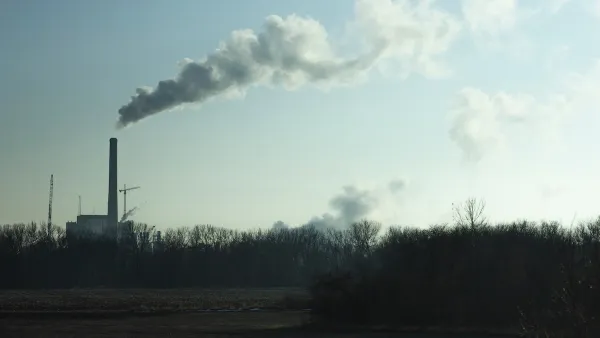
Nation's most wind-powered state turns to coal as data centers increase energy demand
For the first time in decades, Iowa has increased its generation of coal power.

Alabama scores up to $2.5 billion federal loan for largest infrastructure project in state’s history
The Mobile River Bridge and Bayway Project aims to ease congestion at Alabama’s worst bottleneck.

Trump is considering data centers on 6 states' public land — some state officials say they had no idea
If the administration approves the proposed projects, data center and data center-related developments will cover 17,600 acres of public land.

Despite court ruling, Trump is keeping nearly all wind projects in the US on hold
At least 110 wind energy projects have not heard from the government since a federal judge ruled that the Trump administration's freeze on wind turbine clearances was likely illegal.

FREE Course: Walkable City 1: Why Walkability?
After describing his path towards focusing on walkability as the essence of good planning, Jeff Speck marches through his five principal reasons for making more walkable places.
Reinventing Malls: Planning Alchemy—Turning Gray Fields Into Gold
The course focuses on the opportunities and imperatives that shape reinvention of mall sites.

KFH Group Inc.
Greater Baltimore Committee
Eagle County Government
The Architects Foundation
University of Cincinnati Online
The Pocatello Development Authority
The Urban Renewal Agency of the City of Pocatello