Shelby County and Memphis are on the verge of adopting a new smart growth zoning code to slow urban sprawl and breathe reinvigorate urban centers. The county's Main Street Mall will remain car-free. "Pedestrian-friendly" is the new planning theme.


"The basic zoning ordinance and subdivision regulations that have guided growth in Shelby County for a generation now are likely to be replaced with a code emphasizing entirely different patterns of development.
The new code embraces so-called smart-growth policies and focuses more on reclaiming existing neighborhoods in the urban core than developing new ones in suburbia.
The product of four years of debate and drafting, the proposed code provides for more pedestrian-friendly developments with a mix of commercial and residential uses."
From Editorial Urban planners and developers are realizing there's a price to pay in building wider roads while neglecting pedestrians:
"The Center City Commission has decided not to return vehicular traffic to the Main Street Mall. On May 28, the Land Use Control Board is expected to take up a Unified Development Code, designed to curb urban sprawl in Shelby County by requiring more pedestrian-friendly zoning."
Thanks to Steven Sondheim
Read the full story: Pedestrian-friendly zoning: Proposal to curb Shelby County sprawl
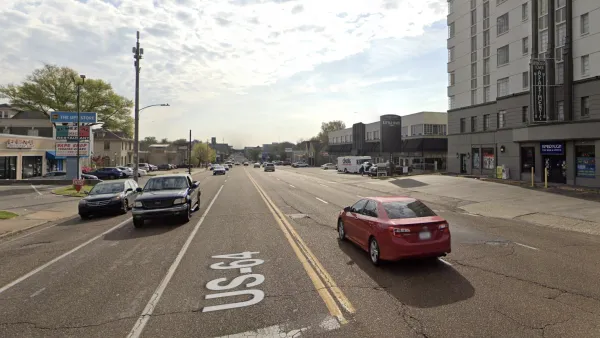
The road design trend that's killing Americans
“Stroads,” street-road hybrids that channel high-speed traffic through residential areas, are increasingly common and often deadly for pedestrians.

Why Nevada Needs Sustainable, Smart Growth
Sprawling cities like Las Vegas must rein in unchecked growth and promote infill development and more sustainable transportation modes.

Memphis Vehicle Fee Would Help Fund Transit
The proposed fee on households with multiple vehicles would generate $9 million to improve the region’s transit system.

Desperate measures: Advocates weigh draining Lake Powell to fill Colorado River
Draining the reservoir could reduce evaporation losses by a couple hundred thousand acre-feet.

Eastern Nebraska is running out of electricity
Data centers and electrification are straining eastern Nebraska’s grid, throttling economic development.

Malls are becoming the midtowns of the future
Mall and office park redevelopments are a generational opportunity to create new nodes of urbanity.

NYC breaks ground on anti-flooding infrastructure project
New York City's new system will reduce stormwater flows to local sewers by 90%.

One Kentucky town’s secret to affordable housing
The Smoketown Community Land Trust has already built seven affordable homes for community members.

Houston gains petal-shaped cooling infrastructure to make streets more ‘delightful’
The city has installed the pavilions along 15 blocks in Houston.

FREE Course: Walkable City 1: Why Walkability?
After describing his path towards focusing on walkability as the essence of good planning, Jeff Speck marches through his five principal reasons for making more walkable places.
Reinventing Malls: Planning Alchemy—Turning Gray Fields Into Gold
The course focuses on the opportunities and imperatives that shape reinvention of mall sites.

City of Rosemead
Rutgers University, Edward J. Bloustein School of Planning and Public Policy
One Hundred Miles
University of Michigan School for Environment and Sustainability (SEAS)
Hunter College, City University of New York (CUNY)
The Architects Foundation
City of Cambridge
Montrose County
The Pocatello Development Authority