Nate Silver, the baseball stats guy turned election predictor, takes a look at the statistics showing that Americans are driving less.


"How much of it is just a result of the bad economy? The unemployment rate has soared significantly since last summer; perhaps the only good thing about losing your job is that you no longer have to endure the drive to work.
To sort this out, I built a regression model that accounts for both gas prices and the unemployment rate in a given month and attempts to predict from this data how much the typical American will drive. The model also accounts for the gradual increase in driving over time, as well as the seasonality of driving levels, which are much higher during the summer than during the winter. (The results of the model are shown for the month of January in each year since 1980 in the graph above.)
The model predicts that given a somewhat higher unemployment rate but much lower gas prices, the lower gas prices should have won out: Americans should have driven slightly more in January 2009 than they had a year earlier. But instead, as we've described, they drove somewhat less. In fact, they drove about 8 percent less than the model predicted."
Read the full story: Nate Silver: The End of Car Culture
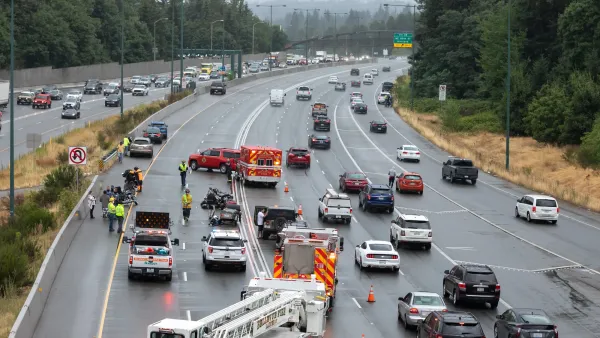
Commentary: Counting Road Deaths by VMT Minimizes the Harm and Normalizes Traffic Violence
When measured per capita, traffic fatalities in the United States far outstrip those in peer countries.
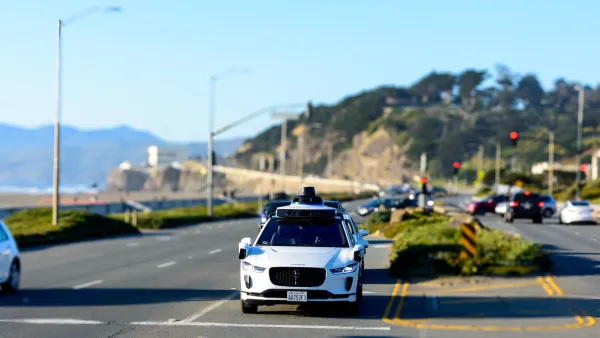
Study: Self-driving Cars Could Raise VMT by 6%, Increasing Congestion
The study contradicts early predictions that AVs would reduce driving miles.
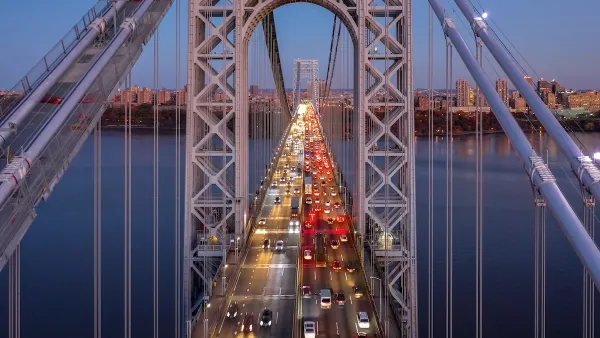
Vehicle Miles Travelled, Level of Service, and a Soon-to-be-Insolvent Transportation Trust Fund
Level of Service and the gas tax have served our transportation needs for a long time. Now, it’s time for a change.

Planetizen Federal Action Tracker
A weekly monitor of how Trump’s orders and actions are impacting planners and planning in America.

California plans to bury El Niño’s downpour
If the state plays its cards right, it may be able to store a billion acre-feet of El Niño’s water in aquifers.

Desperate measures: Advocates weigh draining Lake Powell to fill Colorado River
Draining the reservoir could reduce evaporation losses by a couple hundred thousand acre-feet.

US buildings threatened, destroyed by fires set to triple by 2060
Researchers found a high fire risk for socioeconomically vulnerable neighborhoods in the American West.

LA residents may be allowed to paint their own crosswalks
Councilwoman Katy Yaroslavsky put out a motion instructing the Los Angeles Department of Public Transportation to study the feasibility of allowing volunteers to paint crosswalks.

Dallas moves to overhaul its zoning code
The city's zoning reform will allow more multi-family and mixed-use developments.

FREE Course: Walkable City 1: Why Walkability?
After describing his path towards focusing on walkability as the essence of good planning, Jeff Speck marches through his five principal reasons for making more walkable places.
Reinventing Malls: Planning Alchemy—Turning Gray Fields Into Gold
The course focuses on the opportunities and imperatives that shape reinvention of mall sites.

City of Rosemead
Rutgers University, Edward J. Bloustein School of Planning and Public Policy
One Hundred Miles
Hunter College, City University of New York (CUNY)
The Architects Foundation
University of Cincinnati Online
City of Cambridge
Montrose County
The Pocatello Development Authority