Big-name and big-budget projects in New York are basking in the spotlight, but smaller, community-based projects are also flourishing in the Bronx.


"Today, with the Bloomberg administration raining billions of public-private investment on the borough-a result of the South Bronx Initiative, an interagency effort launched in 2006 to encourage more housing, retail, and local jobs-there is no shortage of big-budget, star-quality projects. The new Yankee Stadium, a revamped Hunts Point Market, and the Gateway Center on the site of the former Bronx Terminal Market are all poised to make a dramatic impact on Bronx fortunes.
At the other end of the spectrum, smaller projects in the borough-receiving less media coverage and funding-have arguably undergirded much of this restoration, with impact far beyond their modest budgets. Be they green-roof entrepreneurs, supportive-housing visionaries, or boxing-gym designers, architects are transforming the borough one vacant lot or storefront at a time. Working alongside established architects such as Richard Dattner, whose 323-unit Courtlandt Corners is among the city's larger affordable housing developments, they have made the range and reach of community-driven Bronx development more vibrant than ever. And by engaging Bronx residents, they're connecting the dots between social, environmental, and economic sustainability."
FULL STORY: Bronx Renaissance


A Bronx Community Fights to Have its Voice Heard
After organizing and giving input for decades, the community around the Kingsbridge Armory might actually see it redeveloped — and they want to continue to have a say in how it goes.

NYC Congestion Pricing Revenue Will Fund up to 1,000 Hybrid Refrigerated Trucks
Traffic to the Hunts Point Produce Market causes increased rates of asthma in surrounding neighborhoods.
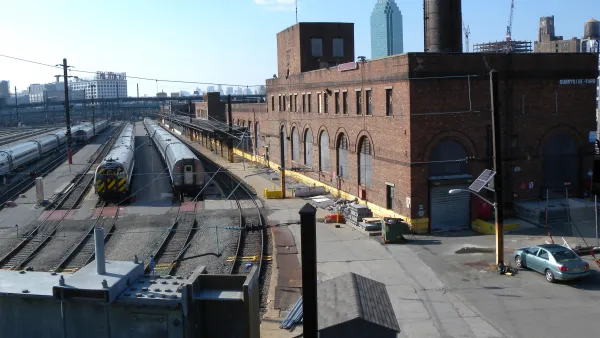
Mamdani Proposes Reviving Sunnyside Yard Project in Meeting With Trump
A proposed redevelopment in Trump’s native Queens could create as many as 12,000 new housing units.

Planetizen Federal Action Tracker
A weekly monitor of how Trump’s orders and actions are impacting planners and planning in America.

The state-sanctioned urbicide of Austin
People don’t kill cities. Freeways do.

US to reduce Colorado River water deliveries to Mexico
A new Colorado Treaty amendment reduces Mexico’s Colorado River water allocation by 250,000 acre feet.

5 New England states march closer to 800 megawatt wind energy project
Securing federal approval for the project may be complicated under the Trump administration, which has historically been hostile towards domestic wind power.

Baltimore to break ground on $50 million Transit Priority Project
The project will bring faster bus trips, safer streets and better bike connections to Baltimore.

Airbnb launches $250 million 'last-dollar financing' housing accelerator, makes first investment in Austin
The company will put $6.4 million towards affordable housing development in Texas’ capital.

FREE Course: Walkable City 1: Why Walkability?
After describing his path towards focusing on walkability as the essence of good planning, Jeff Speck marches through his five principal reasons for making more walkable places.
Reinventing Malls: Planning Alchemy—Turning Gray Fields Into Gold
The course focuses on the opportunities and imperatives that shape reinvention of mall sites.

Eagle County Government
Harvard University Graduate School of Design
Nashville Planning Department
The Architects Foundation
University of Cincinnati Online
The Pocatello Development Authority
The Urban Renewal Agency of the City of Pocatello
Journal of the American Planning Association