The stimulus plan includes $8 billion for investments in high-speed rail, but some critics point out that this isn't nearly enough to bring these plans to fruition.


"To Americans, high-speed trains evoke the gee-whiz factor of a trip to Tomorrowland: Ride futuristic cars that zoom you to a destination in a fraction of the drive time - without having to fight your way through an airport. Read a book, do paperwork, take a nap while you whoosh ahead in high-speed comfort. To governments, they evoke benefits to the common good - reduced freeway traffic, lower carbon pollution and more jobs.
But...President Barack Obama, intent on harnessing new technology to rebuild the devastated economy, made a last-minute allocation of $8 billion for high-speed rail in his mammoth stimulus plan.
It sounds good, but that amount isn't enough to build a single system, or to dramatically increase existing train speeds, transportation experts say."
Read the full story: Billions for high-speed rail; anyone aboard?


California High-Speed Rail Authority could be broke by the end of 2027
A report from the Office of Inspector General says the authority must borrow against state infusions to stay afloat.
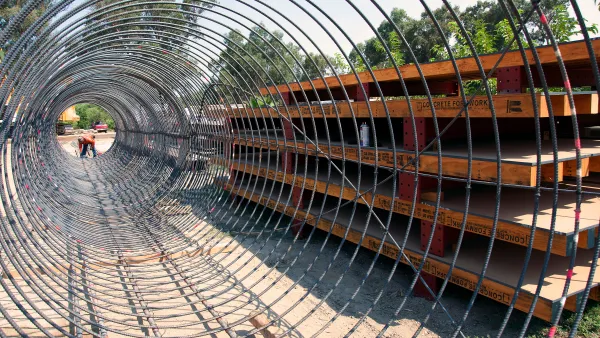
California High Speed Rail to lay first tracks
High Speed Rail Authority officials describe the milestone as "the moment this project truly begins to become a railroad."
TOD Opportunities Around America's First True High-Speed Rail Line
Brightline West hopes to break ground, in anticipation of a 2027 opening. Cities in the Inland Empire and High Desert areas of Southern California are looking to take advantage.

Planetizen Federal Action Tracker
A weekly monitor of how Trump’s orders and actions are impacting planners and planning in America.

Data reveals that NYC’s bet on congestion pricing has paid off
After almost two years of the program, reports show positive impacts on traffic and air quality and no disruptions to parking.

HUD modernizes 50-year-old manufactured housing framework
The Next Generation Manufactured Housing Action Plan establishes new energy-efficiency standards for manufactured homes, and new guidelines for anchoring them.

California voters weigh $11.25 billion housing bond
Prop. 1, combined with other funding, would support over 40,000 new rental units in California.

Connecticut is turning landfills into green infrastructure
Twenty-nine solar arrays have been built, or approved to be built, on top of Connecticut landfills.

Trump guts ‘win-win’ solar energy program for rural farmers
The U.S. Department of Agriculture’s changes have made virtually all solar power ineligible for funding through the Rural Energy for America Program.

FREE Course: Walkable City 1: Why Walkability?
After describing his path towards focusing on walkability as the essence of good planning, Jeff Speck marches through his five principal reasons for making more walkable places.
Reinventing Malls: Planning Alchemy—Turning Gray Fields Into Gold
The course focuses on the opportunities and imperatives that shape reinvention of mall sites.

One Hundred Miles
County of Mendocino
planning NEXT
The Architects Foundation
University of Cincinnati Online
Montrose County
Northern Illinois Transit Authority (NITA)
The Pocatello Development Authority