























In these austere times, some urbanists are advocating greater use of the traditional rectilinear grid — an efficient, less expensive, but also challenging pattern.


"A grid lowers per-unit infrastructure costs 35 to 40 percent compared to conventional suburban development, reports Jonathan Ford, a planner and civil engineer with Morris Beacon Design. In a study for EPA, he ran cost comparisons of various development scenarios for a South Carolina site. His research indicates that a rectilinear grid costs slightly less for infrastructure than a typical new urban modified grid, although more study is needed to get a more precise cost comparison, he says.
A bigger difference between a creative and a rectilinear street network could be the relative efficiency and the speed of implementation for builders and developers, Ford says. 'I love to design these [quirky, organic] layouts and the places that are created, but there are so many details that have to be designed right. It has to be done lot by lot.' [Kevin] Klinkenberg adds that if the layout is more complex, the developer may have fewer chances to replicate some designs and make money on them later in the project. 'The reality is that builders and developers really want to do simple, rectilinear buildings,' he says"
Thanks to Renee Gayle
FULL STORY: The case for the simple grid


Two Cheers For the Planners’ Pledge
A “Planners’ Pledge” created by some of the leading authorities on planning sets forth a bold urbanist agenda- even if not every idea in the pledge is equally useful in all cities.

A Better Understanding of Smart Growth Benefits
Smart Growth creates compact, multimodal communities where residents consume less land, drive less, and rely more on non-auto modes. Planners have important stories to tell about the benefits of Smart Growth.
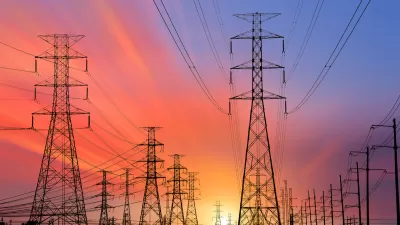
Utilities Spending Less on Energy Efficiency Despite Higher Fuel Prices
A survey of major utilities reveals a link between states with strict efficiency standards and incentive programs and efforts to improve efficiency on the part of utilities.

Planetizen Federal Action Tracker
A weekly monitor of how Trump’s orders and actions are impacting planners and planning in America.

Map: Where Senate Republicans Want to Sell Your Public Lands
For public land advocates, the Senate Republicans’ proposal to sell millions of acres of public land in the West is “the biggest fight of their careers.”
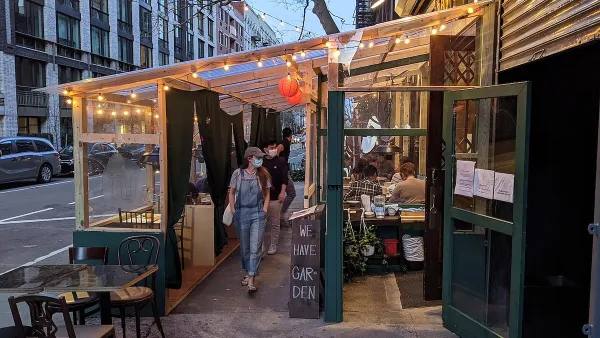
Restaurant Patios Were a Pandemic Win — Why Were They so Hard to Keep?
Social distancing requirements and changes in travel patterns prompted cities to pilot new uses for street and sidewalk space. Then it got complicated.

Platform Pilsner: Vancouver Transit Agency Releases... a Beer?
TransLink will receive a portion of every sale of the four-pack.

Toronto Weighs Cheaper Transit, Parking Hikes for Major Events
Special event rates would take effect during large festivals, sports games and concerts to ‘discourage driving, manage congestion and free up space for transit.”

Berlin to Consider Car-Free Zone Larger Than Manhattan
The area bound by the 22-mile Ringbahn would still allow 12 uses of a private automobile per year per person, and several other exemptions.

Urban Design for Planners 1: Software Tools
This six-course series explores essential urban design concepts using open source software and equips planners with the tools they need to participate fully in the urban design process.
Planning for Universal Design
Learn the tools for implementing Universal Design in planning regulations.

Heyer Gruel & Associates PA
JM Goldson LLC
Custer County Colorado
City of Camden Redevelopment Agency
City of Astoria
Transportation Research & Education Center (TREC) at Portland State University
Camden Redevelopment Agency
City of Claremont
Municipality of Princeton (NJ)