Vancouver is following the example of American cities such as Portland and Seattle in allowing backyard chicken coops.


"Backyard chickens have become the new 'it' animal for urbanites striving for simple, sustainable living habits. Now, Vancouver is poised to join the North American wave of affection for all things chicken after city council approved a plan to allow city dwellers to keep the birds in their own backyards.
The plan has thrilled urban hen keepers who say the move will improve the quality of life for people and chickens alike. Urbanites are increasingly drawn to chickens, she said, because they provide a link to simpler times when people knew – and could see – where their food came from. Retrieving an egg from a hen's roost appears to be just the tonic for people craving a closer connection to their natural environment.
While Vancouver is often on the vanguard of urban trends, this time it is following in the footsteps of a score of large U.S. cities that have embraced urban gardens and small livestock."
Read the full story: Vancouver approves backyard chicken coops

Colorado creates wildlife crossings fund
Residents will have the option to add $5 to their car registration to fund infrastructure that prevents wildlife-vehicle collisions.
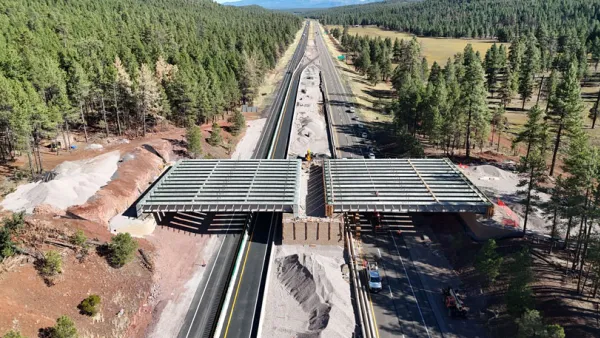
Arizona emerges as national leader in wildlife crossings
Arizona has been building bridges to prevent wildlife-vehicle collisions at various hotspots throughout the state.
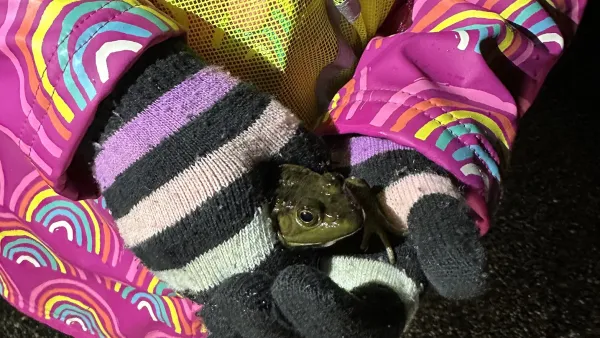
Once a year, Maine roads become highways for amphibians
The 'Big Night' brings out volunteers to help frogs, salamanders, and other migrating amphibians cross roads to reach their breeding grounds.

Planetizen Federal Action Tracker
A weekly monitor of how Trump’s orders and actions are impacting planners and planning in America.

Eastern Nebraska is running out of electricity
Data centers and electrification are straining eastern Nebraska’s grid, throttling economic development.
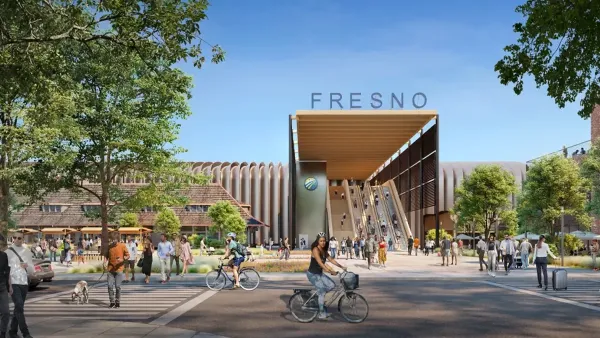
California High-Speed Rail Authority picks trainset manufacturer
The California High-Speed Rail Authority aims to start servicing passengers by 2033.

Massachusetts bogs generate both power, and cranberries
Putting solar panels above farmland is one way Massachusetts is advancing toward its goal of net-zero carbon emissions by 2050.

What could the future of LA transit look like under Raman?
The mayor-elect views broken sidewalks and potholes as crises that can be fixed with better governance.

States are counting on battery farms. Some towns don’t want them.
While fire safety has improved, some communities are still wary.

FREE Course: Walkable City 1: Why Walkability?
After describing his path towards focusing on walkability as the essence of good planning, Jeff Speck marches through his five principal reasons for making more walkable places.
Reinventing Malls: Planning Alchemy—Turning Gray Fields Into Gold
The course focuses on the opportunities and imperatives that shape reinvention of mall sites.

City of Rosemead
Rutgers University, Edward J. Bloustein School of Planning and Public Policy
One Hundred Miles
University of Michigan School for Environment and Sustainability (SEAS)
Hunter College, City University of New York (CUNY)
The Architects Foundation
City of Cambridge
The Pocatello Development Authority
The Urban Renewal Agency of the City of Pocatello